
Overview
When goods enter a new market, businesses frequently focus on documentation, declared value, and customs clearance processes. Also, an equally critical step is local testing after import. Even when goods ship smoothly through international shipping terms and systematic trade programs such as the generalized system of preferences (GSP), this does not confirm that they are technically or legally ready for local use.
Product design, performance, and safety expectations change by country. Differences in environment, infrastructure, and approval systems mean that imported goods must frequently go through testing before they can be supplied. Organizations that manage their shipments through a difficult logistics chain or advanced inventory and order management systems, local testing remains a necessary safeguard to protect both users and trusts.
Why Is Product Testing Important After Import?
Verifying Approval beyond documentation
While accurate classification through an HS code or HTS Harmonized Tariff Schedule helps authorities assess duties, it does not confirm real-world functionality or safety. Local testing after import evaluates how a product performs under local technical standards and usage environments.
Many businesses depend on systematic delivery methods such as DAP or other DAPs defined under the global Incoterms. These terms manage responsibilities between partners, but they do not change the requirements for physical and technical verification once goods arrive.
Reducing operational and market risks
Even when supported by professional importer of record service or exporter of record services, products that skip local testing face higher risks of rejection, malfunction, or market withdrawal. Testing reduces regulatory actions and brand reputation.

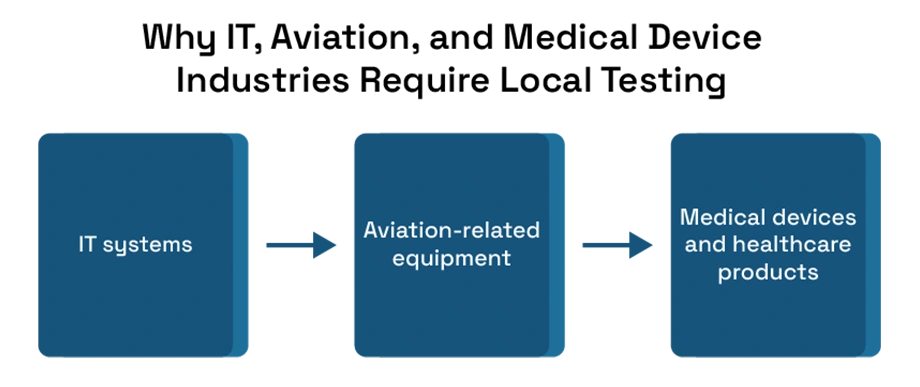
Why IT, Aviation, and Medical Device Industries Require Local Testing
IT systems
IT products must work dependably within local power systems, connectivity standards, and cybersecurity environments. Although organizations may use international freight services and advanced supply chain optimization tools to ship equipment effectively, local testing after import confirms that devices work safely and are combined correctly.
Aviation-related equipment
Aviation components frequently arrive through specialized freight forwarding companies near me or global partners or me, but transport alone does not confirm agreement. Local testing confirms that parts meet local aviation authority requirements and environmental expectations.
Medical devices and healthcare products
Medical equipment is subject to strict local controls because of direct patient impact. Even when supported by premium delivery service options or professional trade handling, devices must undergo local testing after import.
Consequences of Avoiding Local Testing
Regulatory setbacks and financial exposure
Products that bypass local testing may face detention, restricted sales, or forced market removal. This can occur even when all shipping documentation and trade procedures appear correct.
Safety failures and liability risks
Without proper validation, defects may surface only after market entry. This exposes companies to lawsuits, insurance disputes, and serious reputational harm.
Disruption to distribution planning
Unverified products can undermine delivery schedules, damage customer confidence, and offset any efficiencies gained from simplified logistics operations.
How One Union Solutions Helps You in This Situation
Structured support across import processes
One Union Solutions supports businesses beyond the basic shipments of goods. Their approach integrates regulatory coordination, documentation alignment, and guidance throughout the local testing after the import phase.
Expertise across regulated industries
Whether managing IT hardware, aviation components, or medical devices, their teams understand how technical testing interacts with important responsibilities.
Supporting business continuity
Coordinating testing requirements alongside import planning, we help organizations reduce uncertainty, prevent costly delays, and maintain smooth market entry.
Conclusion
Local testing after import is a vital step that completes the gap between international trade procedures and real-world product use. While documentation systems, shipping systems, and professional handling services allow goods to cross borders effectively, only local testing confirms that products are truly fit for the market. In industries such as IT, aviation, healthcare, and automotive, the risks of reducing steps are too high. Importance for local testing and working with expert partners, businesses protect customers, improve agreements, and build long-term market trust.
DID YOU KNOW?
Amidst the escalating trade tensions between the United States and China, both countries imposed tariffs of over 100 percent on imported goods.
FAQs:
1. What is local testing after import?
Local testing after import refers to technical, safety, and regulatory checks performed once goods arrive in a destination country to confirm they meet local standards and usage conditions.
2. Why is local testing necessary even after customs clearance?
Customs clearance focuses on documentation, duties, and classification. Local testing verifies real-world performance, safety, and compliance with country-specific technical regulations.
3. Which industries most commonly require local testing after import?
Industries such as IT, aviation, medical devices, automotive, and electronics frequently require local testing due to strict safety, performance, and regulatory standards.
4. What are the risks of skipping local testing after import?
Avoiding local testing can lead to regulatory penalties, product recalls, market bans, financial losses, and damage to brand reputation.
5. How can expert partners help with local testing after import?
Experienced partners coordinate regulatory requirements, documentation, and testing processes, helping businesses reduce delays, control risk, and maintain smooth market entry.