Overview
Japan is in a situation with trade. In 2026 the country is facing problems and is getting caught up in a lot of issues with trade. Japan needs things to stay calm when it comes to trade with countries and getting the import export it needs. Japan imports and exports multiple products to other countries. This is making it very hard to know what will happen with trade and getting Japan’s import export from one place to another. It relies on global trade routes and imports to keep going.
For businesses that do import and export in the IT industry, the aviation industry, the medical industry and the automotive industry they actually affect how these businesses make decisions about where to get, how to move products around and their overall plans for trading with countries. So what is happening with trade in Japan is really important because it can help us understand how big problems around the world can change the way companies work together to get import export done. Japan’s trade situation gives us insights into how import and export businesses can deal with big changes in the import and export industry.
Japan’s Trade Outlook
Japan’s economy has always been driven by exports in sectors such as automotive, advanced electronics , and industrial machinery. The country wants to be a player in the world of trade so Japan is working hard to make this happen with Japan’s exports of components, electronics and machines. Japan’s export performance is being affected by things, like currency values that keep going up and down, production costs that are getting higher. Japan’s exports are facing these challenges.
Japan gets worried when things go wrong in the Middle East. Japan relies on the Middle East for a lot of its import and export. This makes it very important for Japan to pay attention to what is happening in the Middle East. At the time Japan was also trying to work with more countries on trade. It is putting a lot of money into industries that use a lot of technology. The technology industry is growing fast. At the time the automotive industry is changing to make electric cars and other new ways to get around. The medical equipment sector is also seeing growth due to increasing global healthcare demands. These sectors are closely linked to international supply chains, making efficient inventory and order management essential for maintaining competitiveness.

Trade Uncertainty Amid Middle East Tensions
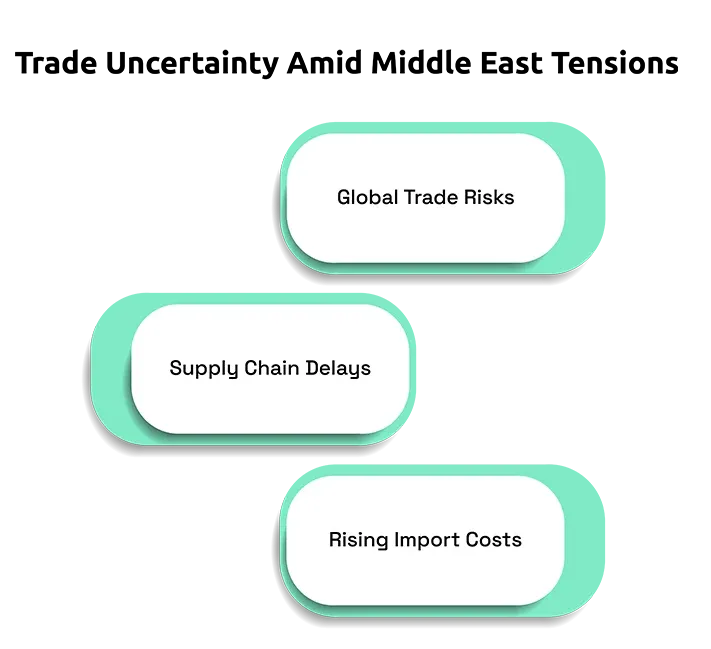
The Middle East is really important for the world’s import export supply. If something goes wrong there it can cause problems everywhere. The Middle East supply is crucial so it can affect the Japan industry with minor inconvenience. In 2026, escalating tensions have raised concerns about potential supply interruptions, increased shipping risks, and rising costs. For Japan, this translates into higher import expenses and potential delays in production cycles.
The shipping routes that go through the Strait of Hormuz are being watched closely. This is because the Strait of Hormuz is an important place. If something goes wrong with the shipping routes that go through the Strait of Hormuz it can take a lot longer for things to get from one place to another. For industries like aviation and automotive, where timely delivery of components is crucial, such disruptions can significantly impact operations.
Additionally, fluctuating prices directly affect manufacturing and transportation costs. Businesses must adapt quickly by re-evaluating sourcing strategies and exploring alternative suppliers. This has led to a growing emphasis on regional diversification and risk mitigation in global trade.
From a compliance perspective, companies are also focusing on using the best trade compliance software for import export rules to manage evolving regulations and make sure of accurate documentation. This becomes particularly important during periods of uncertainty, where even minor errors can lead to costly delays.
Strengthening Trade Resilience in a Volatile Global Environment
In response to these challenges, businesses are prioritizing resilience and flexibility in their trade strategies. One of the key approaches is diversifying supply chains to reduce dependency on high-risk regions. By sourcing materials and components from multiple locations, companies can minimize disruptions and maintain continuity.
Digital transformation is another critical factor. Advanced technologies are enabling better visibility across supply chains, allowing businesses to track shipments, manage risks, and respond to changes in real time. Efficient inventory and order management systems are helping organizations maintain optimal stock levels and avoid shortages.
Collaboration is also becoming increasingly important. Companies are working closely with their trade partners, suppliers and service providers to make sure everything runs smoothly. They are also using expert help for customs clearance and regulatory compliance.
For industries like Information Technology, aviation, medical and automotive these strategies are really important for keeping them growing. This can give the Information Technology industry and the automotive industry an edge over others, in a world market that’s very hard to predict.

Conclusion
Japan’s trade situation in 2026 shows how everything in the world is connected when it comes to import export. When there are problems between countries like what’s happening in the Middle East it can affect the economy. This means that Japan’s trade needs to be able to deal with problems and change quickly. Japan’s trade also needs to have plans in place to handle international trade issues.
For businesses that import and export goods, those dealing with high-value products and time-sensitive products staying ahead of changes is really crucial. They need to use tools that make their supply chains more varied. Import and export businesses should focus on making their supply chains more prominent. As global trade keeps changing Japan’s experience shows that being prepared and making choices are important to solve problems and create a future that lasts in global business.
DID YOU KNOW
“Exports climbed 11.7% on the year last month, extending the streak of gains to a seventh straight month, government data.”
FAQs
Why is Japan’s trade outlook affected by Middle East tensions?
Japan relies heavily on energy imports from the Middle East, so any instability directly impacts costs and supply chains.
Which industries in Japan are most impacted by these tensions?
Key sectors like automotive, aviation, IT, and medical equipment face disruptions due to rising costs and supply delays.
How do Middle East conflicts impact global trade routes?
They can disrupt major shipping routes, increasing transit times, freight costs, and overall trade risks.
What strategies are businesses using to manage trade uncertainty?
Companies are diversifying suppliers, adopting digital tools, and improving inventory management to reduce risks.
How can import-export businesses stay compliant during uncertainty?
By using advanced compliance tools and ensuring accurate documentation to avoid delays and penalties.