Overview
Japan has long been known as one of the world’s growing automotive exporters, supplying vehicles to major shipments across North America, Europe, and Asia. In recent years, the global shipments of sustainable vehicles has grown the demand for electric vehicles (EVs), creating new opportunities for Japanese automaker organizations. These organizations are increasing production of hybrid and fully electric vehicles while expanding their export supply chain. In global trade, automotive exporters must also follow regulatory systems and trade methods such as the generalized system of preferences (GSP), DAP, DDP shipping, HS code categorizations to check goods, the HTS harmonized tariff Schedule, and Incoterms to get approval from customs officials in Japan. These systems help to confirm that international trade terms work smoothly, to know tariff categorizations and trade documentation requirements for exports.
What Challenges Do Japanese automobile manufactures Face in Expanding EV Exports?
As demand for electric vehicles continues to increase, Japanese automobile companies face several challenges when growing into global markets. They must comply with different import rules, safety standards, & customs requirements in each country. Managing battery supply, production costs, & changing trade policies also requires careful planning. In addition, reliable shipping & strong logistics networks are important to keep deliveries on schedule. By addressing these challenges efficiently, Japanese production can improve their global position & support the continued growth of EV exports.
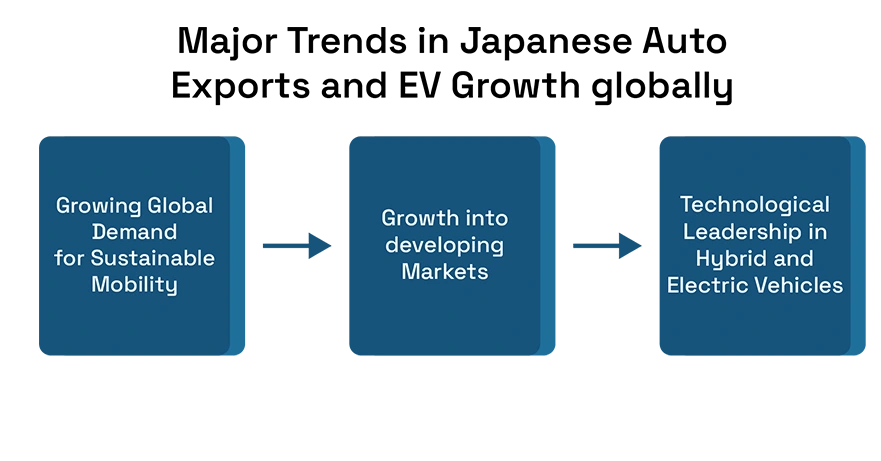
Major Trends in Japanese Auto Exports and EV Growth globally
Growing Global Demand for Sustainable Mobility
One of the most important operators of Japan’s export growth is the increasing demand for a sustainable mobility approach in exporters. Japanese automakers have been quick to respond by expanding their EV portfolios and investing in electrified vehicle technologies. Japanese automobile organizations are now major components of Japan’s automotive export plans for global shipments.
Growth into developing Markets
While conventional trades such as the United States and Europe remain important locations for Japanese automobiles, developing markets are becoming increasingly important for exporters. All countries across Southeast Asia, Latin America, and the Middle East are mainly growing their electric vehicle production and creating new opportunities for Japanese manufacturers globally shipments. Effective logistics systems and global supply chains play an important role in shipping vehicles for global trade. Organizations frequently depend on international freight services, exporter of record services, and importer of record service providers to confirm that logistics across borders are managed smoothly while meeting all regulatory requirements.
Technological Leadership in Hybrid and Electric Vehicles
Automakers have invested heavily in research and development to improve growth efficiency, reduce emissions of the country, and increase vehicle performance in the country. Advanced manufacturing techniques and digital technologies are also helping organizations to improve inventory and order management and supply chain optimization.
Rising Production of Electric Vehicles Drives Japan’s Electric Vehicle Market Demand
Expansion of EV Manufacturing Facilities
Japanese automakers are investing heavily in new manufacturing simplifications and improving existing production plants to support EV manufacturing in Japan. As EV production increases, international trade operations become more complex in global shipments. Exporters must follow proper customs clearance procedures and confirm correct HS code categorizations for vehicle components and complete automobile production. In many cases, organizations depend on the best trade compliance software for import export rules to manage documentation and maintain approval with global trade regulations.
Growth in Battery Transformation in Japan
Battery technology remains one of the most important parts of electric vehicles. Japanese organizations are working in next-generation battery research, including semiconductor battery development, which involves improved energy density and faster charging systems of vehicles. These technological updates are expected to improve EV production and reduce costs, making EVs more approachable to consumers in Japan.
Global funding in Electric Vehicles to guide the Growth of the Japanese Automobile
Major Partnerships and Collaborations with Government
Japanese automakers are mostly starting partnerships with global technology organizations, battery manufacturers, and research institutions. In international trade terms, organizations frequently work with logistics providers and freight experts to manage cross-border shipments with an exporter of record services. Organizations frequently ask questions such as whether a freight forwarder can be an exporter of record or whether a customs broker can handle both import and export documentation, showing the growing importance of effective trade management in Japan.
Government Support for EV Development in Japan
The Japanese government is also supporting the growth of electric vehicles through research, manufacturing production development, and environmental policies for the country’s shipments. Government or investor partnership is helping improve Japan’s EV ecosystem and increasing innovation within the automotive sector. Government guidelines for reducing carbon emissions are encouraging manufacturers to grow the development of electric vehicles while maintaining a strong export performance globally.

Conclusion
Japan’s automotive industry is seeing a huge change as global demand for electric vehicles continues to grow. Strong EV manufacturing expertise in Japan, technological innovation, and expanding global trades, Japanese automakers remain major players in the global EV industry in terms of shipments. At the same time, effective trade methods, advanced logistics systems, and strong regulatory agreements will remain necessary for managing global automotive exporters.
DID YOU KNOW?
A 23.6% increase in goods shipped to Western Europe, along with an 8.8% rise in exports to the United States, the second-largest trading partner, bolstered the export figures.
FAQs:
1. Why is Japan a major exporter of automobiles?
Japan is one of the world’s largest automobile exporters because of its advanced manufacturing technology, strong automotive brands, and effective global supply chains.
2. How is the electric vehicle market affecting Japan’s auto exports?
The global shift toward electric vehicles is encouraging Japanese manufacturers to increase EV production and develop hybrid technologies. This transition is growing Japan’s automotive exports as global demand for sustainable vehicle solutions continues to grow.
3. How do free trade agreements support Japan’s automobile exports?
Free trade agreements help reduce tariffs, improve market access, and make Japanese vehicles more competitive in international markets. They also simplify cross-border trade for exporters.
4. What role does battery technology play in Japan’s EV growth?
Battery technology is critical for improving electric vehicle performance, driving range, and charging efficiency. Japanese companies are investing heavily in next-generation batteries to strengthen their competitiveness in the global EV market.
5. How does international trade regulation affect automotive exports?
Automotive exporters must comply with global trade regulations, including tariff classifications, customs documentation, and international shipping terms.