Insight
The Indian logistics and warehousing sector is fast evolving. Cities in Tier 2 are emerging as new hubs in critical supply chains. The cities are transforming themselves to accommodate specialized industries. They provide quality, precise, and state-of-the-art logistics. Infrastructure is also improved, and this is what benefits their growth. The closeness to demand points will have a strategic advantage. The benefits result in cost savings & efficiency. Thus, Tier 2 cities are emerging as an important contributor to India’s supply chain ecosystem.
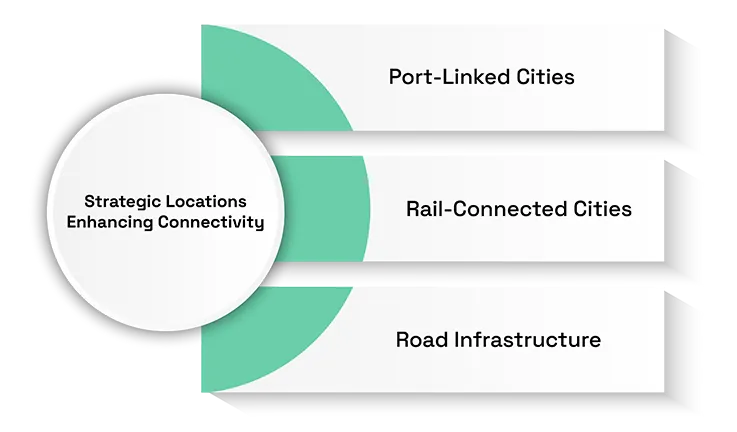
Strategic Locations Enhancing Connectivity
Key logistic hub cities Tier 2 cities have appeared, such as Ludhiana, Jaipur, Lucknow, Indore, Nagpur, Bhubaneswar, Kochi, and Guwahati. Their high multi-modal linkages distinguish them. Most have large ports, airports, roads, and a rail network. This is because it facilitates the faster and easier transportation of goods. Port-linked cities like Kochi, Chennai (near Hosur), and Guwahati are the places where sea freight can be easily availed.
This is essential in the area of import and export of valuable equipment. The central location and dominant rail connections of Nagpur facilitate effective transportation. Jaipur, Indore, and Lucknow have a good road & rail infrastructure. This enhances last-mile delivery and targets the customers. Airports at Nagpur, Amravati, and Lucknow support the air cargo services. It is important for urgent deliveries, particularly sensitive and highly valued products in the aviation and data center industries. Integration of air transport reduces delivery time and improves levels of reliability, making the shipping of urgent cargo more reliable.
How are automation and security implemented in Tier 2 city warehouses?
In Tier 2 city warehouses, automation and security are used to ensure efficient and safe operations. Automated systems handle tasks like inventory management, picking, packing, and sorting, which reduces human error and speeds up processes. Security measures include CCTV surveillance, access controls, alarm systems, and sometimes biometric verification to protect valuable goods. Climate-controlled storage and tracking technologies are also used for sensitive equipment, such as medical devices, automotive parts, and data center hardware. Together, these features make warehouses in Tier 2 cities reliable, safe, and capable of supporting complex supply chains.
Warehousing Of Special Equipment
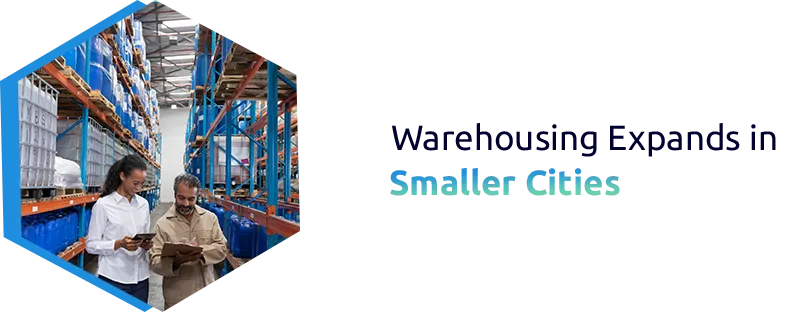
Warehousing in Tier 2 cities is growing rapidly, serving industries that handle complex and valuable equipment like data centers, automotive parts, aviation machinery, and medical devices. These warehouses offer advanced features such as climate control, strict security, and automation to keep goods safe and compliant. Being close to manufacturing centers and transport hubs allows for fast, just-in-time deliveries, reducing downtime and keeping supply chains running smoothly. Tier 2 cities provide flexible and reliable logistics, helping businesses save costs, move essential equipment quickly, and operate more efficiently in demanding industries.
Market Intelligence Driven Data
According to market research, Tier 2/3 cities currently occupy approximately 19% of total warehousing space in India. The sector increased by more than 24% in the first half of 2025, partially because of the increased e-commerce and infrastructure investments. Demand in Grade A warehouse that follows strict operations guidelines shot up by over 55% indicating heightened standards by occupiers. Government efforts to promote improvement in freight corridors, dedicated logistics parks, and urban infrastructure are boosting this trend. With this policy backing, these cities will be competitive and appealing to long-term investment in logistics.
Major Tier 2 Cities Supporting Different Modes of Transport and Equipment Sectors
| Sector | Key Cities | Transport Facilities |
| Logistics & Warehousing | Ludhiana, Jaipur, Lucknow, Indore, Nagpur, Bhubaneswar, Kochi, Patna, Varanasi, Rajpura, Hosur, Coimbatore, Bhiwandi, Guwahati | Ports (Kochi, Guwahati), Major Road & Rail Links |
| IT/Data Center Equipment | Jaipur, Indore, Kochi, Mohali, Patna, Bhopal, Bhubaneswar, Ahmedabad, Guwahati, Nagpur | Airports (Nagpur, Bhopal), Road & Rail |
| Automobile Equipment | Hosur, Chennai (nearby), Aurangabad, Pune, Nashik, Gurgaon/Manesar, Gujarat (Halol, Rajkot, Sanand), Ludhiana, Coimbatore, Bhiwadi | Ports (Chennai), Road & Rail |
| Aviation Equipment | Nagpur, Amravati, Lucknow | Airports (Nagpur, Amravati, Lucknow) |
| Healthcare Equipment Warehousing | Ludhiana, Patna, Jaipur, Lucknow, Bhubaneswar | Road & Rail, Some with Nearby Airport Access |
Thanks to strong multimodal connectivity, Tier 2 cities are becoming highly efficient hubs for freight forwarding services, customs clearance, warehousing services, and in-transit handling of high-value equipment. Their proximity to manufacturing clusters and major consumption markets simplifies the movement of IT hardware, aviation spares, telecom equipment, and automotive components. Modern warehouse management services in these locations support secure storage, faster order cycles, and improved compliance with HS Codes and global trade regulations. For businesses dependent on time-critical deliveries, these cities help reduce transit delays, optimize costs, and strengthen the overall supply chain strategy, especially for specialized sectors like data centers, healthcare, and automotive.
The Future of Logistics: Development and Innovation
Logistics in these cities will likely be the same in the future due to continued infrastructural development and the embracement of technology. AI-powered inventory management and real-time tracking will be important because automated warehousing will become an order of operational excellence. Improved multi-modal transport networks will further shorten delivery time, making these hubs a desirable warehousing and distribution location. With the enhancement of road, rail, air, and sea connectivity, emerging cities will attract more investments in specific equipment logistics. Such development will create more sustainable and robust supply chains for sensitive, high-value goods.
Conclusion
The transformation of India’s logistics and warehousing sector is inseparable from the strategic rise of Tier 2 cities offering strong multi-modal connectivity and modern warehousing solutions. These developments enable efficient, scalable handling of complex equipment inventories, ranging from data centers to aviation to medical equipment. At One Union Solutions, we are proud to support these dynamic logistics ecosystems with tailored, reliable services prepared to meet the unique demands of today’s market.
Did You Know,
The warehousing industry in India is experiencing massive growth with a CAGR of 15 % predicted till 2027, and the local warehousing market is expected to reach approximately USD 35 billion by 2027.
FAQs
What does importer of record mean in logistics?
The importer of record must ensure that goods that have been imported are within the terms of the legal and customs requirements, as well as the payment of duties.
What is the effect of Incoterms on warehousing and delivery?
Incoterms establish the duties of the buyer and seller during shipping, which affects the warehousing and risk management activities.
What are HS codes, and why are they essential?
Harmonized System codes identify goods to customs, which are used to calculate tariffs and speed up clearance procedures.
Why are developing cities preferable to warehousing activities?
They provide lower rates, better infrastructure, and closeness to growing consumer markets, which help to achieve efficient logistics.
How are value-added services compared to warehousing?
They involve tasks such as packaging and labeling, which add efficiency and customization to the product distribution work.