Introduction
India’s import and export system is changing with more digital tools and government efforts to make trade easier. Earlier, businesses faced problems like manual paperwork, delays in customs clearance high duties, and errors due to outdated systems. Now, the government is introducing “Customs 2.0,” a fully digital and paperless system that aims to make trade faster, more accurate, and simpler. This change also matches global trade practices, including better use of HS codes, tariff systems, and international rules. For businesses using shipping terms like DAP or DDP, the new system will help speed up clearance and improve transparency in the overall process.
Government targets full automation of customs processes by April 2026
The government has announced that by April 2026, India looks to reduce physical paperwork in customs clearance and replace it with a total digital processing schedule. This transformation builds on the National Logistics Policy and the ongoing modernization of ICEGATE and allied systems. The new approach intends to integrate port authorities, customs brokers, carriers, and government systems into a single digital ecosystem. Whether businesses operate through IOR services or depend on their own in-house approval teams, this upgrade will standardize the Importer of Record responsibilities and simplify Exporter of Record definition consistency, reducing the risk of miscategorization and penalties.
Will Customs 2.0 reduce documentation errors and compliance risks?
Yes, Customs 2.0 is designed to significantly reduce documentation errors and compliance risks. By moving to a fully digital, paperless system, businesses can submit accurate information online, supported by automated data validation tools. This minimizes human mistakes, ensures proper classification of goods with HS and HTS codes, and helps calculate duties correctly. The system also improves transparency and auditability, reducing the chances of penalties, disputes, or delays at customs, making international trade smoother and more reliable.
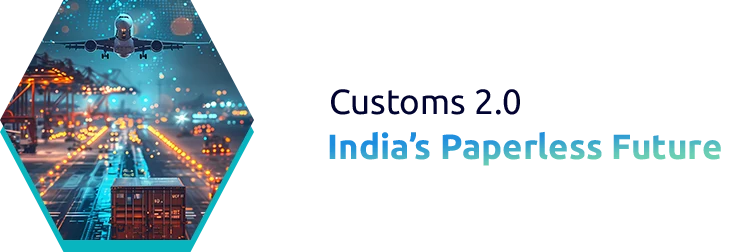
Key Features and Benefits of the automation processes
India’s move to fully automated customs will make trade faster and easier for businesses. With digital systems, companies can track shipments in real time, check documents, calculate duties, and follow customs updates without relying on manual work. Online clearance will reduce paperwork, lower errors, and speed up the entire process. It will also help ensure correct HS code classification, avoiding duty issues and penalties. Overall, digital processing will improve freight services and make deliveries more reliable with better scheduling. Businesses using global trade benefits like GSP will also be able to verify eligibility online, reducing delays and disputes.
India’s imperative for paperless trade with One Union Solutions
As the country prepares for Customs 2.0, the required for dependable trade partners becomes necessary. One Union Solutions supports businesses with a complete range of services, including IOR services, Exporter of Record support, classification accuracy, and Import export documentation filing, confirming transactions comply with growing Indian requirements. The company helps importers guide difficult scenarios related to shipping terms such as DAP and DAPs, Delivered Duty Paid service, and other Incoterms that grow responsibility and cost distribution. For the upcoming digital service, businesses must confirm that tariff categorization, document generation, and shipment handover processes are already digitized and error-free.
Steps to Get Ready for Paperless Trade
To remain competitive in a fully digitalized customs system, organizations must begin preparation now. Businesses need to upgrade internal logistics workflows, move toward digital record-keeping, and confirm that documents such as invoices, HS classification data, and valuation records are combined into electronic platforms. Importers should train teams on approval expectations, mainly surrounding Importer of Record responsibilities and self-classification accuracy. Working with experts, IOR, and customs service providers confirms that companies are adequately prepared when digital enforcement becomes mandatory. The earlier these systems are adopted, the easier it will be to change alongside customs authorities when live processing becomes standard across all global trade.
Conclusion
The move toward fully automated customs by April 2026 signals a major milestone in India’s trade modernization. With automation, digital documentation, combined logistics systems, and improved regulatory transparency, businesses will gain predictability and faster clearance while reducing cost and working pressure. Companies that begin modernizing today, supported by partners like One Union Solutions, will be well-positioned to grow in the era of paperless trade and Customs 2.0.
DID YOU KNOW?
Full implementation of digital trade facilitation measures beyond the commitments outlined in the WTO TFA could reduce average trade costs in the Asia-Pacific region by an estimated 11%.
FAQs:
- What is Customs 2.0 in India?
Customs 2.0 refers to India’s planned fully digital, automated customs system that eliminates manual paperwork and speeds up import-export processing through electronic documentation, real-time verification, and data-driven decision support.
- When will India’s customs system become fully automated?
The government has set a target of April 2026 to complete the shift to fully paperless and digital customs processing across ports, logistics systems, and compliance platforms.
- How will automation benefit importers and exporters?
Automation will reduce clearance time, minimize manual filing errors, improve HS code accuracy, provide end-to-end visibility, lower the risk of compliance penalties, and create faster, more predictable shipments.
- What should businesses do to prepare for paperless trade?
Companies should begin digitalizing internal documentation, updating logistics and customs software, training teams on Importer of Record rules, improving tariff classification accuracy, and partnering with expert customs service providers.
- How can One Union Solutions help with the transition?
We support businesses with IOR/EOR services, digital document filing, HS classification accuracy, and compliance management, helping companies meet evolving customs requirements and avoid penalties during the shift to automation.