Overview
In global trade, speed and dependability matter as much as cost. Businesses frequently invest heavily in international freight services, premium delivery options, and robust inventory and order management strategies, yet often overlook one crucial risk: documentation accuracy. A single missing or incorrect paper can stand a shipment indefinitely, regardless of how well the rest of the supply chain is planned. From customs clearance delays to growing storage costs, paperwork issues remain one of the most underrated warnings in international shipping terms.
How Are Digital Documentation Systems Reducing Global Shipping Delays?
Digital documentation systems are changing the way companies manage international shipments by minimizing paperwork mistakes & improving information accuracy. Digital records help customs teams identify shipment details quickly, provide better shipment visibility, & support smoother communication between exporters, importers, & logistics partners. These tools help businesses manage complex trade processes & avoid extra delays.
The Downside of Missing and Incorrect Paperwork for Shipment
Documentation forms the backbone of iGlobal Shipping. Authorities depend on paperwork to verify ownership, valuation, product classification, and approval with regulations. When even one document is missing, customs officials may place the shipment on hold without a clear release schedule.
Incorrect arrival related to HS code or HTS Harmonized Tariff Schedule categorization can trigger re-verification, inspections, or duty reevaluation. Also, mismatches in goods details or shipping terms, such as DAP or DAPs, may lead to approval issues. These issues can affect both the exporter of record services and the importer of record services, creating accountability confusion.
Beyond regulatory delays, missing document issues affect supply chain optimization. Stockouts, missed delivery deadlines, and customer dissatisfaction frequently follow, particularly for businesses managing valuable or urgent goods.

How Long Will Your Goods Be Held After a Missing Document?
Short-Term Holds: A Few Days to a Week
In minor cases, such as an administrative error or a missing supporting invoice, shipments may be released within a few days once corrected documents are submitted. However, this supports quick response times and prior agreement history.
Long-Term Holds: Weeks or Even Months
When documentation issues involve valuation disputes, incorrect customs clearance declarations, or unclear international shipping terms, goods can be stopped for weeks or even months. In some cases, unresolved cases may lead to seizure or forced re-export, hugely increasing costs and working risk. The lack of alignment between international freight services providers, customs brokers, and approval teams frequently prolongs these delays, mainly when documentation ownership is unclear.
What Are the Essential Documents for Shipment?
Core Shipping Documents
To stop shipment freezes, businesses must confirm accuracy and completeness in all core documents, including trade invoices, packing lists, and logistics documents. These records must clearly work with declared shipping terms and cargo details.
Agreement and Regulatory Documents
Depending on the location and cargo type, extra permits, documentation, or reports may be required for shipment. Problems in the HS code or the HTS Harmonized Tariff Schedule remark about frequently cause unnecessary scrutiny. Exact documentation supports simple customs clearance and quick cargo release.
Role-Based Documentation Responsibility
Clearly defining responsibilities between the exporter of record services and the importer of record services is necessary for logistics. When documentation ownership is unclear, customs officials may pause the shipment until accountability is established.
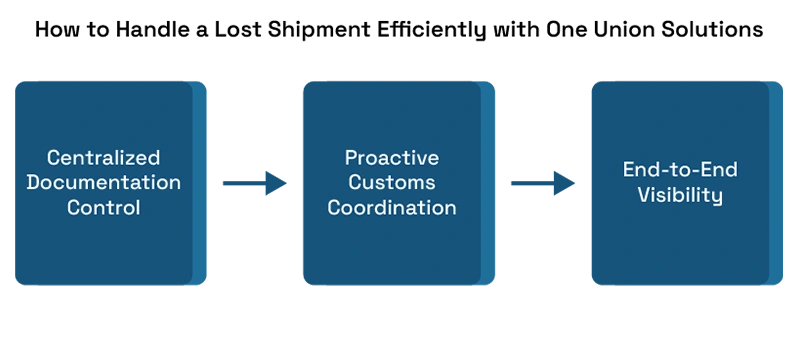
How to Handle a Lost Shipment Efficiently with One Union Solutions
Centralized Documentation Control
We help businesses manage documentation, reducing the risk of missing or inconsistent paperwork. This systematic approach supports better inventory and order management while reducing issues caused by documentation.
Proactive Customs Coordination
With expertise in customs clearance and international shipping terms, we work proactively with authorities to resolve issues before they grow. This approach helps stop extended holds and unexpected penalties.
End-to-End Visibility
Integrating international freight services with approval support, One Union Solutions allows easy supply chain optimization. Businesses gain better visibility into shipment status, documentation, and possible risks, allowing quick disciplinary action when required.
Conclusion
In global trade, a shipment is only as strong as its documentation. Even the newest logistics chain or premium delivery service cannot compensate for missing or incorrect paperwork. Delays caused by documentation issues impact costs, timelines, and customer trust frequently far more than businesses expect. Prioritizing accurate documentation, clear role definitions, and expert support from providers such as One Union Solutions, businesses can protect shipments from indefinite holds. In a world where speed and agreement go hand in hand, getting paperwork right is not optional; it is necessary for sustainable international shipping success.
DID YOU KNOW?
Submitting customs documents is a crucial step, as incomplete documentation is one of the most common causes of shipping delays, accounting for 80% of such delays.
FAQs:
1. What happens if a shipping document is missing during customs clearance?
If a required document is missing, customs authorities may place the shipment on hold until corrected paperwork is submitted. This can result in storage charges, inspection delays, or even shipment seizure.
2. How long can goods be held due to incorrect documentation?
Goods may be held anywhere from a few days to several months, depending on the nature of the error, valuation disputes, or unclear international shipping terms.
3. Which documents are most commonly responsible for shipment delays?
Trade invoices, packing lists, HS code declarations, and regulatory permits are the most common documents causing delays when inaccurate or incomplete.
4. How do HS code errors impact international shipments?
Incorrect HS or HTS Harmonized Tariff Schedule classification can trigger re-verification, duty reassessment, or physical inspection, significantly delaying customs clearance.
5.Can digital documentation help prevent customs delays?
Yes, digital documentation systems help reduce paperwork errors, improve data accuracy, & provide faster access to shipment records. These tools support smoother customs verification, better tracking, & quicker resolution of documentation issues.