When specialized equipment needs to be transported, the weather can affect both safety and delivery times. Sudden storms or extreme heat can block transport routes or damage fragile items. That means logistics planning needs to be flexible. Customs rules also make shipping more complicated. Laws require goods to be labeled and reported with specific codes, like HS and HTS, so the correct taxes are paid. Customs duties must be handled correctly to avoid delays and fines.
Ports are important entry points, and careful coordination between freight forwarders and customs brokers helps shipments move smoothly. Transporting valuable equipment needs high-quality services, such as white glove delivery, to protect items and reduce the risk of damage. Integrated technology plays a big role in connecting all these steps, creating a strong, clear, and reliable supply chain for high-value equipment.
Problems with Separate Systems
Many logistics companies still use separate systems that do not communicate with each other. This traps important information, causing mistakes, repeated work, delays, and shipment hold-ups due to incomplete paperwork. This slows down decision-making and makes the supply chain less reliable.
Using only emails, phone calls, and spreadsheets makes workflows slower and less certain. Logistics providers often struggle to meet client expectations without platforms that provide instant updates and clear information.
Solving Problems with Integration
Integrated logistics platforms bring all information together in real time. This lets companies spot and fix problems before they happen instead of reacting afterward. Integrated networks can respond quickly to issues like port congestion, new rules, or transport delays. Connected communication helps everyone work together so shipments keep moving. This makes logistics more planned, data-driven, and reliable, keeping customers satisfied.
The Power of Digital Freight Platforms
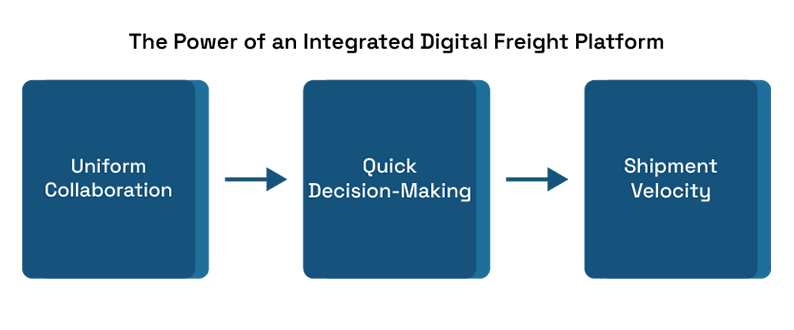
A digital freight platform is a single hub for booking, tracking, customs clearance, and delivery information. This improves every step of shipping. Real-time updates keep freight forwarders, customs brokers, and importers on the same page. For example, when customs clears a shipment electronically, the freight forwarder knows right away, so the shipment moves immediately.
AI tools can spot bottlenecks, predict problems, and suggest better routes. Automating data reduces manual work, speeds up cargo movement, and improves service quality. Transparent tracking and timely updates also help warehouses prepare and manage inventory better.
Coordinating the Supply Chain Digitally
Digital supply chain coordination means linking all parts of the supply chain to work as one. Instead of managing shipping, storage, and delivery separately, information flows instantly between all points. This helps companies respond faster to problems like bad weather or customs delays. A coordinated supply chain also makes it easier to follow rules and ensures shipments arrive on time.
AI and Automation
AI and automation are changing logistics by handling routine tasks, predicting problems, and helping teams respond to risks quickly. These tools reduce human error, speed up work, and let logistics teams focus on planning. Smart systems give early warnings of delays, find better routes, and help keep service levels high even in a changing market.
Competing Through Connection
Companies that use integrated technology have more control, better reliability, and happier customers. Investing in strong digital platforms improves teamwork, simplifies operations, and builds stronger supply chains. Good connections in today’s business world give companies an advantage and help them grow.
Market Insights
Over 70% of logistics providers already use integrated platforms, making their operations up to 30% more efficient. In 2024, the global market for integrated supply chain technologies reached over $125 billion, showing that integrated systems are essential to stay competitive.
Conclusion
Integrated technology is changing logistics. It removes separate systems, speeds up decisions, and makes compliance easier. Supply chains become clearer, faster, and more efficient when freight forwarding, customs brokerage, warehouse management, and white glove delivery work together. One Union Solutions is an expert in moving high-tech equipment. Our system ensures deliveries follow rules, arrive safely, and reach the destination on time, helping your business succeed in a fast-changing market.
Did You Know,
Over 60% of specialized equipment shipments rely on AI-enabled integrated platforms to optimize delivery accuracy and supply chain agility.
FAQ’s
How does removing data silos benefit logistics?
It facilitates faster communication and reduces errors caused by fragmented data.
In what ways does AI improve logistics operations?
AI forecasts delays and suggests better routing to maintain schedules.
What is the importance of Incoterms like DDP?
They define who is responsible for duties and customs, ensuring clarity.
How does a digital freight platform enhance shipment control?
By providing real-time data and automating document handling.
What advantages does white glove logistics offer?
It ensures careful handling and installation of sensitive, high-value equipment.