
Introduction
European logistics companies are facing problems. Rising costs, slower global trade, and uncertainty in the market are affecting stock prices. Logistics is very important for international trade, but changes in trade rules, like Incoterms and Delivery Duty Paid (DDP) shipments, have made things more complicated. These changes affect freight forwarding and export services in Europe.
Industry Outlook
Even with ups and downs in the market, European logistics is still very important. The region has strong ports and transport systems, fast and efficient customs processes, and clear HS Code and HTS tariff rules. Some companies face weak demand and higher costs, but the need for freight forwarding, DDP shipments, and DAP agreements is still strong. Exporters and importers depend on customs brokers and logistics providers to move goods quickly and efficiently.
Challenges
European logistics stocks are under pressure because of slower trade, higher costs, changing trade rules, and stricter DDP requirements. These problems affect not just stocks, but also how companies invest in infrastructure, technology, and staff training. Many logistics providers may delay upgrades to ports, warehouses, and transport fleets, or reduce their capacity to save money. This slows shipments, increases delivery times, and raises costs for exporters and importers.
The stricter DDP rules and changing Incoterms also mean companies need to spend more on compliance, training, and paperwork. All of these issues put pressure on the logistics sector and global supply chains, showing the need for digital tools, planning, and new ways to work efficiently.
How Companies Can Improve
European logistics companies can get better results by using digital systems to track shipments, improving customs clearance, and expanding DDP shipping services. Working with Importer of Record (IOR) and Exporter of Record (EOR) service providers can also help. Following Incoterms rules carefully and moving into new markets can increase opportunities. These steps help companies work faster, reduce costs, and regain investor confidence.
How One Union Solutions Helps
One Union Solutions helps businesses in Europe by handling IOR and EOR services, managing customs clearance, providing freight forwarding, and giving complete import-export support. Their services help companies follow rules, speed up deliveries, and avoid delays. This is especially useful for industries like IT, aviation, medical, and automotive, where timely shipments are very important.
Impact of Stock Pressure
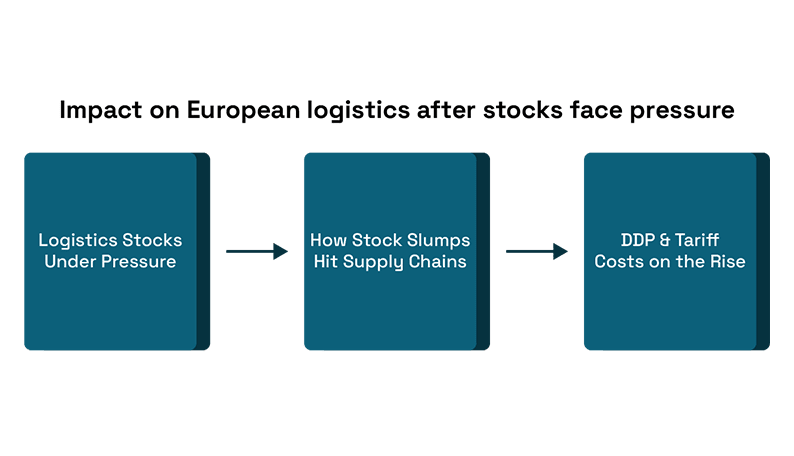
When logistics stocks go down, it affects more than just investors. Companies may delay upgrades to infrastructure, reduce freight capacity, and slow DDP shipments. Exporters may face longer delays and higher costs, making international trade slower and more expensive. These problems can disrupt supply chains, increase delivery times, and raise costs for businesses that rely on fast shipments.
Conclusion
European logistics stocks may face short-term problems, but the industry is still strong. With support from One Union Solutions and other service providers, companies can improve customs clearance, expand DDP and freight services, and follow Incoterms rules properly. These steps help logistics companies stay competitive and make sure Europe continues to play an important role in global trade.
Did You Know?
Bernstein lowered its 2025 EBIT guidance to DKK 19.5–20.5 billion but kept an “outperform” rating.
Shares closed at DKK 1,264.50 on September 29, showing over 20% potential upside to the target of DKK 1,700.
FAQs
Q1. Why are European logistics stocks under pressure?
Because of slower trade, higher costs, and changes in DDP and Incoterms rules.
Q2. How does this affect global trade?
Delays in logistics can slow down shipments and increase costs for exporters.
Q3. How does One Union Solutions help?
They provide IOR and EOR services, customs clearance, and freight forwarding, making trade easier.
Q4. How can logistics companies improve?
By using digital systems, modern shipping methods, and working with global logistics providers.
Q5. What is the future of European logistics?
With investments and better systems, companies can recover and remain strong in global trade