Overview
Global trade networks are dealing with a lot of uncertainty. This is because businesses have to handle things like tensions and regional conflicts. There are also problems like port congestion and extreme weather events. To make things worse trade regulations are changing all the time. These problems can affect the shipping routes. This can cause delays. Make transportation more expensive. It can also lead to inventory shortages. Make businesses less efficient.
Some industries like IT and automotive manufacturing are really sensitive to problems with trade routes. This is because they need to get parts and special equipment on time. Companies in these industries are looking for ways to deal with these problems. They want to be able to keep going even when things get tough. To do this companies are changing how they manage risks. They are trying to be stronger in the run. They are finding suppliers and making sure they have the right parts in stock. They are also using technology to keep an eye on everything. This way they can adapt to changes, in trade and keep their businesses running smoothly. The IT and automotive manufacturing industries are doing this to build supply chains.
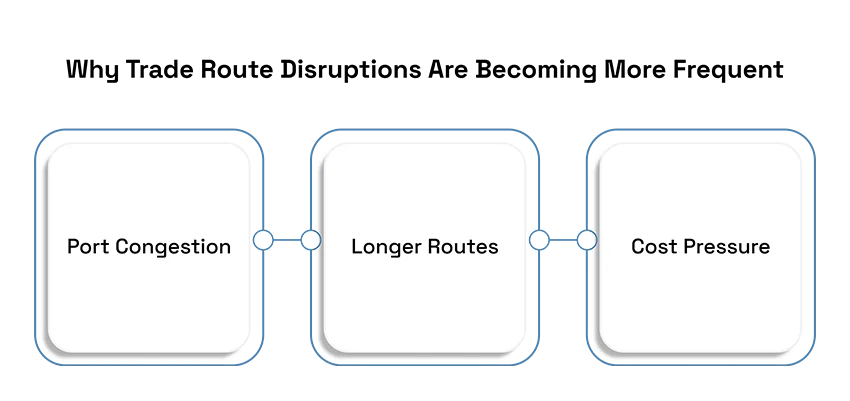
Why Trade Route Disruptions Are Becoming More Frequent
Global trade routes are facing a lot of problems. There are issues like geopolitical tensions and port congestion. We also have weather events and regional conflicts. There are not enough trucks and ships to move all the goods. When countries do not agree on trade it can cause a lot of trouble. Ships have to take routes and it takes longer to get the goods to where they need to go. Ports are very busy. This slows down the movement of goods all around the world. We are also having a lot of bad weather like hurricanes and floods. This is affecting the roads and bridges that goods travel on.
For companies involved in international imports and exports, particularly in the IT, aviation, medical, and automotive sectors, these problems can make things cost more slow down important deliveries and make it hard to get the things they need. This can also make it hard to know what is going on with their supplies. Because of this companies are trying to be better prepared for problems do business with people and watch out for risks so they can keep doing business even when things are not going well with international trade.
Diversification Strategies Strengthening Modern Supply Chains
Businesses are trying to make their supply chains stronger. They are doing this by getting things from places using different ways to transport things and working with many suppliers. Companies do not want to rely on one country or vendor. So they are getting things from countries. This way they are not affected much if there is a problem in one area. Many companies are also finding ways to move things around. This helps when the usual shipping routes are busy or slow. Some businesses are also working with suppliers that’re closer to them. This helps them get things faster and react quicker to what customers want. They are also storing products in key locations.
When you have inventory and order management these things help make the supply chain better and the business more flexible. As the world trade gets more complicated companies are trying to work with suppliers and use good international freight services to keep things running smoothly avoid problems and make sure goods keep moving across the world without any stops.
Trade Compliance as a Foundation for Supply Chain Resilience
Supply chain resilience is not about transportation networks and having many suppliers. It is also about doing trade compliance. Even if you have ways to get things and other routes to ship them mistakes in paperwork or problems with rules can cause expensive delays and mess up how your business runs. If you classify things correctly using the HS code and follow the Harmonized Tariff Schedule it helps get goods across borders smoothly. Using Incoterms like DAP helps buyers and sellers know what they are responsible, for. A lot of companies use Importer of Record Service and exporter of record services to handle rules and make sure they are doing everything in many different places.
Customs broker support is really important for getting things through customs and avoiding problems. Companies often wonder if a customs broker can handle the paperwork for both bringing things in and sending things out. The answer is that many experienced customs brokers can do that helping businesses keep things running smoothly. Customs brokers make sure all the paperwork is correct and that companies are following all the rules. This helps companies deal with issues and keep their supplies moving. By doing things and planning ahead organizations can keep their important supplies chains running efficiently. Customs broker support is crucial, for this.
Conclusion
Trade route problems are not something that happens sometimes. They are now a regular thing in the world we live in where everything is connected. Companies that make sure they get things from different places use tools to see what is going on follow all the rules for trading and have many ways to move things around are better able to deal with unexpected things and keep working normally. For industries such as IT, aviation, medical equipment, and automotive manufacturing, being able to handle problems is not about fixing things when they go wrong. It is about making supply chains that can change and get back to normal quickly.
By planning and using smart global trade solutions companies can lower risks, safeguard income and create a more stable base for lasting growth in a global market thats getting harder to navigate.
DID YOU KNOW
“To combat volatile bottlenecks at maritime choke points and shifting geopolitical borders, businesses are shifting from “just-in-time” to “just-in-case” models. ”
FAQs
How are companies diversifying their sourcing?
They are not just getting everything from one place anymore. Companies are now getting things from a few places and this is called dual sourcing. They are making things in different parts of the world.
How do companies balance “Just-in-Time” with “Just-in-Case” inventory?
The traditional Just-in-Time model helps to keep storage costs low by having inventory. To make their supply chain more resilient businesses are moving to a Just-in-Case approach.
What role does “Predictive Rerouting” play during a crisis?
Predictive rerouting uses intelligence to look at live weather how busy ports are and whats happening geopolitically. This helps to keep the supply chain moving smoothly.
How do businesses identify vulnerabilities in Tier 2 and Tier 3 suppliers?
Well businesses use software to track where their products come from beyond just the companies they buy from directly which are called Tier 1 suppliers. This software helps them see where their suppliers get their materials from which are the Tier 2 and Tier 3 suppliers.
How are businesses managing third-party risks?
Businesses are starting to hire experts who know about trade and geopolitics to help them plan for scenarios. They are also working closely with their Tier 2 and Tier 3 suppliers and making sure they have extra inventory of the raw materials that are most important to them.