Overview of Forward Stocking Locations (FSL):
A Forward Stocking Location (FSL) is a decisively positioned storeroom that permits organizations to keep their popular stock near clients or key functional center points. These areas assume an essential part in further developing store network productivity by decreasing conveyance times and guaranteeing quick access to crucial items. Especially in enterprises where time is basic, like IT hardware, clinical gadgets, and aeronautics, FSLs empower organizations to answer quickly to client needs and limit disturbances.
By situating stock in key geographic areas, organizations can improve administration levels, lower transportation costs, and smooth out the coordinated factors process. Whether it’s extra parts for upkeep or hardware expected for critical activities, FSLs are an essential tool for organizations meaning to stay serious in the present speedy market.
Importance of Efficient Inventory Management in Global Supply Chains:
In an increasingly globalized marketplace, organizations face the test of exploring complex import and commodity guidelines while guaranteeing their items arrive at clients productively. This is where administrations like Importer of Record (IOR), Exporter of Record (EOR), and DDP (Delivered Duty Paid) delivery services become vital. IOR and EOR administrations work with consistency with nearby regulations, guaranteeing smooth traditions and freedom and decreasing the dangers related to worldwide exchange.
By integrating FSLs with IOR and EOR services, businesses can not only optimize their inventory management but also ensure that goods are moved seamlessly across borders. DDP delivery services further improve this interaction by permitting organizations to deal with all delivery-related obligations, expenses, and customs costs forthright, giving clients a problem-free encounter. Together, these administrations engage worldwide stockpile chains to work all the more productively, decrease postponements, and keep costs unsurprising.
The Role of FSL in International Logistics
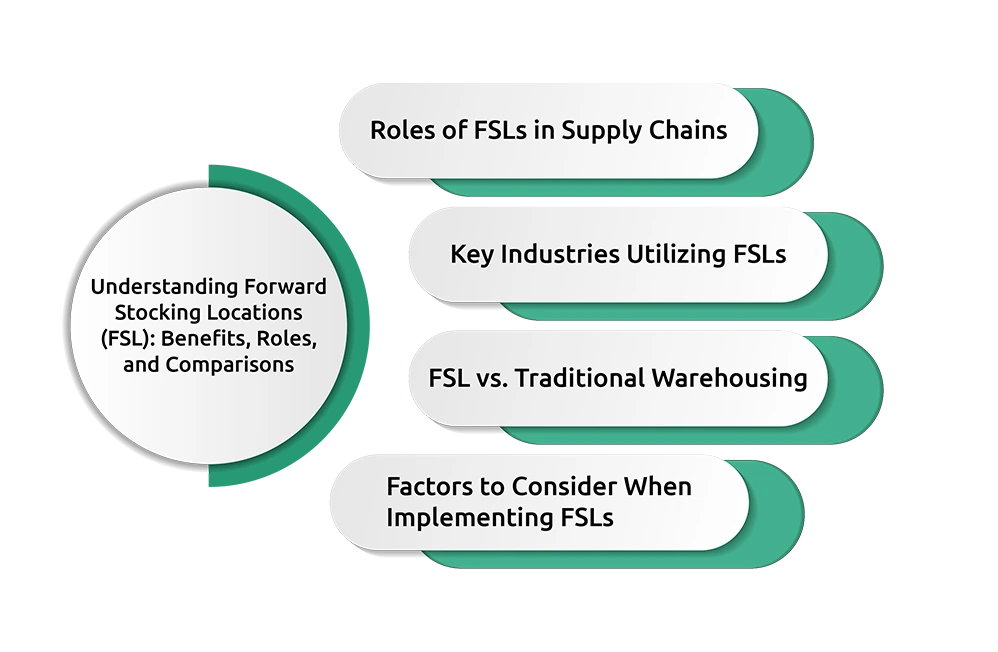
Optimizing Inventory with FSL: Forward Stocking Locations (FSLs) play an urgent part in enhancing stock administration for organizations working in global business sectors. By positioning stock closer to critical demand points, companies can reduce lead times and improve response times for customers. In industries like IT/Data Centers, Medical Equipment, Aviation, and the Automobile sector, where downtime can lead to significant financial losses or operational delays, FSLs provide an essential buffer by ensuring fast access to spare parts, replacement components, and essential products.
How FSLs Complement Importer of Record (IOR) Services: The integration of Forward Stocking Locations with Importer of Record (IOR) services is a strong blend for organizations overseeing worldwide stock. IOR administrations guarantee that products are imported in full consistence with the nearby traditions guidelines, including adherence to assessments, obligations, and import limitations.
Integration of Exporter of Record (EOR) with FSL: Forward Stocking Locations also complement Exporter of Record (EOR) services, making an effective structure for worldwide shipments. EOR administrations deal with the lawful obligation regarding sending out merchandise starting with one country and then onto the next, taking care of consistency with trade guidelines, and it is accurately handled to guarantee all documentation.
Benefits of Forward Stocking Locations (FSL)
Faster Delivery:
FSLs keep products closer to customers, so goods can be delivered faster, especially during urgent situations.
Lower Shipping Costs:
Businesses can save money by reducing long-distance shipping and emergency shipping costs.
Better Customer Support:
Products and spare parts can reach customers quickly, helping solve problems faster and improving service.
Easy Access to Inventory:
Important products are stored in key locations, making them available when needed and helping avoid stock shortages.
Less Downtime:
When spare parts are nearby, repairs can be done faster, helping equipment and business operations continue without major delays.
Industry Use Cases for FSL
IT and Data Center Equipment:
In the fast-paced IT and data center industries, uninterrupted operations are paramount. Forward Stocking Locations (FSLs) give an essential advantage by keeping principal tools, similar to servers, sorting out parts, and limiting contraptions, near client districts. With FSLs unequivocally arranged in key regions, IT expert centers can ensure speedy permission to urgent parts, restricting leisure time in the event of tools frustration or system redesigns.
Medical Equipment Sector:
The medical care industry depends on the opportune accessibility of basic clinical supplies and tools to guarantee patient consideration is rarely compromised. FSLs are crucial for clinical benefits providers as they consider the fast transport of key things like characteristic devices, cautious instruments, and clinical consumables. By arranging stock close to centers and clinical consideration workplaces, FSLs can answer quickly to sincere requests, diminishing lead times and ensuring that life-saving equipment is reliably reachable.
Automobile Sector:
The automotive industry relies upon the accessibility of extra parts to keep vehicles out and about and guarantee consumer loyalty. FSLs empower car organizations to stock crucial parts, for example, engine parts, tires, and electronic systems, near showrooms and fix focus. This limited methodology considers quicker fixes and upkeep, decreasing vehicle margin time and further developing client care.
Aviation Industry:
The aviation industry is intensely dependent on accuracy and timing, particularly concerning the accessibility of extra parts for airplane support. FSLs assume a fundamental part in guaranteeing that carriers and support suppliers approach basic parts like motors, landing stuff, flying, and other fundamental hardware. With FSLs decisively positioned close to air terminals and aeronautics centers, organizations can rapidly get the parts they need to perform routine upkeep or pressing fixes.
Conclusion
As worldwide stockpile chains become more complicated and organizations progressively request quicker, more dependable access to stock, Forward Stocking Locations (FSLs) will continue to play an urgent part. The mix of FSLs with Importer of Record (IOR), Exporter of Record (EOR), and DDP delivery services offers organizations a complete answer for smoothing out worldwide coordinated operations. This incorporation guarantees quicker conveyance times as well as ensures consistency with administrative requirements, limiting delays and dangers.
Did You Know?
The Port of Shanghai, one of the world’s most active ports, handles more than 43 million TEUs (twenty-foot equivalent units) every year, making it a critical center point for worldwide inventory chains, and a vital area for decisively setting Forward Loading Areas to improve imports and products.
FAQs
Why are Forward Stocking Locations important for time-critical deliveries?
FSLs enable faster response times by placing inventory closer to end users, reducing lead times and ensuring rapid fulfillment during urgent or unplanned demand.
How do FSLs help reduce logistics and operational costs?
By shortening transportation distances and minimizing emergency shipping, FSLs lower freight expenses, reduce downtime costs, and improve overall inventory efficiency.
Can FSLs improve service-level agreements (SLAs)?
Yes, FSLs help businesses meet strict SLAs by ensuring spare parts and critical equipment are readily available for same-day or next-day delivery.
How do FSLs support international trade compliance?
When combined with IOR and EOR services, FSLs ensure goods are pre-positioned in compliance with local regulations, reducing customs delays and simplifying cross-border movements.
How do FSLs enhance supply chain resilience?
FSLs act as buffer points during disruptions by maintaining localized stock, allowing businesses to continue operations even when global supply routes are impacted.