
The health sector in Africa is developing quickly, and medical equipment has become a major aspect of enhancing patient services and patient outcomes. The key to this transformation is diagnostic machines, surgical equipment, and monitoring equipment. To meet the increasing market of the continent, it must have credible import skills, effective freight forwarding, & advanced supply chain management. Such elements assure that the necessary equipment is delivered safely, timely, and regulated to the health facilities.
General Regulatory Environment
The African nations are improving their medical device regulations to provide quality and safety. The importation of complex medical machinery may require compliance with different local regulations, including the registration of the product with health jurisdictions and quality standards such as ISO 13485. Using South Africa as an example, strict licensing has been implemented by its regulatory body to regulate the quality of medical devices. Ethiopia needs performance and safety records of imported equipment. Close adherence to the customs paperwork, such as invoices and certificates, is essential to clearance on imports and saves unnecessary delays at high expense.

Managing Import Duties Across Regions
Import duties on healthcare equipment differ across African nations, influenced by trade agreements and customs policies. Many countries apply combined import duty and VAT rates of around 15-25%, with variations for used or refurbished equipment. For instance, newer devices might receive preferential duty treatment to encourage modernization.
Proper classification with harmonized system codes is highly important in the field; medical equipment usually has codes in chapter 90 of the HS code, though there are goods with specific codes that determine tariffs. Experts in importation suggest that licensed customs brokers are the best at handling the documentation and paying the duty without delays and fines at points.
Specialized Freight Forwarding Services
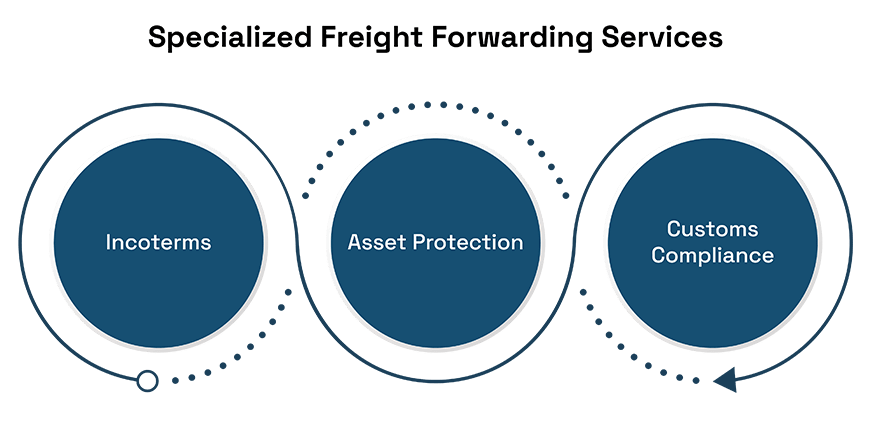
Medical equipment freight forwarding requires expert information to steer the intricacies of multimodal transportation and delicate cargo management. Air freight would frequently be utilized in the immediate delivery of diagnostic equipment, whereas ocean freight would be used in bulk surgical and hospital equipment deliveries.
Freight experts design logistics plans that comply with customs procedures while ensuring asset protection. Utilizing Incoterms like DDP shifts customs clearance responsibility to suppliers, which is favored by healthcare organizations for ease and certainty in receiving equipment.
Major Distribution Hubs in Africa
Africa has several regional hubs, which are vital points of healthcare equipment distribution. Nairobi and Johannesburg are the economic hubs in terms of their infrastructure and regulations regarding the distinctive development and diverse infrastructure. These hubs provide extensive supply networks in East and Southern Africa. It is also important in the Northern part of Africa, as Cairo facilitates the connection between equipment makers and healthcare provider by providing well-developed import-export processes. Companies often centralize these centers to provide fast regional delivery and technical support by locating warehousing and after-sales services in these locations.
Data-Backed Market Growth
Africa has a growing market for healthcare equipment. The projections indicate that the compound annual growth rate will be 8% until 2029 due to the spending on infrastructure and the rise in the accessibility of health services. The adoption of warehouse management systems is also expanding to address complex logistics needs that allow efficient inventory control & quick distribution. This growth underscores the need for quality logistics solutions to facilitate the safe & timely supply of critical healthcare technologies.
Warehouse Management Advancements
Warehouse management systems help to transform the healthcare equipment supply chain. Automation of the warehouse management system tracks the inventory, minimizes errors, and enhances the accuracy of orders. Its use will make it easier to comply with the rules of bonded warehouses and keep the items safe under customs supervision. With logistics being a challenging environment in Africa, a warehouse enables quicker release procedures and visible supply operations, vital in sensitive and high-cost medical equipment.
White Glove Delivery for Critical Equipment
White glove delivery offers premium care for delicate, high-value healthcare devices. This service includes tailored packaging, real-time shipment visibility, expert unloading, and on-site installation assistance. Such thorough handling minimizes transit damage risk and accelerates readiness for clinical use. White glove logistics builds confidence among healthcare provider by ensuring their equipment arrives intact, fully operational, and on schedule.
Conclusion
Healthcare equipment forms the foundation of Africa’s healthcare future. From compliance to logistics and delivery, every step ensures equipment can save lives and improve care. At One Union Solutions, we specialize in seamless import and freight forwarding solutions tailored to Africa’s unique needs. We guarantee your critical equipment arrives securely, supporting the continent’s medical progress.
Did You Know,
Africa’s medical device market is forecast to grow by over USD 2.5 billion by 2029, with rapid warehouse management system adoption to support rising healthcare infrastructure.
FAQ’s
What certifications are required to import healthcare equipment in Africa?
ISO 13485 and local authority approvals are typically mandatory before import clearance.
How do import duties affect medical equipment costs?
Duties vary but often add 15-25% on equipment value, emphasizing the need for accurate HS code classification.
What benefits does DDP Incoterm provide in healthcare equipment shipping?
DDP moves customs clearance responsibility to the seller, simplifying delivery for healthcare buyers.
Which cities serve as major hubs for medical equipment distribution in Africa?
Nairobi, Johannesburg, and Cairo are principal hubs supporting broad regional supply networks.
Why is white glove delivery important for healthcare equipment?
It ensures careful handling, protects fragile items, and supports installation at healthcare facilities.