
Know about Data Rights and Data Sovereignty
Data rights explain how individuals, organizations, and officials can collect, store, and share data. Data sovereignty, also referred to as the concept that data is related to the laws and governance systems of the country where it is processed. With the growth of artificial intelligence (AI), cloud computing, and cross-border data transfers, confirming agreement with international export regulations has become increasingly difficult. Similar to import export registration and customs clearance support in global trade, data sovereignty confirms that digital assets are tracked, governed, and handled responsibly.
Data Sovereignty in AI is Becoming More Important
AI systems are highly dependent on huge datasets, and these datasets frequently cross multiple borders. Governments are now treating data as a critical national resource, much like aviation or medical equipment. This trend resembles the use of HS codes and HTS harmonized tariff classifications in physical trade, where products must be carefully identified before crossing borders. Also, in digital ecosystems, data must be classified, protected, and transferred under agreed systems. As businesses expand globally, global trade facilitation is not only about moving goods through freight forwarding service or Delivered Duty Paid logistics, but also about managing the legal movement of information.
Countries Leading the Way in Data Rights through Data Sovereignty Policies
Many nations are building strong systems around data sovereignty. The European Union leads with its GDPR, setting a standard for others. Countries such as India, China, and Brazil are also pushing policies that restrict how foreign organizations process and store local data. These approaches resemble export register and export customs brokerage in traditional trade, confirming that, just like physical goods, data cannot freely move without proper authorization. Much like Incoterms define the responsibilities in logistics transactions, whether under DAP (Delivered at Place), DDP shipping (Delivery Duty Paid service), or DAPs agreements, data sovereignty laws define who is accountable for securing and managing information.
The Importance of Data Rights on Global Trade
Global trade is no longer limited to physical goods. Data has become an equally important commodity. For businesses engaged in comprehensive import-export support, importer of record services, or exporter of record services, data plays a critical role in agreements, market access, and customer trust. For example, organizations handling sensitive customer data across borders must guide different guidelines requirements, just as they do with tariffs, Incoterms, and logistics arrangements. Protecting data rights confirms smoother cross-border collaboration, grows trust in digital trade, and supports global supply chain services where both goods and information must flow compliantly.
Balancing Innovation and Data Privacy in the Digital Economy
The digital economy is quickly growing because of AI & new technology. At the same time, businesses must secure customer details & follow data privacy rules. Strong data security helps to avoid data misuse, increases customer trust, and supports safe online commerce. Companies should use secure systems, follow to local and international rules, and get just the data they require. Businesses may create new digital services while keeping information secure & following legal requirements in many countries by balancing AI innovation with data privacy.
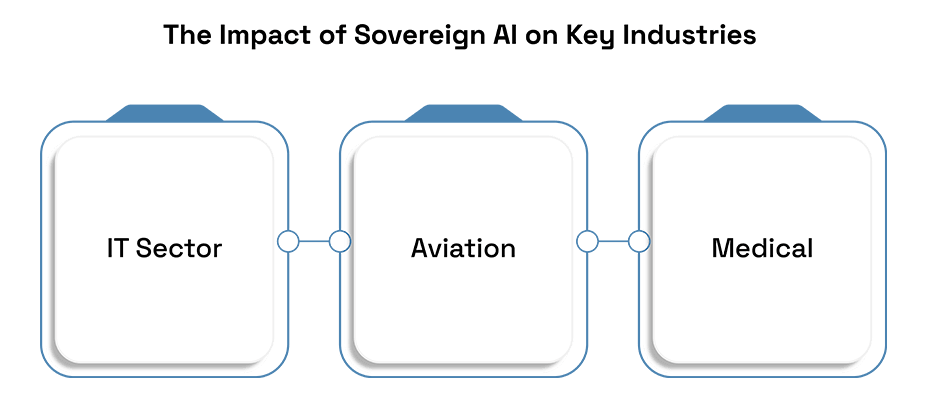
The Impact of Sovereign AI on Key Industries
AI-driven under sovereign rules will reshape industries in profound ways:
- IT Sector: Tech companies must design AI systems that follow multiple regional data sovereignty rules. Similar to import export business procedures, IT providers must adjust operations to local approval structures.
- Aviation: Airlines depend massively on AI for predictive maintenance, passenger data management, and scheduling. Just as they depend on freight forwarding services for cargo, they now need a strong system for handling sensitive travel data under sovereign AI guidelines.
- Medical equipment: Healthcare industry providers use AI for diagnostics and patient management. Sovereign AI confirms that sensitive health data does not leave a country without proper permissions and customs clearance support in regulated trade.
- Automotive: Connected and autonomous vehicles depend on live AI-driven data. Managing these datasets is like handling physical components under global supply chain services with strong oversight on agreements and security.
Conclusions
Data rights and data sovereignty are no longer optional; they are a critical part of an AI-driven, hyper-connected economy. As trade has always depended on rules such as the generalized system of preferences, Incoterms, and delivery duty paid service, the digital economy requires similar principles for information. For businesses, aligning strategies with sovereign AI is as important as securing DDP shipping solutions, importer of record services, or export customs brokerage in traditional trade. By respecting these developing digital regulations, organizations can confirm agreement, build trust, and facilitate growth in a future where both goods and data move across borders with equal importance.
DID YOU KNOW?
The manufacturing sector remains a major target, accounting for half of ransomware victims and 57% of cyberattacks in North America.
FAQs:
Q1. What are data rights and data sovereignty?
Data rights define how data can be collected, stored, and shared, while data sovereignty ensures that data follows the laws of the country where it is processed.
Q2. Why is data sovereignty important for AI?
AI systems depend on large datasets that cross borders. Data sovereignty ensures these datasets are classified, secured, and transferred under regional compliance rules.
Q3. Which countries are leading in data sovereignty policies?
The EU leads with GDPR, while India, China, and Brazil are also enforcing strict rules to regulate how foreign companies process local data.
Q4. How do data rights affect global trade?
Just like tariffs, HS codes, and Incoterms regulate goods, data rights regulate cross-border digital information flow, enabling secure and compliant global trade.
Q5. What industries are most affected by sovereign AI?
Industries like IT, aviation, medical equipment, and automotive heavily rely on AI-driven systems. Sovereign AI ensures sensitive data in these sectors stays compliant with local laws.