The Evolution of Global Trade in the Aviation Sector
Aviation has revolutionized the transportation of high-value equipment across borders. Air freight links production centers to the world market at a faster rate than any other means. Globalization has also transformed airports into the largest distribution centers for industrial, medical, and technological products.
Over time, international air transport trends have evolved beyond passenger mobility. Now, airports serve as strategic trade centers for critical components, including aviation systems, IT gear, automobile modules, and medical machinery. The enhanced use of digital documentation, freight tracking, and warehousing systems has made air cargo a pillar in global trade.
The aviation markets worldwide also see an increasing role for integrated supply chains to ensure sustained innovation. The aviation industry is facilitated by automation, high-level volumetric weight computation, and a rapid customs clearance system.
Key Aspects Influencing Global Trade Dynamics in Aviation
Modern technology and data management drive the transformation of the trade. Freight forwarding services offer live tracking, ensuring predictability in port-to-port deliveries. Electronic Data Interchange – EDI – facilitates seamless communication between airports and customs systems, thereby reducing the time spent on paperwork. Aviation trade agreements have now made it easy to take routes and minimized obstacles in the transportation of equipment across borders. The policies align with advancements in DDP shipping, which grants total control over tariff payments, import duties, and deliveries.
Supply chain management practices, paired with warehousing solutions, maintain flow control even during demand surges. Digital freight forwarding tools also calculate volumetric weight accurately, providing transparent cost assessment before flight departure.

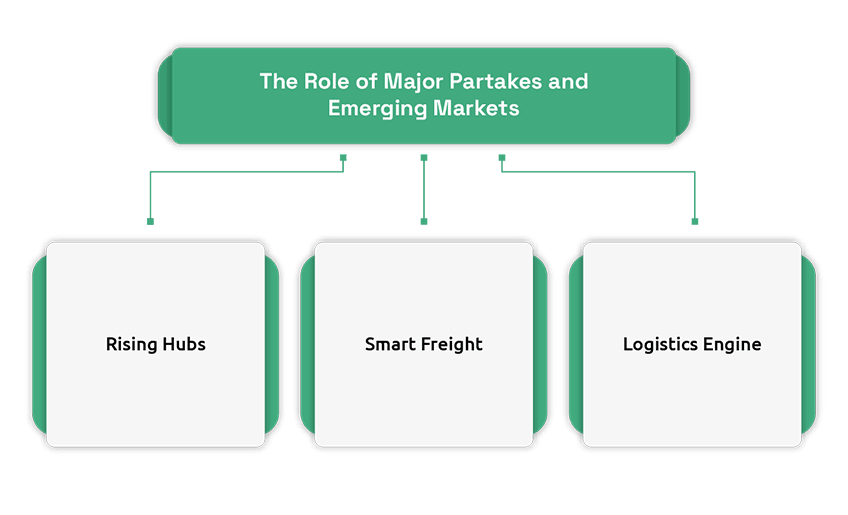
The Role of Major Partakes and Emerging Markets
Major airports act as anchors in the global logistics grid. Asia and the Middle East have become rising trade hubs, supporting an increasing share of international equipment freight volume. These emerging aviation markets benefit from expanded cargo capacity and upgraded infrastructure designed for automation and tracking.
Aircraft manufacturers and logistics administrators drive continuous optimization through strategic collaborations and route planning. Each cargo forwarder plays an instrumental role in moving sensitive loads, whether aviation equipment or data center materials, using monitored freight forwarding and warehousing technologies.
Impact of Geopolitical Factors & Economic Policies
Air cargo movement can be strongly affected by geopolitical factors. Sanctions, tariffs, and changing bilateral agreements determine trade routes and prices. The business of dealing with such volatility requires the knowledge of the DDP incoterms and IOR-EOR coordination to prevent the expensive delays.
Shifts in international policies have compelled airports to implement more accommodating logistics frameworks. Electronic customs clearance minimizes the risks associated with sanctions by building on transparency and documented compliance. The economic policies that have encouraged infrastructure investment continue to reinforce aviation networks globally through the creation of resilient gateways for the importation and exportation of regulated equipment.
Sustainability and Environmental Considerations in Air Trade
Sustainability has become a defining force in the aviation trade. The shift toward green initiatives and carbon offset programs reflects global commitment to cleaner logistics. Freight operations are adopting sustainable aviation fuel – SAF – in international shipping routes to reduce emissions.
Airports are also adopting energy-saving warehousing facilities and environmentally friendly packaging to comply with international regulations governing environmental protection in the aviation industry. DDP shipping agreements now include considerations for lower fuel consumption during port-to-port transfer, blending environmental accountability with trade practice.
Innovation in freight forwarding service also allows better load optimization, reducing volumetric waste and minimizing aircraft carbon output without compromising delivery precision.
The Growth and Innovation Opportunities
More automation, load balancing with AIs, and smart warehouse implementation will be used in the global aviation trade. Digital freight forwarding technology will continue to enhance the precision of its volumetric weight calculator software to ensure price transparency.
Investing in new cargo terminals and warehousing infrastructure at the airport will promote quick customs clearance and low operational expenses. IOR and EOR designs will be advanced to the next stage, enabling remote authentication through digital compliance tools.
Technology hubs, in collaboration with freight transport teams, will enhance connectivity between continents. With air freight transportation growing in both the medical and technology industries, innovation has become the key to ensuring both speed and safety.
Conclusion
The world aviation trade is constantly developing with the help of innovation, compliance, and smart logistics. With the restructuring of cross-border connectivity, efficiency, and sustainability in response to advanced airports and automated freight networks, each shipment requires accuracy. The movement of sensitive aviation, IT, automotive, and medical equipment to any part of the world now takes the form of digital IOR-EOR management, integrated warehousing, white glove handling, and DDP shipping.
At One Union Solutions, we integrate all these abilities into a single seamless operation – ensuring that all equipment is delivered to its destination on time, safely, and in compliance with various conditions. Our global air freight business offers real-time visibility and organized trade compliance, enabling businesses to conduct transactions across borders. The purpose of our business is to streamline, expedite, and make aviation logistics worldwide more reliable in a connected world.
Did You Know,
More than 65% of critical shipments of equipment in the aviation and healthcare sectors are now transported by air freight. The high-EDI tracking equipment has also enabled the customs department at airports to reduce the time taken to less than 48 hours, facilitating quicker delivery of goods across continents.
FAQ’s
What is DDP shipping in international aviation trade?
DDP shipping assures that when shipping goods, payment of duties, taxes, and custom clearance has already been done, port-to-port flow of goods is easy.
What is an Importer of Record in air freight delivery?
An Importer of record is in charge of ensuring compliance, documentation and legal liability in the import process.
What is the benefit of a freight forwarding service in the delivery of equipment around the globe?
It takes care of air cargo, documentation, and clearance of customs making it efficient and prompt shipment.
What is the importance of a volumetric weight calculator?
It assists in the calculation of volumetric weight to estimate freight costs so that there are no overcharges made on light gear.
What is the role of warehousing in the global air freight logistics?
Managing inventory, the ability to track freight in real-time, and dispatch coordination are all managed by a warehouse management system to keep the freight accurate.