Insight
Exporting IT equipment today requires a complete understanding of the physical movement of goods and the complex legal and logistical framework that supports it. We’ll explore the essential segments the exporter must navigate to succeed, from grasping export controls and classifications to partnering with a reliable freight forwarder and warehousing services. Here, we focus on dual-use IT equipment, which demands careful attention due to its sensitive nature and strict regulatory oversight. The following blog will walk us through the key compliance requirements, logistics solutions, and market insights that shape effective export strategies.
Assuring Compliance with Export Controls
The EU has strict regulations on dual-use IT equipment exports because they may be used in military and civilian uses. Encryption systems, hi-tech processors, and secure computer assemblies are subject to these controls. HS codes should be harmonized to allow exporter to classify controlled goods appropriately to establish a correct identification of controlled goods by customs authorities. Export licenses depend on the type of product and the country to which it is being sold, and export activities are to be registered by the concerned authorities with the accompanying Importer-Exporter Code (IEC). By using the services of an Importer of Record, the workload of completing customs documentation and duties is reduced, avoiding the wastage of time and fines. Keeping up with changes in legislation is an important aspect of compliance.
Optimization of Freight Forwarding and Logistics
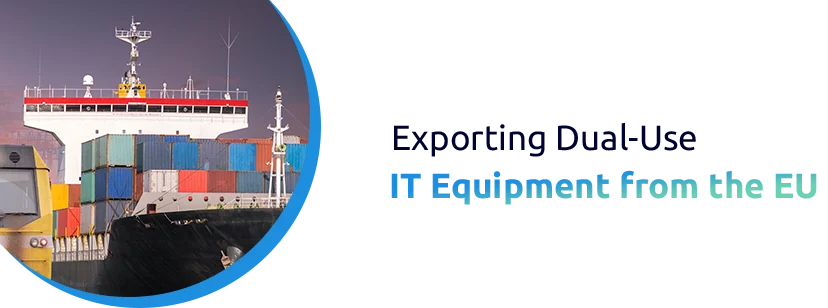
The logistics of fragile and expensive IT equipment require special freight forwarding knowledge. Freight forwarder handle shipments by air, sea, and land in an accurate way that ensures safe and timely delivery. Incoterms such as Delivery Duty Paid (DDP) leave the seller with the responsibility of clearing and paying customs duties to the government, and allow the buyer to receive equipment without any hassle and deploy it. Warehousing, cargo handling, and customs brokerage are also managed by Freight Forwarder, thus limiting transit risks and maximizing the flow of logistics that are necessary in sensitive IT shipments.
Major export hubs of IT equipment in Europe
Europe also has some strategic centers where IT equipment is exported. Being one of the world’s leaders in technology, London has the power of a strong data center ecosystem and an environment conducive to innovation. Amsterdam has a strategic location to the markets in Northern Europe in terms of IT, and it has an excellent freight infrastructure. Berlin is home to a strong hardware and IoT ecosystem and has great capacity to innovate. Munich boasts of industrial IT and B2B solutions strength, having the advantage of established logistics networks and government subsidies. These cities are important in promoting efficient export and supply chain management of IT goods.
Getting familiar with the Export licensing complexity
The Export Control Classification Number (ECCN) is the main guiding factor in licensing the export of IT products because it evaluates products by their technical difficulty and security traits. Legal export is done by proper licensing in accordance with regulatory guidelines of departments such as the Directorate General of Foreign Trade (DGFT) & the avoidance of shipment blockage or fines. Awareness and use of such licenses must help ensure smooth supply chains and meet international regulatory standards.
Exploring the Warehouse Management Systems
The Warehouse Management Systems (WMS) can empower exporter to have close control over stocks, readiness to ship, and accuracy of orders. WMS helps to use bonded warehouses, which meet the customs requirements, by utilizing automation of inventory tracking and effective logistics of warehouse storage. The WMS and transportation management integration boosts supply chain visibility and minimizes handling errors, which is critical in protecting the costly and delicate IT equipment.
Role of White Glove Services in IT Equipment Shipping
White glove logistics can take delicate IT equipment handling services to the next level with personalized packaging, real-time tracking, and on-site services. Such a special service prevents the risks of injury or tardiness and speeds up the business preparation when deliveries are received. It gives hope to its customers who do not just want it to be delivered, but to be assured of the quality and functionality of their IT hardware.
Market Insights on IT Equipment Exports
The European Union has been at the forefront in exporting high-level information technology hardware, and the dual-use exportation exceeds 57.3 billion euros annually. Trade agreements provide tariff cuts to many goods, but sensitive IT equipment usually faces stringent duties and controls, which can be attributed to its strategic value. Exporter rely on bonded warehouses and customs broker to remain competitive to simplify intercountry logistics, and ensure compliance.
Conclusion
Exporting IT equipment needs balancing compliance, logistics, and supply chain management. The road to successful exports has many crucial steps, including obtaining the necessary licensing, registering the classifications properly, and taking advantage of competent freight forwarding and warehousing services. One Union Solutions specializes in end-to-end export solutions to IT equipment. Our international presence, extensive regulatory know-how, and logistics experience guarantee that your shipments will pass through customs on the first attempt and reach their destinations safely and on time. Offering services like white glove delivery, we promise to protect and handle your goods carefully as you build on your international presence with ease.
Did You Know,
More than 70% of IT and data center equipment exports from the EU require dual-use export licenses, highlighting the sector’s strict regulatory environment.
FAQ’s
What is the purpose of HS codes in IT exports?
They classify products worldwide, determining applicable customs duties and export controls.
How does the DDP Incoterm benefit exporter and buyers?
It makes the seller responsible for customs clearance and duties, simplifying delivery for buyers.
What advantages do Importer of Record services provide?
IORs manage compliance, handle duties, and ensure smooth cross-border shipment documentation.
Are export licenses needed for all high-tech IT products?
Dual-use IT goods require export licenses to meet EU security standards.
How do freight forwarder assist with IT equipment exports?
They coordinate transport, manage customs processes, and physically safeguard shipments.