Insight
Japan has developed digital infrastructure. The increasing market need for network routers makes it a favorable business destination. Nevertheless, stringent regulatory conditions and the customs process in importing network routers into Japan are challenging. This guide outlines the procedure for such obstacles, emphasizing the advantages of hiring an Importer of Record (IOR) service to simplify the process.
Common Challenges When Importing Network Routers into Japan
Importing network routers into Japan includes several regulatory and working challenges. Businesses must manage approval standards, customs documentation, & product classification accurately to avoid delays. Differences in technical standards & custom compliance rules can create complexities for overseas companies. Proper planning & expert support help minimize risks & make sure smoother market entry.
Japan’s Regulatory Landscape for Network Routers
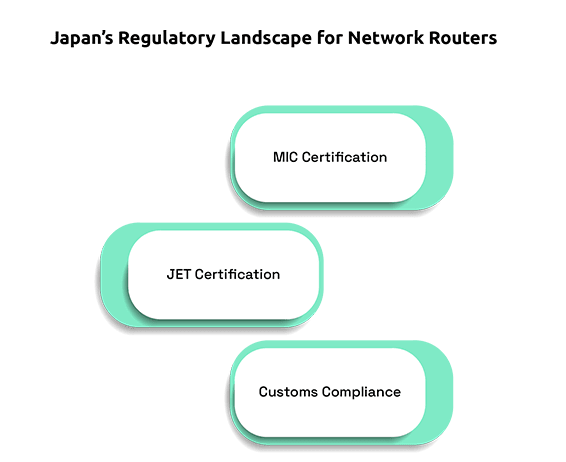
The importation of network routers into Japan must comply with many regulatory authorities. It includes the Ministry of Internal Affairs & Communication/MIC, the Japan Customs, and the Japan Electrical Safety & Environment Technology Laboratories/JET. All of these agencies have some requirements that could ensure network routers can meet Japan’s high safety, technical, & environmental standards.
1. MIC Certification: Telecommunications equipment, such as network routers, should meet Japan’s Radio Law and Telecommunications Business Law. It involves the acquisition of Technical Conformity Certification, which is the certification of the routers to the technical standards in Japan.
2. JET Certification: Electrical Appliance and Material Safety Law (DENAN), managed by JET, requires safety certifications on electrical appliances and materials in Japan, which make them meet the strict safety standards of Japan.
3. Customs Compliance: Another regulation is that the importer should also follow the rules of Japan Customs, which requires proper documentation of their goods in the form of invoices, packing lists, and certificates of origin. Another area in which importer have to put their goods in the right place according to the Harmonized System (HS) code is to pay the duties and tariffs applicable in the country.
The Role of an Importer of Record (IOR) Service
| Aspect | How an IOR Service Simplifies the Process |
| Regulatory Compliance | Ensures all necessary certifications (MIC, JET) are obtained. Local expertise helps navigate Japan’s complicated certification processes. |
| Documentation Management | Prepares all documents & verifies that they are accurate and complete to prevent delays in customs. It includes handling HS codes, invoices, packing lists, & certificates of origin. |
| Local Representation | It represents you officially in Japan, meeting the legal demands of the country and communicating with the regulatory authorities. |
| Customs Clearance | Manages customs procedures, ensures that goods are classified well, taxes are paid, and any problems are resolved promptly. |
| Cost and Time Efficiency | Outsourcing compliance and documentation services saves time and resources, and gains access to the market more quickly. |
Choosing the Right IOR Service Provider
Some important considerations can be made when choosing an Importer of Record service provider. First, make sure that the provider is experienced and knowledgeable in importing network routers and other telecommunications equipment to Japan because it is an international business that requires expert knowledge to navigate the regulatory environment. Also, ensure that you research the provider’s reputation by looking at their clients’ testimonials and case studies to check their record in terms of successful imports.
There is also a need to ensure that the IOR provides a wide range of services, including work with customs clearance and managing documents and their local representation. It is essential to have a local presence in Japan, which will help establish effective discussions with regulatory bodies and ensure that the IOR will be able to address the local needs efficiently. Lastly, find a provider with open pricing so that you do not get any hidden charges, which means you know the price structure in advance and can more easily budget and plan the import process.
Case Study: Successful Import of Network Routers with an IOR Service
To demonstrate the value of using an IOR service, consider a case where a global network equipment manufacturer faced difficulties navigating Japan’s complex regulatory environment. The company had to obtain MIC and JET certifications and ensure compliance with Japan Customs.
By partnering with an experienced IOR service provider, the company was able to:
Obtain Certifications: The IOR managed the certification process, ensuring all MIC and JET requirements were met.
Simplify Customs Clearance: The IOR also took care of the documentation of all customs and the customs process; this reduced delays and guaranteed the appropriate classification and collection of duties in due time.
Encourage Local Representation: The IOR served as an official representative in Japan, where all legal requirements were met.
Speed to Market: The company hosted the Japanese market much quicker, which gave it a competitive edge in the technology industry.
Cost and Time Saving: Outsourcing the import process to the IOR saved the company some vital resources that enabled the company to concentrate on marketing and sales.
Conclusion
The importation of network routers into Japan is a complex process because of strict regulations by the country and complicated customs practices. But with the help of the Importer of Record service, businesses can easily overcome these hurdles. IOR service can simplify compliance, control documentation, and create a seamless customs clearance system so businesses can focus on their main company operations and grow quickly in the Japanese markets. Collaborating with One Union Solutions in IOR service may ease the process, reduce risks, keep up with compliance, and allow businesses to thrive in one of the most technologically developed markets in the world.
Did You Know,
The Japanese market is ranked as the third-largest IT market globally, and networking equipment is one of the most requested markets in Japan. According to the Japan Customs, the telecommunications equipment (network routers) has increased by 8% each year, indicating the growing demand for sophisticated networking equipment.
FAQ’s
What factors should businesses check before importing network routers into Japan?
Businesses should verify product details, HS code classification, customs documentation, & local regulatory requirements before shipping. Proper preparation helps avoid delays & supports smooth import clearance in Japan.
Do I need an IOR service for importing network routers into Japan?
Yes, it makes the process easier by taking care of regulatory compliance, documentation, and the routine of managing the customs process, which can save you time and minimize the risk.
What are the main certifications required to import network routers into Japan?
Network routers must comply with the MIC Technical Conformity Certification and the JET certification under Japan’s Electrical Appliance and Material Safety Law.
How does using an IOR help with customs clearance?
An IOR manages the customs clearance process, ensuring that goods are classified correctly, duties are paid, and any issues are promptly addressed, preventing delays.
Can an IOR service help with the import process for other equipment types?
Yes, an IOR service can assist with importing a variety of goods, including telecommunications equipment, electronic systems, and other regulated products, ensuring full compliance with local laws.