The Shift Toward Digital Trade Documentation
The world of trade is changing really fast. It is going digital because businesses want to find ways to deal with international shipments. They want these shipments to be faster and safer. Traditional paper-based Certificates of Origin often create delays due to manual approvals, physical verification processes, and documentation errors. In today’s fast-moving import export environment, companies dealing with automotive parts, IT equipment, aviation components, and medical devices require secure trade documentation systems that can support quicker customs processing and improved operational visibility. As international trade volumes keep getting bigger, businesses are using documentation more and more. This helps to cut down on paperwork. It also makes communication easier. Helps with digital trade compliance in many different areas. Businesses are using electronic documentation to deal with this.
The move to Certificates of Origin is happening because governments and customs officials want to make things easier. They are doing this because of problems with import and export. Governments and customs people want to stop using paper for trade. They want to make things clear and simple. This will help reduce the amount of work they have to do. Electronic Certificates of Origin are a part of this, and digital certification systems are really helpful because they help reduce the risk of fraud and people messing with documents. They also make it easier for exporters, importers, freight providers, and customs officials to work together. Digital certification systems and electronic Certificates of Origin are going to be crucial in this area.
What Are Electronic Certificates of Origin and Why Do They Matter?
Electronic Certificates of Origin, which are also called eCOs, are documents that are used for trade. These documents are digital, so they are on computers. They are used to say where the goods that are being exported come from. The old way was a hassle because the papers had to be stamped, sent by courier, and checked by hand. Electronic Certificates of Origin are better because they are done on computer systems. These systems are connected to the people who do trade, like the chambers of commerce and the customs authorities. This digital workflow is really helpful for businesses. It helps them reduce paperwork, which is a big deal. The digital workflow also helps businesses get through Customs clearance faster. It helps minimize mistakes with paperwork when they are importing and exporting things.
In industries such as automotive, IT, aviation, and medical equipment, where shipment timelines are critical, electronic documentation supports faster approvals and smoother cross-border movement. Additionally, eCO systems can integrate with HS code classification tools, HTS harmonized tariff Schedule databases, and modern trade compliance software, helping businesses improve accuracy in import export documentation while preparing for future technologies like blockchain-enabled trade verification.
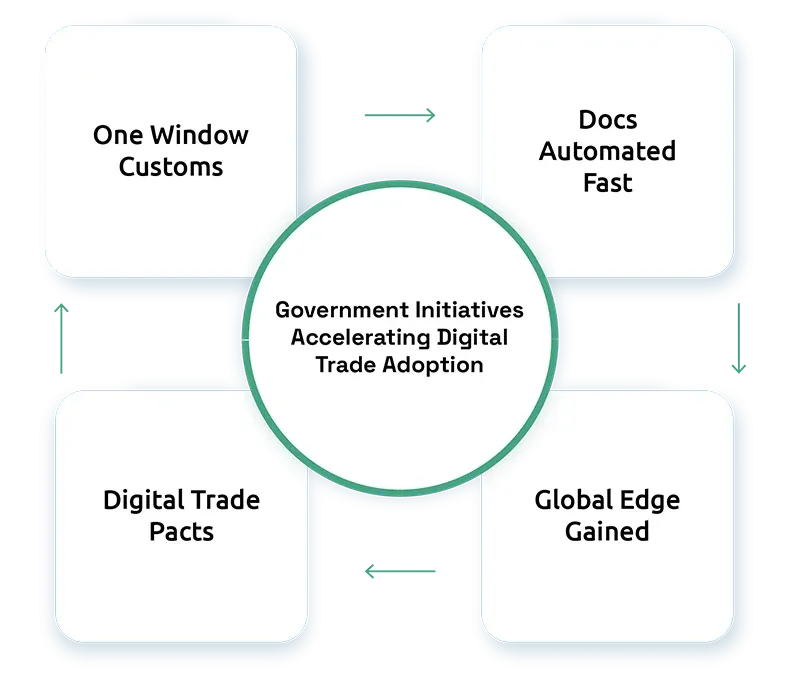
Government Initiatives Accelerating Digital Trade Adoption
Governments and customs authorities worldwide are actively promoting electronic Certificates of Origin as part of broader trade modernization efforts. Many countries are putting money into systems that let people do all their customs work in one place. They are also using computers to fill out customs forms. This makes it easier for people to buy and sell things across borders. It also helps get things done faster.
This change is really helping companies that do freight services get their shipments done faster and with more clarity. They are also making sure they follow the rules better. At the time, companies that use Importer of record Service and Exporter of record services are seeing that their paperwork is getting easier to handle, and they have less administrative work to do. As the whole world of trade becomes more digital, automating customs and updating regulations are becoming very important for making trade stronger and keeping supply chains safe. International freight services are getting better because of this.
The Future of Smart and Paperless Global Trade
The future of trade is changing really fast. Global trade is moving toward using computers and the internet for all its paperwork. This means global trade will use systems that are connected and do not use paper. These digital systems are made possible by digital technologies. Time customs connectivity is a big help to people who import and export things. It lets them share information about their shipments away. This means they can get approvals faster. Everything is more open in industries like automotive, aviation, IT, and medical equipment, where they have to work. They also need to follow all the regulations. Real-time customs connectivity and electronic trade documentation are really important for importers and exporters.
When we talk about import export rules, we need to think about the trade compliance software. This software helps us with our inventory and the orders we get. It also helps us make our supply chain better and move goods across borders in a way. Companies that use trade technologies will be ready for changes in rules and will be able to do things more efficiently. They will also be able to build global supply chains that can handle problems. This is about import export rules and how we can use the best trade compliance software to make our work easier.
The Future of Trade Is Digital
Electronic Certificates of Origin are becoming really important for trade. They help businesses get rid of paper-based systems. They allow for more secure and transparent international operations. As the IT, aviation, medical equipment, and automotive industries grow globally, digital trade documents help clear Customs. This reduces risks. Improves supply chain management. Electronic certification makes operations more efficient. It also helps trade stay strong during disruptions and regulatory changes.
Businesses that use digital documentation systems now will be ready for what’s coming in international commerce. They should work with people who know a lot about Importer of Record Service, exporter of record services, International freight services, and global trade compliance requirements. This way, companies can make cross-border operations easier. Keep them accurate, fast, and reliable even when the supply chains are complicated. Businesses that do this will be better at the Importer of Record Service and the Exporter of Record services. They will be good at International freight services too.
DID YOU KNOW
“Electronic Certificates of Origin (eCOs) are transforming global trade by replacing slow, paper-based processes with secure digital verification.”
FAQS
1. Are Electronic Certificates of Origin accepted by all countries?
While many countries are adopting this method and groups like the World Customs Organization and the International Chamber of Commerce are promoting it, its use really depends on the trade agreements between countries.
2. How much does an e-COO cost?
The cost of something like this usually depends on where you’re from in the local Chamber of Commerce. It also matters if the document is preferential or non-preferential. The electronic certificate usually costs between $25 to $50. This is a lot less than the paper certificate.
3. Can I still submit a paper Certificate of Origin?
In many jurisdictions, the answer is no. Major exporting hubs have strictly mandated digital submissions.
4. How do customs authorities verify e-COs?
Instead of manually inspecting physical stamps, foreign customs officers verify e-COs in seconds using unique certificate numbers and QR codes.
5. Where can I learn more about the rules and regulations?
Standards and regulations are continually updated to keep pace with digital origin statements. For a deep dive into the standards and global perspectives on paperless trade, you can review the World Trade Organization and visit the International Chamber of Commerce for comprehensive information