Electronic Certificates of Origin are digital versions of traditional trade documents that verify the national source of transported goods. They are upgrading global trade by cutting processing times by up to 80%, reducing operational costs, controlling fraud, & enabling seamless, paperless verification across global customs borders.
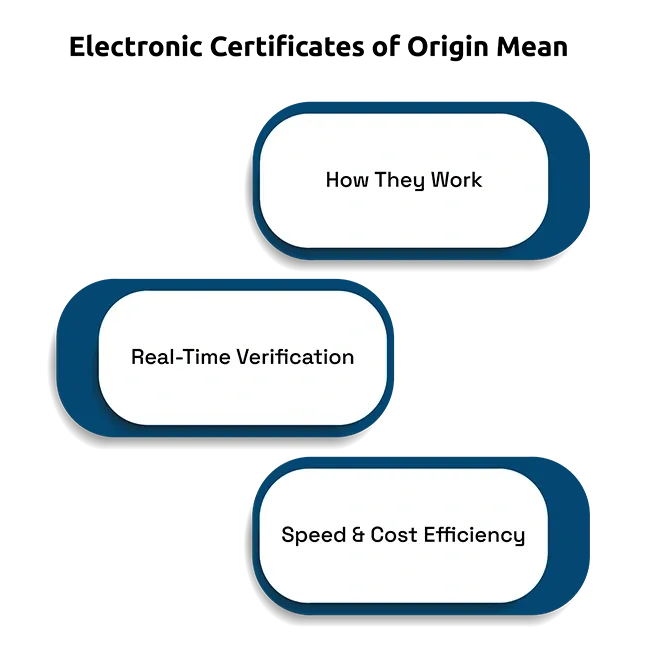
Electronic Certificates of Origin Mean
Electronic Certificates of Origin are digitally updated, mainly connecting trade documents that certify the country where export goods were produced or processed. Customs authorities & banks use them to verify shipment validity & classify applicable tariffs or free trade agreement (FTA) benefits.
eCOs replace traditional, paper-based certificates & offer some important advantages & features for global trade:
How They Work: Exporters enter their shipment data online through authorized portals. The certifying body reviews the application digitally & issues the approved certificate with electronic seals & signatures.
Real-Time Verification: Customs officials and banks can verify the authenticity of an eCO via an online portal or a unique certificate tracking number, which helps minimize document alteration & fraud.
Speed & Cost Efficiency: They reduce the need for courier fees & in-person visits to government offices, & minimize processing times from days to mere hours.
Importance of Certificates of Origin in Global Trade
The COO plays a useful role in global trade by giving detailed information about the product’s origin & its destination. Customs authorities in the importing country, depending on the COO, determine if the product is usable for import, and if any duties need to be applied. It ensures compliance with trade regulations, avoids delays at customs, & helps exporters qualify for duty development.
If you’re exporting goods to a country with which your home country has a free trade agreement, the special COO allows you to minimize import tariffs. Without this document, the importer may have to pay higher tariffs, which can make your product less competitive in the market.

Who issues a Certificate of Origin?
A Certificate of Origin is an important document that is used for the origin of goods being transported from a country. This certificate is mainly issued by the Indian Chamber of Commerce or the Trade Promotion Council of India. It certifies that the products being exported are either mainly produced or managed in India, which is useful for both the exporter & the importing country.
This document helps ensure easy trade by verifying the origin of goods, which may affect customs duties, tariffs, or even trade agreements between countries. Millions of COOs are issued globally to facilitate global trade.
The Certificate of Origin works as one of the main documents in global trade to confirm where goods are made. It plays an important role in proving the origanity & origin of the goods, helping exporters deal with legal & trade regulations worldwide.
Types of Certificates of Origin
There are two main categories of Certificates of Origin: preferential & non-preferential.
1. Preferential Certificate of Origin
This type of COO is used when an exporter wants to take advantage of minimizing tariffs or other trade benefits under many trade agreements. These agreements allow some products to be imported with lower or zero tariffs, but only if the products start from a country that has a trade agreement with the importing country.
2. Non-Preferential Certificate of Origin
The important COO, a non-preferential COO, does not give any tariff benefits. It mainly certifies the origin of the goods. This certification may still be needed by customs in the importing country to ensure the goods meet local regulations or trade rules.
How to Collect a Certificate of Origin?
1. Regular Basis COO
Exporters who regularly ship goods, they may apply for a COO on a long-term basis. When applying for a regular COO, the exporter is required to submit an indemnity bond on stamp paper along with other needed documentation.
2. Individual Shipments COO
For one-time or occasional shipments, exporters can apply for a COO on a shipment-by-shipment basis. In this case, the indemnity bond is typically submitted on stamp paper.
Exporters need to add some copies of the completed COO application, the invoice for the shipment, & a cover letter to the authorized agency. A fee is also charged for issuing the COO, which usually handles many copies of the document. For example, while certifying eight copies of a COO typically while certifying eight copies of an invoice costs around.
Conclusion
Electronic Certificates of Origin mainly make global trade faster, simpler, & more secure. By changing paper documents with digital systems, businesses & customs authorities can minimize delays, lower costs, improve accuracy, & speed up cross-border trade processes. Technologies such as AI, blockchain, & cloud platforms are mainly improving the efficiency & security of trade documentation. Challenges like cybersecurity risks, system difficulties, & limited digital network still exist; the adoption of electronic trade documents is expected to grow rapidly. As more countries move toward paperless trade systems, Electronic Certificates of Origin will play an important role in the future of global trade & supply chain management.
Did you know?
On 30 April 2026, a bilateral technical meeting of the working group on the implementation of the provisions of the Agreement between the Government of the Republic of Tajikistan and the Government of the Republic of Uzbekistan on the mutual application of electronic systems for the certification of origin of goods was held in Tashkent.
FAQs
1. What is an Electronic Certificate of Origin (eCO)?
An Electronic Certificate of Origin (eCO) is a digital trade document that confirms the country where goods were manufactured or produced. It is used in international trade for customs clearance and trade agreement compliance.
2. How do Electronic Certificates of Origin improve global trade?
eCOs help speed up document processing, reduce paperwork, lower administrative costs, and improve accuracy in international trade transactions.
3. What technologies support Electronic Certificates of Origin?
Technologies such as blockchain, artificial intelligence (AI), cloud computing, and digital signature systems help improve the security, verification, and automation of eCO platforms.
4. What are the benefits of using eCOs instead of paper certificates?
Electronic Certificates of Origin provide faster approvals, easier verification, reduced human errors, better transparency, and environmentally friendly paperless trade operations.
5. What challenges affect the adoption of Electronic Certificates of Origin?
Some common challenges include cybersecurity concerns, a lack of global standardization, interoperability issues between systems, and limited digital infrastructure in some countries.