
Overview
The aviation industry is increasingly driven by data. From real-time aircraft monitoring to predictive maintenance analytics, the ability to collect, process, and transfer data across borders has become essential. However, in 2026, data sovereignty laws are significantly reshaping how this information is managed, stored, and shared globally.
Data sovereignty refers to the concept that data is subject to the laws and governance structures of the country in which it is collected or stored. For aviation companies, this creates new challenges, especially when aircraft operate across multiple jurisdictions. These regulations are not only impacting airlines but also influencing IT systems, maintenance operations, and cross-border aviation workflows.
For import-export businesses working across IT, aviation, medical, and automotive industries, understanding these changes is critical. The intersection of data compliance and global operations is now a defining factor in maintaining efficiency and avoiding regulatory risks.
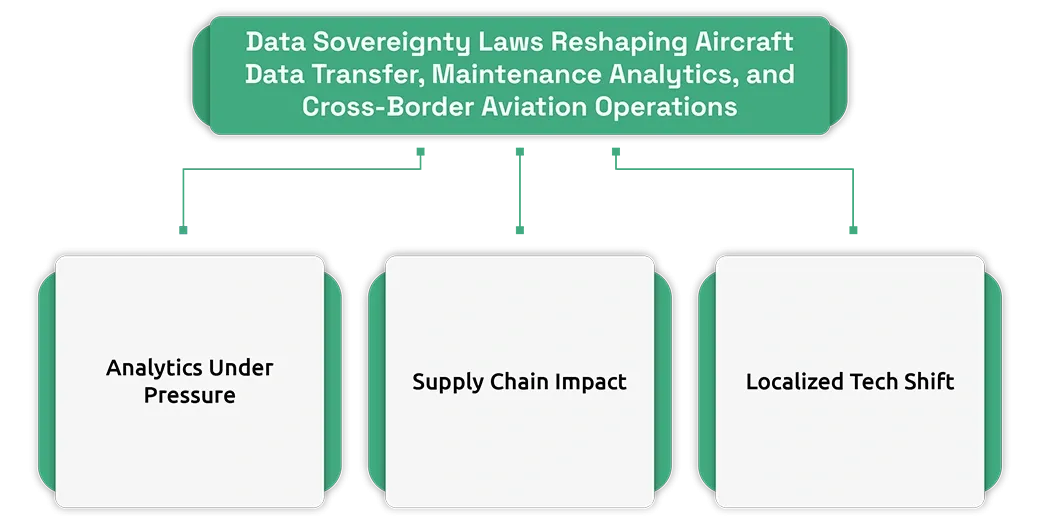
Data Sovereignty Laws Reshaping Aircraft Data Transfer, Maintenance Analytics, and Cross-Border Aviation Operations
Data sovereignty laws are directly affecting how aircraft data is transferred between countries. Modern aircraft generate massive volumes of data, including engine performance metrics, flight data, and maintenance records. Traditionally, this data would be transmitted to centralized systems, often located in different regions. The government has made rules that say some kinds of information have to stay inside the country. This information can only be looked at. Used if it is done in a very careful way. The new rules are about types of data that have to follow these rules so that the information is safe. These types of data have to stay inside the country or be processed under conditions.
This shift is transforming maintenance analytics. Predictive maintenance relies heavily on centralized data processing and advanced algorithms. With data localization requirements, companies must adapt by deploying regional data centers or adopting hybrid cloud solutions. This ensures compliance while maintaining operational efficiency.
Cybersecurity and data privacy are really important now. Governments are making sure to keep an eye on things to protect sensitive aviation data, from people who should not be looking at it. So businesses are putting money into systems to keep data safe and using advanced encryption technologies to lock everything up tight. Cybersecurity and data privacy are a deal and businesses are taking steps to make sure they are doing everything right to keep aviation data private.
Cross-border aviation operations are getting really complicated because of these rules. Airlines and the people who help them have to deal with data laws in different places and that can affect how flights run, when things get fixed and how teams from- different countries work together. This is also a problem for the people who supply things to the aviation industry, like the ones who move airplane parts and computer systems around. Cross-border aviation operations are getting harder to manage every day.
Digital transformation in aviation is changing because of these laws. Companies are looking at their computer systems to make sure they follow the rules. They still want to use the information they get from data to make decisions. To do this companies are using computers that process data in the area and they are using special computers that can do work on their own. They are also using programs that work with data in specific regions. Digital transformation in aviation is really about using data to make decisions and companies are doing this by using localized data processing and other new technologies.
Navigating Compliance and Operational Efficiency in a Data-Driven Aviation Ecosystem
One of the biggest challenges for businesses is balancing regulatory compliance with operational efficiency. Data sovereignty laws often require companies to store and process data within specific regions, which can lead to increased costs and operational complexity.
To deal with this problem organizations are coming up with data strategies that’re specific to certain regions. They are doing things like setting up places to store data locally and making sure that the ways they move data around are okay, with the rules that countries have. Organizations need to have data strategies in place and these data strategies must be followed by everyone.
The thing that is also very important is combining analytics with the rules we have to follow. Analytics for maintenance has to keep giving us the information at the right time even when the data is spread out in many different places. To do this we need systems that can handle the data in a way and we need all the different platforms, in different regions to work together smoothly. Advanced analytics has to work with the rules we have to follow so we can make sure everything is done correctly.
For industries such as medical equipment and automotive, which also rely heavily on cross-border data flows, these challenges are equally relevant. This is why people are coming up with ideas and using new technologies to do this. The medical equipment and automotive industries are looking for ways to handle data that’s both secure and compliant.
Moreover businesses are working on creating systems. These systems can adjust to rules and regulations. They do this by keeping an eye on new laws ,they update their processes to match and companies can reduce problems.
They can stay ahead of others, in the market.

Conclusion
The aviation industry is really changing because of data sovereignty laws. These laws are affecting how aircraft data is transferred and used for maintenance. They are also changing how airlines work with countries. This is a challenge but it also means that companies can find new ways to do things and keep data safe. Data sovereignty laws are making the aviation industry think about data security, in a way.
For import-export businesses operating across IT, aviation, medical, and automotive sectors, staying ahead of these changes is essential. If these import-export businesses put money into getting the systems for handling data and use the latest technology and make sure everything they do follows the rules then they can do well in a world that is always changing.
The world of aviation is always changing. Managing information in a way is very important, for the future of airlines and airports and all the people who work with them. The ability to manage data across borders will play a big role in the future of the aviation industry. Managing data is something that the aviation industry needs to do.
DID YOU KNOW
“The data sovereignty controls for airport cloud market size have grown rapidly in recent years. It will grow from $1.65 billion in 2025 to $1.9 billion in 2026 at a compound annual growth rate (CAGR) of 15.1%.”
FAQs
- What are data sovereignty laws in aviation?
They are regulations that require aircraft and operational data to be stored, processed, or managed within specific national jurisdictions. - How do these laws affect aircraft data transfer?
They restrict how and where data can be shared across borders, often requiring localized storage or controlled transfer mechanisms. - What is the impact on maintenance analytics?
Data localization can limit centralized analytics, pushing companies to adopt regional or hybrid data processing systems. - Why are data sovereignty laws important for cross-border aviation operations?
They ensure data security and compliance but also add complexity to international coordination and operations.
5. How can businesses adapt to these regulations?
By investing in secure IT infrastructure, adopting regional data strategies, and staying updated with evolving compliance requirement