The Shift Toward Alternative Trade Routes in an Uncertain World
Global trade networks are having a tough time because of all the problems between countries. This changes import export and the materials are usually shipped. There are problems in waterways like the Red Sea and the Strait of Hormuz. Shipping companies and global trade networks are dealing with these problems. This is making it very hard for businesses that need to move things from one country to another. Global trade networks need to find ways to do things because of all the problems. There are a lot of restrictions on trade. Global trade networks are also dealing with sanctions and security concerns. This is making it necessary for shipping companies and Global trade networks to think about routes.
To make things better companies are trying to be more flexible when it comes to shipping. They are using different routes and ways to get things from one place to another. They are also using different distribution networks to make sure things keep moving even when there are problems in the world. Route diversification is very important, for route diversification and shipping strategies. Companies are using route diversification to make their shipping strategies better.
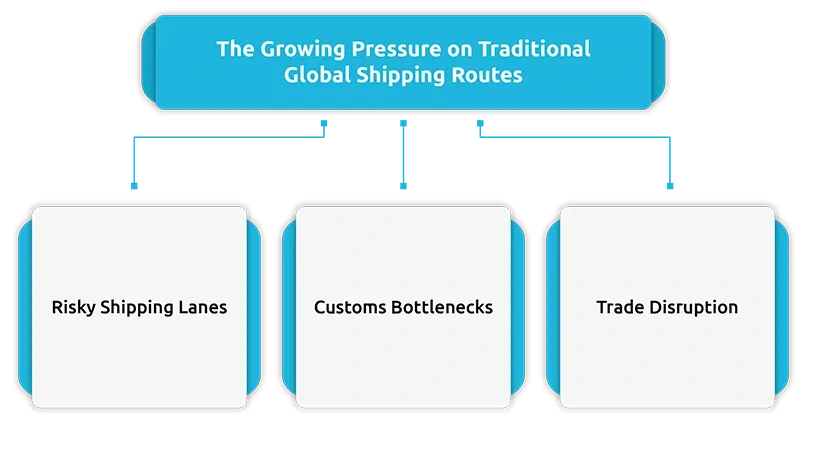
The Growing Pressure on Traditional Global Shipping Routes
The way we ship things is getting harder because of problems between countries fights in areas and changes in trade rules. This is changing the way the whole world does business. There are a lot of worries about safety on the water in important shipping lanes and this is a big risk for companies that move goods. Also ports are getting very crowded. This is causing a lot of delays. It is taking longer to get things from one place to another. It is hard to know when they will arrive. There are also a lot of rules that companies have to follow, like sanctions and export controls. This is making it hard for businesses to know what to do.
Companies are focusing on getting customs clearance to work quickly. They are also looking at using ways to transport goods and trying to prepare for potential problems. This helps them to move goods across borders without any issues. Efficient customs clearance, diversified transportation and proactive risk management are becoming key for organizations. They want to keep their operations going.
Alternative Trade Corridors Driving Supply Chain Resilience
Companies are trying to find ways to import export around. They want to make sure they can still get the things they need. Some shipping companies are sending their ships around the Cape of Good Hope. They do not want to go through the Red Sea because it’s not safe. At the time manufacturers are trying to make things closer to home. They are doing this so they do not have to rely on people who’re very far away. This way they can still get the things they need even if there are problems with the shipping routes.
New trade routes are being made between Asia, the Middle East and Europe at this time. This is a deal for companies because they now have more options for sending goods around the world. These new trade routes are really helpful. This helps to avoid delays. Makes sure deliveries are on time. The new trade routes are important for industries such as IT, aviation, medical equipment and automotive manufacturing. These industries need the new trade routes to manage problems and keep products in stock.
Industry-Specific Strategies for Maintaining Supply Chain Continuity
As the world gets more unstable global trade routes are changing. This affects industries that need to move high-value goods. The IT and Data Centre industry needs to get servers, networking equipment and critical infrastructure on time. They rely on delivery schedules that work like clockwork. Automotive manufacturers are now getting parts from places and using different transportation routes. The aviation sector needs aircraft parts and maintenance equipment to keep moving all the time. Automotive manufacturers are trying places to get the things they need and new ways to transport them so that they can keep making things without stopping. The aviation industry really needs aircraft parts and maintenance equipment to be moved around.
Companies are also using services that help them follow the rules when shipping things across borders. These services are called Importer of Record Service and exporter of record services. All these things help companies keep their supply chain running smoothly when things get really crazy with global trade. The medical equipment sector really needs this because it has to keep going no what.

Strengthening Trade Resilience Through Smart Planning and Compliance
Global trade is getting affected by things that are happening in the world. So companies are trying to make their supply chains stronger. They are doing this by working with different suppliers finding alternative ways to move goods and using new technology to keep an eye on things that could go wrong. Companies do not want to depend on one place to get the things they need. They do not want to use one route to transport their goods either. So they are getting the things they need from different places. This way they can still keep working even if something goes wrong in one of those places. It is also very important for companies to follow all the rules when they are importing and exporting goods. They have to make sure they are classifying their products correctly using the codes. They have to follow the rules that are set by the Harmonized Tariff Schedule when they need to. This is all part of managing trade and supply chains properly.
The Future of Global Trade Depends on Supply Chain Resilience
As countries around the world keep having problems with each other businesses can’t just use the old ways of shipping goods and making transportation decisions based on cost. The focus is now on making supply chains strong and able to adjust to problems, new rules and changes in the market. Companies need to think and make their transportation networks more diverse. They should look into routes for shipping goods.
For industries like IT, aviation, medical equipment and automotive manufacturing it is really important to think about resilience. These industries need to keep going no what problems they face. They have to handle whatever comes their way. Industries, like these need to be strong to keep growing. Being strong is crucial for industries to keep producing things and shipping goods and industries require strength so goods can be transported worldwide without issues or delays. Industries need to be resilient to keep making goods and moving them around the world.
DID YOU KNOW
“Connecting China to Europe via Central Asia, the Caspian Sea, and Türkiye. Supported by multi-billion dollar infrastructure injections, it acts as a lifeline avoiding the unpredictable Northern Corridor through Russia and shortens traditional maritime transit times.”
FAQs
1. How much time and cost does the Cape of Good Hope detour add?
Rerouting around the Cape of Good Hope adds 10 to 14 days to a typical Asia to Europe voyage. This is compared to taking the Suez Canal which is a shortcut. The extra time is because you have to go all the way around Africas Cape of Good Hope.
2. Can overland pipelines fully replace maritime chokepoints like the Strait of Hormuz?
No pipelines cannot fully replace sea routes. While there are alternative routes, such as Saudi Arabias East-West Pipeline.
3. What multimodal (sea-rail-land) alternatives are being utilized?
The Middle Corridor: A rail and sea network that goes through Central Asia and the Caspian Sea to connect China to Europe without going through Russia.
The UAE-Saudi Land Bridge: A land route that uses the Etihad Rail network and truck routes to move goods from ports on the Gulf of Oman to Saudi Arabia.
Sea-Air Hubs: A mix of sea and air transport where goods are shipped by ocean to safe hubs, like Dubai or Singapore and then flown to their final destination to save time.
4. Are standard cargo insurance policies covering these high-risk alternative routes?
The insurance that we usually get for cargo on the water does not cover us if there is a war.
5. Will the routes that ships take go back to the way they were before like the route through the Red Sea?
It is not clear if things will go back to the way they were. Some big shipping companies, like A.P. Moller-Maersk and CMA CGM are slowly starting to use the Suez Canal but many companies are still using a mix of different routes.