The international logistics industry is transforming as businesses face pressure to reduce transportation costs, improve speed of delivery, & cover growing supply chain difficulties. Past freight negotiation processes mainly depend on manual communication, late pricing updates, & divided market data, making it difficult for shippers & carriers to respond quickly to transportation conditions. As freight rates remain due to capacity shortages, geopolitical frauds, & converting customer demand, companies are turning to Artificial Intelligence to operate & automate logistics operations. AI-powered freight negotiation is used as a game-changing solution that enables real-time pricing analysis, automated carrier selection, predictive decision-making, & autonomous contract negotiations. By using machine learning, predictive analytics, & intelligent automation, businesses can make faster, smarter, & more easy logistics networks capable of adapting to changing market conditions.
What Is AI-Powered Freight Negotiation?
AI-powered freight negotiation uses artificial intelligence & machine learning to automate & use the process of safe shipping rates & terms with carriers. It replaces manual, spreadsheet-based methods with real-time market data analysis, enabling companies to benchmark rates, predict capacity, & negotiate better freight prices, often minimizing costs by 5-10%. AI-powered freight negotiation works by analyzing historical shipping data against real-time market benchmarks to identify the best opportunities to save on freight rates.
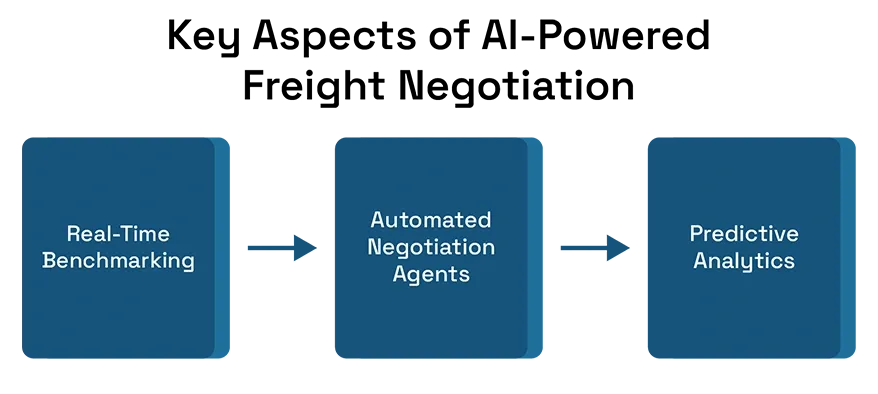
Key Aspects of AI-Powered Freight Negotiation:
Real-Time Benchmarking: AI systems mainly compare carrier quotes against millions of data points to ensure the rate is complete, often keeping spot rates within 5% of the price.
Automated Negotiation Agents: AI agents communicate directly with carriers, negotiating discounts & managing difficult logistics networks, allowing brokers to manage 35–50 loads per week instead of the usual 15–20.
Predictive Analytics: Algorithms forecast market instability, lane density, & carrier capacity, helping shippers secure positive contracts, even when the market is developing.
Data-Driven Strategy: AI creates dynamic profiles for carriers based on performance, usability, & past negotiation outcomes, giving use in contract negotiations.
Benefits of AI-Powered Freight Negotiation in Autonomous Logistics
Faster Quote Cycles
AI-powered freight negotiation mainly minimizes the time needed to make & compare freight quotes by automating pricing analysis & carrier communication. Past freight negotiations often take hours or even days due to manual coordination between shippers, brokers, & carriers. With AI-driven systems, businesses can analyze real-time market rates, judge carrier availability, & make usable quotes within seconds. This faster decision-making process helps companies respond mainly to transforming logistics demands & secure transportation capacity more easily.
Reduced Costs
One of the biggest advantages of AI-powered freight negotiation is its ability to minimize transportation expenses through intelligent pricing. AI systems mainly monitor freight market trends, identify pricing variations, detect overcharges, & negotiate better spot rates automatically. An AI platform can reduce a $1,000 per-load shipping rate by nearly 7% across 200 annual loads, resulting in significant long-term cost savings. By improving pricing correction & selecting the most cost-effective shipping options, businesses can use logistics spending while maintaining service quality.
Increased Efficiency
AI automation improves logistics tasks such as freight pricing, contract evaluation, carrier selection, shipment scheduling, & rate comparisons. This minimizes manual workloads & allows logistics teams to focus on more strategic activities, with supply chain planning, customer relationships, & long-term carrier partnerships. By minimizing human action in routine processes, companies can improve operational output, reduce errors, & advance whole logistics performance.
Proactive Risk Management
AI-powered freight negotiation also improves supply chain strength through proactive risk management. Intelligent systems mainly analyze real-time data related to weather conditions, port blockage, route issues, & shipment delays. When main risks are found, AI can automatically reroute shipments, adjust delivery schedules, & discoused transportation options before issues arise. This real-time visibility enables businesses to manage logistics operations more easily, reduce delays, & enhance supply chain usability.
Challenges in AI Adoption in Logistics
AI adoption in logistics is difficult because most logistics networks were not built for connected, real-time, AI-driven decision-making. The biggest issues are data quality, system fragmentation, integration difficulties, & change management.
Data integration & system compatibility issues
Data linking & system compatibility issues remain one of the biggest risks to effective AI adoption in logistics because AI depends on stable, connected, & easy data across systems. Most logistics environments work with many platforms like warehouse management systems, transport management systems, & enterprise resource planning. Each store & updates data differently while often defining the same metrics in unstable ways.
High implementation & transition complexity
AI implementation in logistics develops both systems & managing behavior. A company buys AI-enabled software, but value only comes when workflows, roles, KPIs, & decision rights change with it.
Transition difficulties are also great because logistics operations do not pause for transformation. Warehouses must keep transporting, carriers must keep moving, & customer commitments must still be met while new systems are introduced. This makes phased adoption important.

Conclusion
AI-powered freight discussion is changing the logistics industry by replacing slow, manual processes with intelligent, data-driven automation. By using real-time market verification, predictive analytics, & autonomous reduction skills, businesses can use freight pricing, improve operational usability, minimize transportation costs, & respond faster to developing supply chain conditions. These AI-driven systems are helping logistics providers & shippers build quicker, easier, & more usable transportation networks for covering growing market issues.
Did you know?
By 2030, automation will reshape how logistics companies plan and move freight, especially as major ports adopt fully automated crane and yard systems that speed up container unloading and improve schedule reliability.
FAQ
1. What is AI-powered freight negotiation?
AI-powered freight negotiation uses artificial intelligence and machine learning to automate freight pricing, carrier communication, and contract negotiations. It helps businesses secure better shipping rates and improve logistics efficiency.
2. How does AI improve freight negotiation?
AI analyzes real-time market data, carrier availability, historical shipping trends, and pricing benchmarks to negotiate optimized freight rates faster and more accurately than manual processes.
3. What are the main benefits of AI-powered freight negotiation?
Key benefits include faster quote generation, reduced transportation costs, improved operational efficiency, real-time decision-making, and proactive risk management.
4. Can AI-powered freight negotiation reduce logistics costs?
Yes, AI systems can identify pricing inconsistencies, detect overcharges, and negotiate better spot rates, helping companies significantly reduce freight and transportation expenses.
5. What technologies are used in AI-powered freight negotiation?
Technologies commonly used include machine learning, predictive analytics, Natural Language Processing (NLP), real-time tracking systems, and autonomous AI agents.