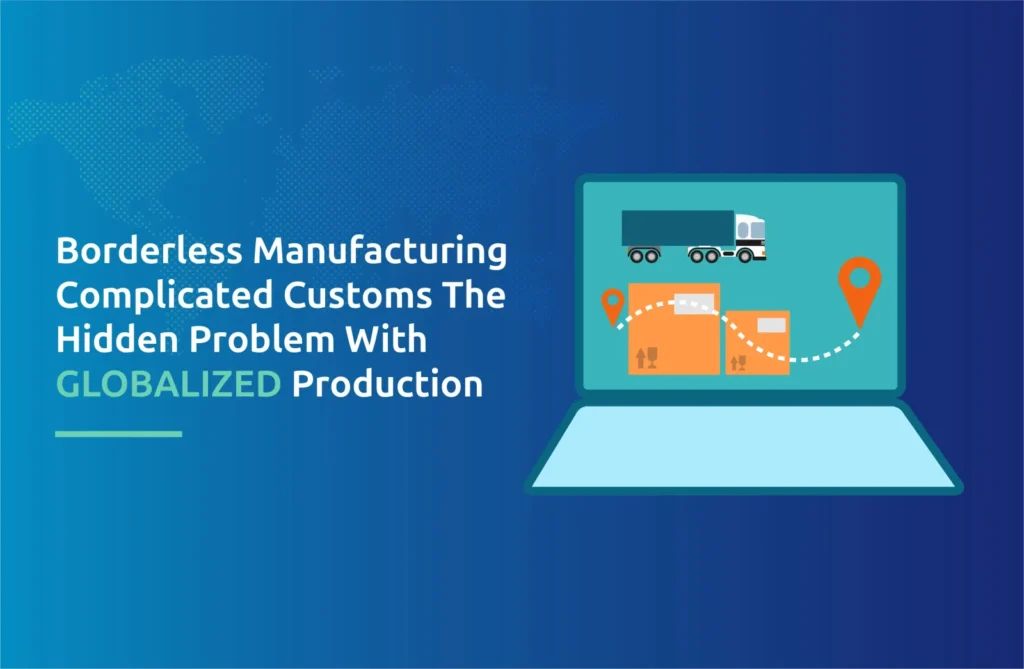
Manufacturing is no longer confined to a single nation. A product may be manufactured in the US, assembled in Vietnam, packaged in another nation, and then distributed to consumers in several countries using parts from Germany and Japan. Businesses can reduce expenses, have access to specialist suppliers, and provide speedier service to clients around the world by using this international manufacturing model. However, there is a hidden challenge behind this mainly borderless development model: customs compliance becomes more difficult as production becomes more complex.
Why Global Production Creates Customs Complexity
Traditional manufacturing often involved a relatively simple supply chain. Raw materials entered a factory, products were manufactured, & finished goods were exported from the same country. Updated manufacturing can look very different.
A company may source electronic components from multiple countries, send them to a contract manufacturer for assembly, ship finished products to a regional distribution center, & then export them to some markets. Each stage can affect the customs treatment of the goods. The country where a product is assembled is not always automatically its country of origin. Customs authorities may consider where the product underwent its last substantial transformation. The answer can depend on the product, applicable trade agreements, & the specific rules of the importing country.
Country of Origin Is More Complicated Than It Looks
Country of origin affects more than the label placed on a product. A product containing components from some countries may need a detailed origin analysis before it is imported.
Knowing where the final assembly took place might not be sufficient for companies that operate internationally. Businesses may require precise information at various stages on value added, component sourcing, and manufacturing processes. Businesses may experience problems, shipment delays, customs reassessments, or loss of favorable tariff treatment if origin information is inaccurate.
HS Classification Becomes a Major Challenge
International manufacturing also creates difficulties around HS classification. The Harmonized System provides a common framework for classifying traded goods, but determining the correct HS code can still be difficult. Updated products often combine hardware, software, electronics, mechanical components, communication capabilities, & other technologies.
Consider a modern industrial device. Is it mainly a computer, a communication device, a measuring instrument, or another type of machine? The answer can affect the applicable tariff classification, duty rate, regulatory requirements, and documentation. The challenge becomes even greater when similar products are manufactured in different configurations for different markets. Incorrect classification can result in overpayment of duties or, more seriously, customs compliance problems.
Customs Valuation Can Become Difficult Too
Customs authorities mainly need to determine the value of imported goods for duty & tax purposes. Global production structures can make this process complicated. A multinational company may purchase components from related companies, pay licensing fees, use contract manufacturers, or transfer goods between subsidiaries.
The price shown on an invoice may therefore not always tell the complete story. Businesses may need to consider whether assistance, royalties, commissions, tooling costs, or other elements should be included in customs value. This is mainly important for multinational organizations that regularly move goods between related entities.
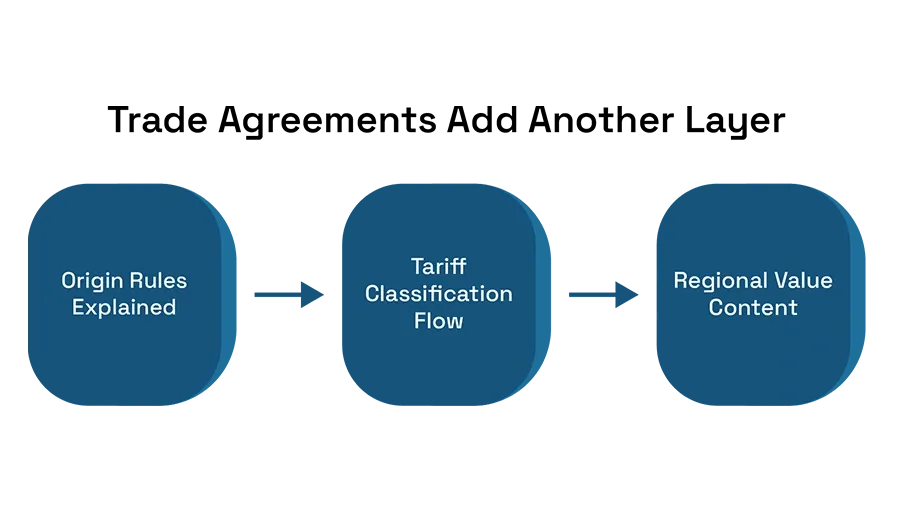
Trade Agreements Add Another Layer
Globalized production can create opportunities through free trade agreements, but those opportunities come with rules. A product manufactured using components from some countries may qualify for preferential treatment only if it satisfies specific origin need.
Depending on the agreement, businesses may need to meet rules involving tariff classification changes, regional value content, processing requirements, or other conditions. This means companies cannot assume that a product qualifies for minimum tariffs simply because it was assembled in a country that has a trade agreement with the destination market. Proper documentation & origin analysis are useful.
Regulatory Compliance Does Not Stop at Customs
The primary step in the import process is customs clearance. Additionally, products may be subject to regulations pertaining to chemicals, batteries, medical devices, environmental standards, labeling, telecommunications, safety, and other areas. A local regulatory body may need to approve the import of telecom equipment. Rules pertaining to recycling or the environment may apply to electronic products. Separate certifications or registrations may be required for medical equipment. This establishes a crucial link between product conformity and customs compliance.
A shipment can have a correct commercial invoice & HS code but still be delayed because the required product approval is missing.
Supply Chain Visibility Is Becoming Essential
One of the biggest problems with globalized production is that customs teams may not have complete visibility into the supply chain.
Procurement teams may know where components were purchased. Manufacturing teams may know where assembly occurred. Logistics teams may know the shipping route. Finance teams may control invoices & payments.
But customs compliance often needs information from all of these areas. Businesses can minimize this risk by creating a centralized product information system.
Technology Can Help Simplify Global Customs
Technology is mainly being used to handle the complexity created by global manufacturing. Automated classification tools can help identify potential HS codes. Trade management platforms can monitor regulatory needs. Digital documentation systems can minimize manual errors. Supply chain visibility platforms can connect manufacturing, logistics, & customs data.
Artificial intelligence may also help companies identify inconsistencies in product descriptions, classification, valuation, & origin information before shipments reach the border. However, technology should support, not replace, proper customs expertise & regulatory review.

Conclusion
Globalized manufacturing may make production appear borderless, but customs borders have not disappeared. As products move through increasingly difficult global supply chains, companies must handle origin, classification, valuation, documentation, trade agreements, & product regulations together.
The businesses that succeed in this environment will not simply build efficient manufacturing networks. They will build customs-aware supply chains where compliance is considered from product design & sourcing through manufacturing, transportation, import clearance, & final delivery. In a truly global manufacturing environment, customs should not be treated as the final checkpoint. It should be part of the supply chain strategy from the beginning.
Did you know?
A product made using components from several countries may not simply be considered “made” in the country where final assembly takes place. Customs authorities use rules of origin to determine where goods originate, and these rules can affect tariffs, trade preferences, quotas, and other import requirements.
FAQ
1. Why does globalized manufacturing make customs more complicated?
Globalized manufacturing involves multiple suppliers, countries, production stages, and shipping routes. Each cross-border movement may require accurate information about product origin, HS classification, customs value, duties, taxes, and regulatory requirements.
2. Does the country of final assembly determine the country of origin?
Not always. The country of origin can depend on where the product undergoes its last substantial transformation and the specific rules applied by the importing country. Businesses should review applicable rules of origin before making origin claims.
3. Why is HS classification important for global manufacturing?
HS classification determines how goods are identified for customs purposes and can affect applicable duties, taxes, trade measures, and regulatory requirements. Incorrect classification can lead to delays, additional costs, or customs compliance issues.
4. How can companies manage customs valuation in international manufacturing?
Companies should maintain accurate records of invoices, related-party transactions, royalties, tooling costs, assists, and other relevant costs. These records can help support the declared customs value and reduce valuation-related risks.
5. Can free trade agreements reduce customs duties for globally manufactured products?
Potentially, but eligibility depends on the specific agreement and its rules of origin. A product assembled in a member country does not automatically qualify for preferential tariffs. Businesses may need to demonstrate that the product meets the agreement’s origin requirements.