Why the Red Sea Route Is Critical to Global Trade
The Red Sea and the Suez Canal are really important for trade between Asia, Europe, the Middle East and some parts of Africa. They carry all sorts of equipment, from industrial machinery to automotive components, medical devices, and technology equipment. The Red Sea and the Suez Canal are important because they help import export from one place to another. So companies really need the Red Sea and the Suez Canal to keep working.
Recent problems in the Red Sea have shown how connected modern supply chains are and are worried about safety and the routes ships are taking. This means carriers have to find ways to deliver goods, which takes more time and costs more money. Carriers are seeking routes, which increases transit times and expenses for them.
These problems are affecting businesses in areas, such as IT, aviation, medical and automotive industries. Businesses in these areas need to get equipment and parts on time. This is so they can keep running their businesses and meet what customers expect from the medical industries, the IT and the aviation industries.
Why the Red Sea Route Is Critical to Global Trade Networks
The Red Sea is an important route for ships to travel on. It connects Asia, Europe, the Middle East and parts of Africa through the Suez Canal. A lot of the worlds container traffic goes through the Red Sea. This makes the Red Sea a vital link for people to buy and sell things to each other from countries. It connects Asia, Europe, the Middle East and parts of Africa through the Suez Canal. A lot of the worlds container traffic goes through the Red Sea. This makes the Red Sea a vital link for people to buy and sell things to each other from countries.
Healthcare organizations need devices and diagnostic equipment to be delivered all the time. Aviation companies also need things like aircraft components and maintenance materials to be transported quickly and efficiently. If something goes wrong with the shipping it can cause a lot of problems. Businesses that trade with countries can have a lot of trouble with inventory and operations. This is because healthcare organizations and aviation companies rely on the shipping of devices and aircraft components. Any problems, with the shipping of these things can affect businesses that do trade and cause longer transit times and increased transportation costs.
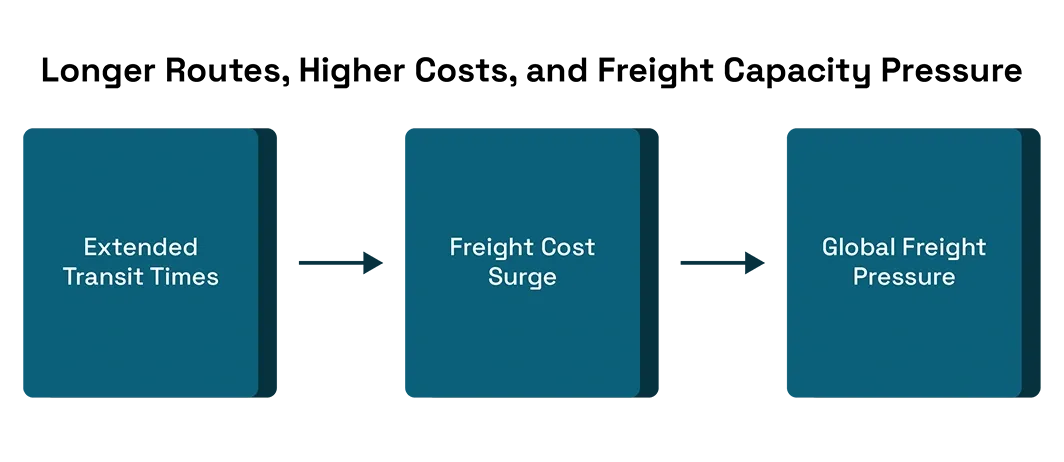
Longer Routes, Higher Costs, and Freight Capacity Pressure
The Red Sea disruptions have caused a lot of problems. One big issue is that ships have to go around the Cape of Good Hope in Africa. This makes the trip from Asia to Europe and other big markets a lot longer. The Red Sea disruptions have caused a lot of problems. One big issue is that ships have to go around the Cape of Good Hope in Africa. This means that containers and ships are not available for use for periods of time. The Red Sea disruptions create shortages of equipment. Reduce the number of ships that can be used for trade, around the world.
For companies that need to send things to countries, bad weather and other problems can make deliveries late cost more money and make it harder to plan what to do next. Some types of businesses like automobile makers, computer companies, medical businesses and airlines have a lot of trouble because they need to get parts and finished products to people from all around the world. International freight services are very important for these businesses international freight services can be affected by things and this can cause problems, for international freight services and the companies that use them.
Building Supply Chain Resilience Through Strategic Adaptation
Companies are also paying attention to the products they have in stock and the orders they get from customers for these products. They are keeping an eye on stock they have of these products. This way Businesses can avoid running out of these products when there are delays, in shipping of these products. Companies are also paying attention to the products they have in stock and the orders they get from customers for these products. This way Businesses can avoid running out of these products when there are delays, in shipping of these products.
Strengthening Trade Compliance Amid Global Shipping Disruptions
When it comes to shipping things around the world things are getting pretty unpredictable. So companies that do business with countries need to make sure they are doing everything right when it comes to trade rules. If the papers for a shipment are not filled out correctly it can cause a lot of problems. The shipment might get held up because the route it is taking has changed or because the port where it is arriving is really busy or because the rules have changed. Using the code for the product, which is called the HS code and following the rules for the HTS harmonized tariff Schedule can really help. It can help get the shipment through customs quickly and reduce the chance that the company will get in trouble and have to pay a fine.
Many organizations are also adopting the best trade compliance software for import export rules to improve visibility, automate documentation processes, and ensure regulatory accuracy. In addition, specialized Importer of Record Service and exporter of record services provide valuable support for managing import and export obligations in multiple jurisdictions
Conclusion
The Red Sea problems have shown how weak global supply chains can be. This is especially true for companies that rely on international trade and getting goods on time. Things, like politics, transportation issues and market changes keep affecting trade. To stay ahead businesses must focus on being flexible managing risks and following rules. Managing stock and orders efficiently plus tracking shipments better, * getting goods through customs quickly and easily. By doing these things businesses can handle problems better and the Red Sea disruptions are a good example of this.
For industries like the industry the IT industry, the aviation industry and the medical equipment industry the main thing people are thinking about is changing. They are starting to care about having strong trade networks that can handle big changes, in the world.
DID YOU KNOW
“Red Sea disruptions force maritime carriers to bypass the Suez Canal and route around Africa’s Cape of Good Hope. This adds 10 to 15 days to transit times, causes global capacity shortages, spikes freight costs, and increases carbon emissions.”
FAQs’
Why are ships avoiding the Red Sea?
Houthi rebel attacks on commercial vessels have made the route unsafe, forcing ships to redirect to avoid missile and drone strikes.
What alternative route are shipping companies taking?
Most carriers are routing ships around Africa via the Cape of Good Hope, bypassing the Suez Canal entirely.
How much longer does the alternative route take?
Bypassing the Red Sea adds roughly 3,500 to 4,000 nautical miles, lengthening the voyage by 10 to 15 days.
How does this affect consumer prices?
Longer routes make fuel costs and cargo insurance fees go up. This means that prices of goods that consumers buy go up too.
Which industries are hit the hardest?
The automotive industry, medical and healthcare, aviation and automobile industries are hit hard.