Human Oversight in the Age of AI-Driven Supply Chains
Artificial intelligence is rapidly transforming global supply chains by improving forecasting accuracy, automating procurement, enhancing inventory and order management, and streamlining logistics operations. Businesses across the automotive, IT, aviation, and medical industries are increasingly adopting AI-powered systems to manage warehouse operations, monitor shipments in real time, and support Supply chain optimization. These technologies are really useful for companies. They help companies reduce delays and lower the costs of their operations.
This also helps them make decisions when it comes to International freight services networks, which can be very complicated. Even though computers are getting better at doing things on their own, businesses still need to keep an eye on things when it comes to managing modern supply chains. Automated systems can look at a lot of information. Suggest what to do but they cannot take the place of human decision making when it comes to things like judgment in areas involving ethics, compliance, accountability, and crisis response.
In industries such as medical equipment, aviation, automotive, and IT infrastructure, even a small supply chain error can create major operational and regulatory risks. Human professionals are still needed to evaluate unexpected disruptions, oversee supplier decisions, manage trade compliance requirements, and ensure that critical logistics operations align with business and regulatory standards. The future of Artificial Intelligence managed supply chains will depend not on machines doing work for us but also on people being in charge to make sure things are done right. This means Artificial Intelligence managed supply chains need to be reliable, clear to everyone and have people making decisions. Artificial Intelligence managed supply chains will only work well if people are watching over them.
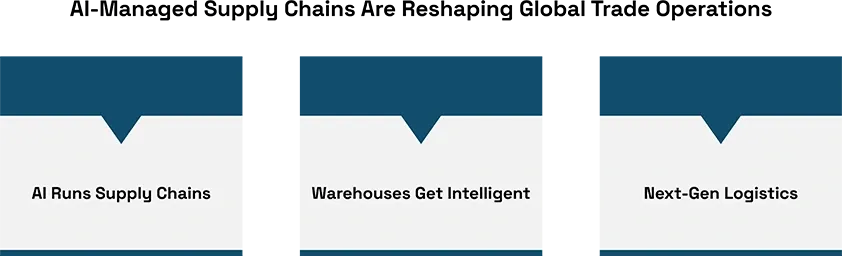
AI-Managed Supply Chains Are Reshaping Global Trade Operations
Artificial intelligence is changing supply chains fast. They used to be supervised. Now they are highly automated. Businesses are using technologies to make things better. They are using things like predicting what people will buy and automatic systems to get what they need. They are also using intelligence to make their warehouses work better and find the best way to get things from one place to another. Unlike traditional systems that merely supported human decision-making, AI now actively controls workflows by analyzing inventory levels, shipment patterns, supplier performance, and market disruptions in real time. In the automotive industry, AI helps forecast semiconductor demand to reduce production delays, while aviation companies use predictive systems for spare parts planning and maintenance scheduling. Medical equipment suppliers use intelligence for urgent inventory allocation when they really need it. They have to act in critical situations. IT businesses also use intelligence to forecast shipments. This helps them manage the distribution of hardware. Medical equipment suppliers and IT businesses both use intelligence to make things work smoothly. These changes are making supply chain optimization better. They help with inventory and also help with order management. This makes the overall logistics performance stronger, for import and export operations.
Human Oversight Remains Essential in AI-Driven Trade Operations
Although AI is changing the way supply chains work today with data analysis and automatic decisions people still need to oversee global trade. AI can make routes better, cut down on costs and manage stock and orders efficiently. AI systems often do not have the right judgement when things get complicated like during trade disruptions, customs hold-ups or sudden regulation changes. Supply chains are getting more efficient with AI but Humans are still in charge. For example, an AI platform may select the lowest-cost supplier without identifying trade sanctions, ethical sourcing concerns, or region-specific compliance risks. In situations like these, experienced professionals are really important. They help keep compliance standards and make Customs clearance processes go smoothly. Businesses in industries like automotive, aviation, IT and medical equipment still need human experts to approve trade decisions. This is especially true when they are managing importer of record service and exporter of record services in countries. Experts in these areas play a role in making sure everything is done correctly.
With the best software, for trade compliance companies still rely on experts who know the changing import and export rules. These specialists check if a customs broker handles import and export documents well in international deals. They make sure the broker does both import and export documentation efficiently.
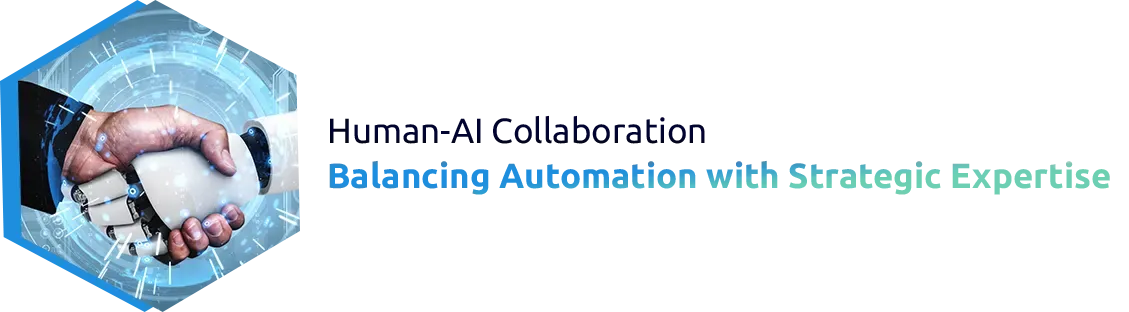
Human-AI Collaboration: Balancing Automation with Strategic Expertise
The future of supply chains that are managed by intelligence will depend on people working together with these intelligent systems. This means that human professionals and artificial intelligence systems will need to work. The thing about Artificial Intelligence is that it can look at a lot of data fast, figure out when things might go wrong and automatically handle things like inventory and orders. It can also make supply chains work better. People are still needed to make big decisions, follow rules and think about what might go wrong with the supply chain and inventory and order management. Artificial Intelligence is helpful.
In complex import export operations involving the automotive, aviation, IT, and medical industries, professionals are still needed to manage problems that come up, check the suggestions made by AI and deal with issues in trade. AI is good at handling the speed of operations and processing a lot of information. Humans bring in judgment the ability to reason ethically and specific knowledge about the industries. Companies are using technology in global logistics networks. This means they are using a mix of computer systems and human teams to make decisions. Computer systems, like AI, help with efficiency. The human teams have a lot of experience. They oversee things like Customs clearance and making sure everything is done correctly. They also keep an eye on freight movements. The goal is to make sure everything runs smoothly and safely.
Conclusion
As artificial intelligence keeps changing supply chains the future will be built on combining smart systems and human knowledge. Companies in the aviation, medical and IT sectors are using AI more and more for quicker predictions, better inventory and order handling and improved supply chain management. There are still some things that need a real person to make decisions. For example, getting things cleared through Customs is one of them. We need to make sure they are doing everything they are supposed to do. This helps to prevent any problems or delays. They also need to check on suppliers to see if they are trustworthy and make decisions when it comes to global trade. Artificial Intelligence is not enough for these things; it needs judgment and people have to be accountable for what they do.
In complex import export operations involving Incoterms, HS code classifications, HTS harmonized tariff Schedule requirements, and International freight services, human oversight to make sure everything is accurate and done right. Companies that mix AI efficiency with trade experts will be better prepared. They need importer of record service support and exporter of record services. This helps manage disruptions and keeps everything compliant. It also helps build a global supply chain for the future. They need to combine AI efficiency with trade pros. Importer of record and exporter of record services are a must.
Did You Know
“This challenge is further intensified by the spread of “shadow AI”: tools deployed without formal approval or governance. In supplier networks, such tools can be difficult to detect and even harder to control, particularly beyond tier‑one relationships. ”
FAQs
1. What is “Human-in-the-Loop” (HITL) in Supply Chain?
This involves keeping humans involved in monitoring and correcting AI decisions. It can range from active approval of every action to “human-on-the-loop” monitoring for exceptions and high-risk decisions.
2. Does AI Replace Supply Chain Managers?
No, it shifts their role. AI automates repetitive tasks and provides insights, but human talent is required to interpret those insights and handle complex strategic relationships.
3. What are the Risks of Too Much Automation?
When we rely much on something it can make the system have a sort of tunnel vision. The system focuses on making things better and better but it misses the big picture. .
4. Why is Human Oversight Necessary?
AI models can make these predictions because they are not always good, at figuring out what the data really means.
5. Why is traceability across the AI lifecycle central to watsonx governance?
This is because it makes it possible to automatically record information like the data used to train the system, the settings used and how well the system performs.