Overview
Smart cars are changing the automotive industry by using new technologies such as artificial intelligence, sensors, and connected software systems. As the automotive sector becomes more software-driven, governments have begun paying closer attention to how this technology is shipped across borders with exporter of record services. US export control laws regulate the logistics of some technologies to confirm national security, protect sensitive innovations, and stop misuse of international trade terms. Smart car software exports are mainly related to these regulations because the technology used in autonomous driving systems and data processing can have dual-use applications with Incoterms. Also, organizations working in exporting smart car software must carefully check regulatory requirements and maintain proper agreement procedures.
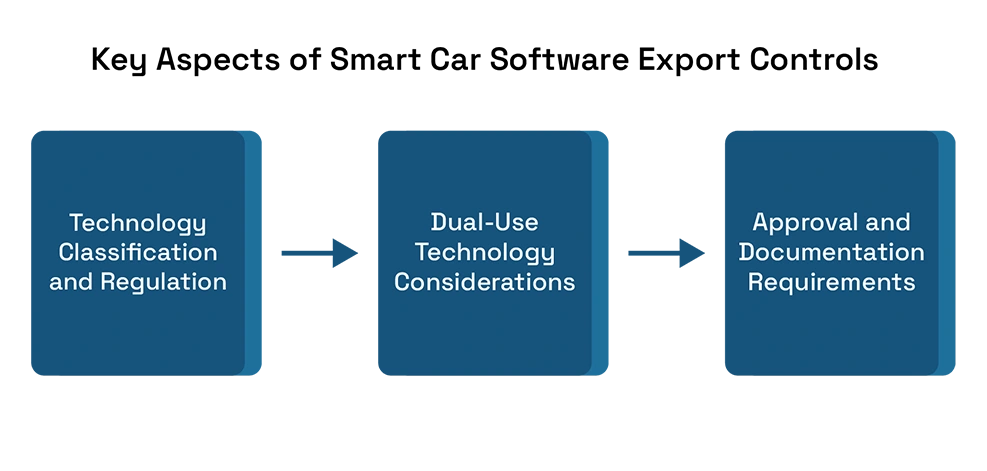
Key Aspects of Smart Car Software Export Controls
Technology Classification and Regulation
Export controls in the United States frequently depend on how a specific technology is categorized under government regulations and HS Codes. Smart car software that includes advanced driver assistance systems, navigation algorithms, or artificial intelligence features may be checked for its technical capabilities. If the software contains sensitive components, exporters may be required to get special authorization before shipping the technology to global partners.
Dual-Use Technology Considerations
Many smart vehicle systems are dual-use technologies. These are products or software worked for civilian purposes but are mainly used in military or surveillance applications. Importer of record Service resolves this possible risk; regulators closely check software exports that require encryption, advanced sensors, or automated decision-making capabilities.
Approval and Documentation Requirements
Organizations working in exporting smart car software must maintain correct documentation and customs clearance processes. Proper classification with HS code and HTS harmonized tariff Schedule and regulatory checks are necessary to confirm that exports follow international trade regulations. Organizations frequently implement internal GPS systems to verify that software logistics meet export requirements and are shipped only to authorized recipients with International freight services.
Do Export Control Rules Apply to Smart Car Software Exports?
Digital Changes and Software Updates
Yes, export control rules can apply even when software is relayed electronically rather than physically shipped with the best trade compliance software for import export rules. Smart car software updates delivered through cloud infrastructure may still be considered exports if they are shipped to foreign organizations. Also, businesses must assess whether their digital services are subject to export regulations.
International Collaboration and Development
Smart car development frequently requires a partnership between service providers and organizations. Can a customs broker handle both import and export documentation? When Smart Car software is shipped to global organizations, new US export regulations may apply depending on the technology and the destination country.
Data Security and Encryption Features
Modern vehicles depend heavily on cybersecurity and encryption technologies to protect important data and vehicle supply chain optimization. Software containing strong encryption capabilities may be related to additional regulatory scrutiny as a freight forwarder or exporter of record. Organizations must assess whether such features require regulatory approval before transferring the technology internationally.

How One Union Solutions Help You in Exports of Smart Car Software?
One Union Solutions helps organizations guide difficult international trade regulations when exporting advanced technologies like smart car software. Their expertise in global trade regulations helps organizations understand regulatory systems and have proper procedures for technology changes. The company provides support in evaluating possible regulatory risks associated with software exports. This includes reviewing technology categorizations, confirming accurate documentation, and supporting businesses in meeting approval problems when working with global partners. With the quick growth of connected vehicle technologies, businesses require dependable partners to manage cross-border trade difficulties with the Generalized System of Preferences (GSP) scheme. We support organizations in simplifying global trades while confirming that all shipments are working with international regulatory terms.
Conclusion
The quick advancement of smart car technology has created new opportunities for automotive software organizations globally. Also, as these updates become more difficult, governments have introduced stronger export control regulations to safeguard sensitive technologies. Organizations working in global software distribution must understand how export laws apply to digital shipments and software updates. As the smart vehicle industry continues to develop, careful attention to export control laws will remain a necessity for organizations aiming to work successfully in the global automotive technology ecosystem.
DID YOU KNOW?
China exported a record 7.1 million cars in 2025. Given the global trend towards electrification, China was able to maintain its position as the world’s largest auto exporter due to the growing demand for new energy vehicles (NEVs).
FAQs:
1. Are smart car software exports subject to US export control laws?
Yes, smart car software exports may fall under US export control regulations if the technology includes advanced artificial intelligence, encryption, or autonomous driving capabilities.
2. What is considered dual-use technology in smart vehicles?
Dual-use technology refers to software or systems developed for civilian purposes, but that could also be applied in military or surveillance operations. In smart vehicles, this may include AI-driven navigation systems, sensor integration, and automated decision-making technologies.
3. Do export control laws apply to digital software transfers?
Yes, export regulations can apply even when software is transmitted electronically. Sending software updates, cloud-based applications, or technical data to foreign partners may still be considered an export under US regulations.
4. Why are technology categorizations important in smart car software exports?
Technology classification helps determine whether software requires export licensing or additional regulatory approval. Authorities review factors such as encryption strength, AI capabilities, and sensor integration when assessing export eligibility.
5. How can companies confirm approval when exporting smart car software?
Companies can maintain approval by properly categorizing technology, accurately documenting, using internal approval systems, and confirming that software is only shared with authorized international partners.