
Overview
Reverse logistics for refurbished medical devices plays a vital role in new medical systems, requiring cost performance and accessibility to be increasingly important during shipments. Healthcare device supply, reverse logistics require returning, inspecting, repairing, refurbishing, and redistributing shipments such as MRI systems and surgical equipment. These goods must meet strong safety and regulatory standards, making the process more difficult than systematic returns of shipping. Healthcare providers depend on refurbished equipment to reduce costs while getting clinical quality, but managing returns across borders, managing approval requirements, and confirming product quality create working problems.
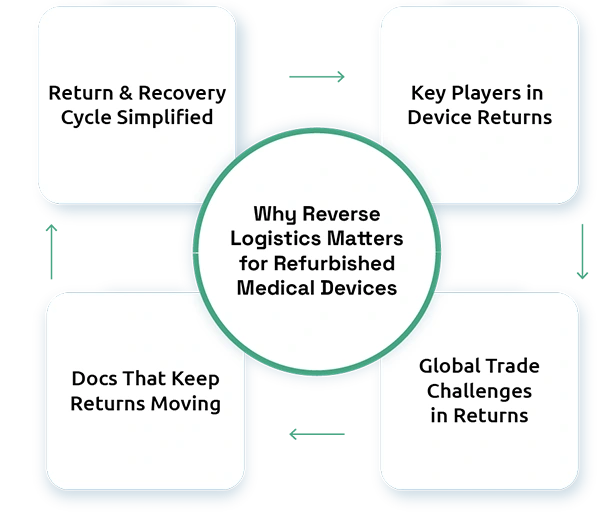
Why Reverse Logistics Matters for Refurbished Medical Devices
Refurbished medical devices increase equipment life cycles and reduce medical waste, but their success depends heavily on systematic return and recovery systems. Hospitals frequently return equipment for improvements or repairs, which requires careful work between manufacturers, service providers, and global partners. In global trade environments, processes such as customs clearance and approval verification become necessary. Organizations managing international freight services must confirm that returned devices ship effectively without delays that could stop healthcare logistics. Proper documentation also supports supply chain optimization by reducing maintenance and improving device utilization.
The Important Steps of Refurbished Medical Device Reverse Logistics
Device Collection and Documentation
The process begins with structured collection procedures of devices. Every returned device must include detailed documentation, including service history and categorization of devices with HS code or HTS Harmonized Tariff Schedule references when crossing global borders. Correct packaging labeling stops regulatory misunderstandings and shipment delays in the supply chain.
Inspection of Refurbished Medical Devices
Returned equipment undergoes customs inspection to show whether refurbishment, repair, or recycling is appropriate. Inventory and order management systems help track device status, confirming clarity and reducing misplaced devices.
Refurbishment and Quality Checking
Technicians restore equipment according to manufacturer and regulatory standards. Quality testing verifies performance before the redistribution of medical devices. At this stage, approval teams confirm work with trade requirements, including Incoterms agreements such as DAP or DAPs, depending on shipment responsibilities.
Redistribution and Re-entry into the Market
After certification, devices are repackaged and shipped to new users. Organizations frequently depend on exporter of record services or importer of record service providers to manage cross-border responsibilities and regulatory approval.
Key Regulatory Challenges for Refurbished Medical Devices with Reverse Logistics
Approval Across Multiple Administrations
Medical shipments must follow healthcare regulations as well as trade guidelines. Organizations get beneficial programs, such as the Generalized System of Preferences (GSP), which may change duties and costs, but eligibility changes by country, creating planning difficulty in global trade.
Documentation and Responsibility Allocation
A frequent challenge is determining accountability during international shipments. Businesses often ask whether a freight forwarder can be an exporter of record or whether a customs broker can handle both import and export documentation.
Maintaining Product Quality
Refurbished equipment depends on the regulated handling conditions of devices. Delays of shipments, improper storage, or incomplete documentation can affect product quality and lead to regulatory penalties. Technology-related solutions, including the best trade compliance software for import export rules, help organizations reduce manual problems and maintain audit readiness.
How We Deliver Smooth Reverse Logistics
Integrated Process Management
Successful reverse logistics requires work between technical teams, approval experts, and transportation partners in the global trade. Organizations improve performance by combining inventory tracking, documentation processes, and inspection reporting into a single working system.
Strong Approval and Trade Expertise
Managing refurbished medical devices globally demands good knowledge of customs procedures and trade rules. Dedicated importer of record service and exporter of record services confirm regulatory responsibility is clearly supported, reducing risks during cross-border shipments.
Technology and Visibility
Digital platforms improve visibility across every stage of the return shipments. Automated alerts, documentation inspections, and shipment tracking help stop recurring paperwork errors while improving delivery schedules. These systems also support supply chain optimization by identifying inefficiencies and allowing proactive decisions on shipments.
Conclusion
Reverse logistics for refurbished medical devices is far more than a return process; it is a highly regulated operational strategy that gets safety of goods, supports sustainability, and improves healthcare affordability. Organizations must balance regulatory approval, logistics work, and equipment refurbishment standards to confirm the successful results of trades. When managed effectively, refurbished medical devices can ship smoothly through global trades, extending product life cycles while maintaining dependability, approval, and working efficiency.
DID YOU KNOW?
The global healthcare logistics market size is expected to grow at a CAGR of 8.5% during the forecast period 2025 to 2034, from US$93.8 billion in 2024 to reach approximately US$217.3 billion by 2034.
FAQs:
1. What is reverse logistics in refurbished medical devices?
Reverse logistics refers to the process of returning, inspecting, repairing, refurbishing, and redistributing medical equipment so it can safely re-enter the healthcare supply chain.
2. Why is reverse logistics important for refurbished medical equipment?
It helps extend device life cycles, reduce healthcare costs, minimize medical waste, and confirm equipment meets safety and regulatory standards before reuse.
3. What are the main challenges in reverse logistics for medical devices?
Major challenges include regulatory approvals, customs documentation, cross-border approval, quality assurance, and maintaining proper handling conditions during transportation.
4. How are refurbished medical devices inspected before resale?
Devices undergo technical inspection, performance testing, documentation verification, and quality checks to confirm approval with the manufacturer and regulatory requirements.
5. How can companies improve reverse logistics efficiency in healthcare?
Organizations improve efficiency by using digital tracking systems, trade approval software, integrated inventory management, and experienced importer/exporter of record services.