Overview
Cross-border aircraft transactions have become difficult as governments address issues with systems to protect national security. Aircraft transfers today are not viewed completely as trade activities; they are also inspected through national security, technology protection, and regulatory agreements. Whether an aircraft is being sold, leased, or relocated for maintenance, authorities carefully review documentation, ownership systems, and shipment procedures before approving the global trade. New aircraft include advanced navigation systems and sensitive components; regulators conduct detailed evaluations to confirm transfers do not add strategic risks. These reviews frequently work with international trade terms, requiring companies to understand regulatory classifications, documentation standards, and structured delivery agreements. Proper planning allows aviation customers to complete transactions smoothly while meeting developing approval expectations.
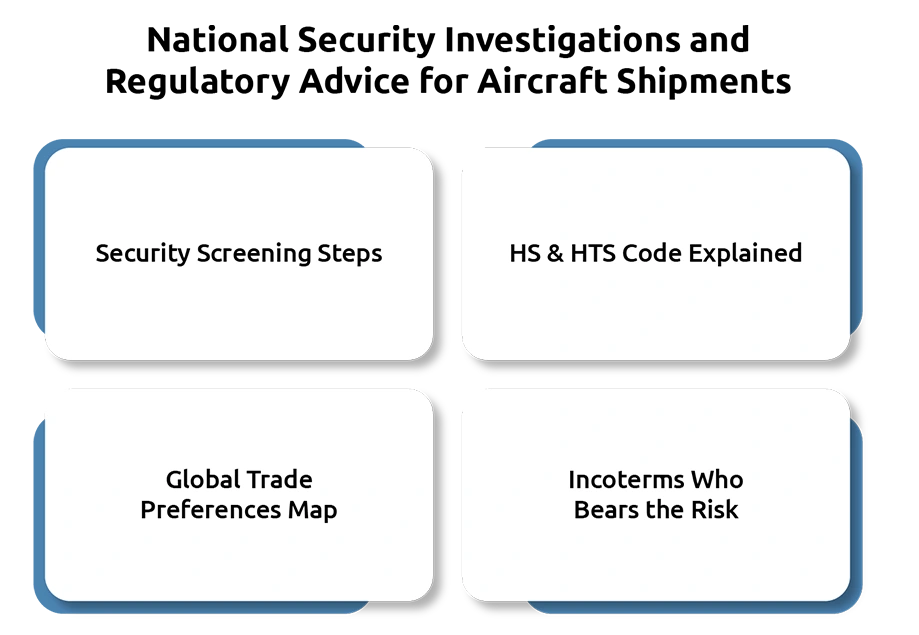
National Security Investigations and Regulatory Advice for Aircraft Shipments
Understanding Security Screening Requirements
National security investigations evaluate the parties involved in a transaction, the destination country, and the intended working use of the aircraft. Authorities may review tariff categorizations, such as the HS code and under the HTS Harmonized Tariff Schedule, to verify how aircraft components are categorized and tracked during global trade. Governments may also consider trade systems such as the generalized system of preferences (GSP) when estimating eligibility for some trade benefits or tracking major exports. These regulatory checks help confirm that aircraft shipments comply with both economic and security objectives.
Regulatory Documentation and Trade Terms
Clear contractual arrangements play an important role during reviews. Delivery terms defined under the new Incoterms, such as DAP and DAPs, help to show responsibility for risk changes, delivery problems, and approval responsibility of brokers. Correct documentation supports easy approval processes and reduces misunderstandings between buyers and sellers.
Approval Through Structured Planning
Organizations frequently depend on advanced digital tracking tools, including the best trade compliance software for import export rules, to track documentation accuracy and regulatory updates. Combining compliance checks early improves approval issues and reduces transaction delays.
Why Cross-Border Trade is an Advantage for Aviation With an Importer of Record Service
Operational Efficiency and Market Access
Cross-border aviation trade allows airlines and leasing companies to access aircraft where demand is strongest. Using an Importer of Record Service, organizations can manage regulatory responsibilities effectively when shipping into new markets. This system confirms that legal responsibility for imported aircraft or components is clearly defined.
Improving Global Operations
International aircraft shipments depend massively on coordinated logistics and reliable International freight services. These services help manage aircraft parts, engines, and specialized equipment across administrative areas while maintaining approval with national security requirements.
Supporting Supply Chain Stability
Effective Supply chain optimization improves aircraft availability and reduces operational problems. Combined with strong inventory and order management, aviation companies can maintain spare parts availability while meeting strict regulatory expectations.

National Security Reviews for Cross-Border Aircraft Shipments with a Customs Broker
Role of Customs and Trade Specialists
Security reviews frequently involve professional brokers who guide organizations through regulatory problems. During Customs clearance, brokers confirm documentation accuracy and verify shipment details before submission to authorities. Their involvement reduces approval risks and supports timely approvals. Many organizations also use exporter of record services to confirm that export responsibilities are properly working within the law. Questions frequently grow, such as whether a freight forwarder can serve as the exporter of record, underscoring the importance of clearly defining responsibilities in global trade.
Managing Documentation Across Borders
A common problem for aviation businesses is whether a customs broker can handle both import and export documentation. In many cases, experienced brokers coordinate both processes, helping organizations maintain consistency across completion while satisfying national security review requirements.
Increasing Clarity and Responsibility in Shipments
Correct documentation supported by technology and skilled experts improves transparency during inspections. By working on shipment records, agreement problems, and approval systems, customers reduce the chance of delays or regulatory scrutiny.
Conclusion
National security reviews are now a critical component of cross-border aircraft transactions. As aviation becomes more interconnected, governments continue to improve measures to protect major interests while allowing global trade to grow. Understanding regulatory systems, delivery responsibilities, and documentation standards is necessary for successful aircraft trade. By combining systematic approval planning, professional advisory support, and effective working systems, aviation organizations can guide difficult security reviews with confidence. Also, well-managed cross-border processes not only confirm regulatory approval but also provide quick, safer, and more dependable international aviation operations in an increasingly regulated global trade.
DID YOU KNOW?
Aerocor announced today that it has completed more than 350 aircraft transactions, representing more than $500 million in sales, while also expanding its integrated brokerage and in-flight training model.
FAQs:
1. Why are aircraft shipments subject to national security reviews?
Aircraft contain advanced navigation systems and sensitive technologies, so governments review cross-border trades to stop strategic or security risks while confirming regulatory approval.
2. What documents are required for cross-border aircraft transactions?
Common requirements include ownership records, export and import declarations, tariff classifications, delivery agreements, compliance certificates, and customs documentation.
3. What is an Importer of Record in the aviation trade?
An Importer of Record (IOR) is the legal entity responsible for confirming imported aircraft or components comply with local laws, duties, and regulatory requirements.
4. How do Incoterms affect aircraft deliveries?
Incoterms define responsibility for shipping risks, delivery issues, and customs clearance between buyers and sellers, helping authorities verify accountability during approvals.
5. Can a customs broker manage both import and export processes?
Yes, experienced customs brokers frequently coordinate both import and export documentation, helping aviation companies maintain approval and reduce shipment delays.