

Introduction
The United States and China have one of the most difficult trade ties in the world. Their partnership has evolved over decades, with both problems changing global markets. Today, their trade extends beyond simple import and export exchanges, such as international export regulations, customs clearance support, and comprehensive import-export support systems. The two nations have good ties across industries such as IT, aviation, medical technology, automotive, and their guidelines affect logistics and global supply chain services.
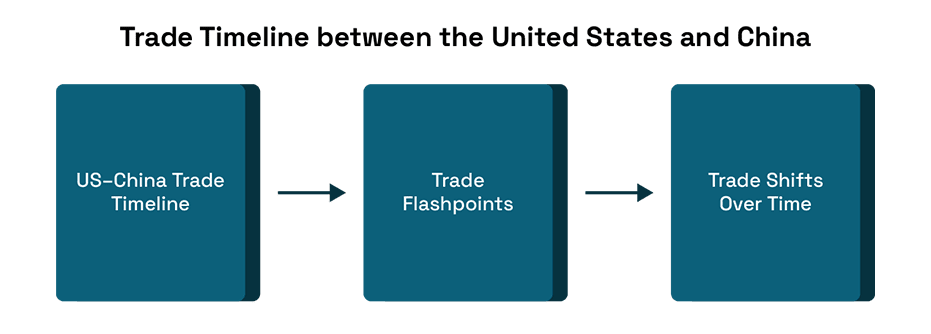
Trade Timeline between the United States and China
The U.S.-China trade relationship has gone through dramatic changes since the late 20th century. In the 1970s, trade was reduced, but the adjustment of diplomatic relations in 1979 enabled economic exchanges. Over time, the acceptance of Incoterms such as DAP and DDP shipping, freight forwarding service, and exporter of record services helped businesses overcome difficulties in customs and agreements. A major changing point in 2001 when China joined the World Trade Organization. This move integrated China into the global trade chain, making it a manufacturing hub. Introduction of HS codes and HTS harmonized tariff systems, trade documentation became more structured, easing import export business activities. Importer of record services, export customs brokerage, and Delivery Duty Paid Service methods also grew in importance as organizations requested dependable ways to manage global trade facilitation.

History of the U.S.-China trade relationship?
The history of U.S.-China trade shows a revolution of growth and problems. In the early years, trade was limited by political tensions, but after the 1979 trade agreement, long-term trade expanded quickly. The 1980s and 1990s saw Chinese exports grow in U.S. trade, specifically in medical, electronics, and machinery. During this time, businesses increasingly depend on freight forwarding services and global supply chain services to meet rising demand. In the 2000s, the relationship deepened but also became exhausted due to trade variation. Tariff discussion over Incoterms and disagreements on international export regulations created growth. The 2018–2020 trade war was a defining chapter, with both countries adding billions in tariffs. This directly impacted Delivery Duty Paid logistics, comprehensive import-export support systems, and the way import-export registrations were handled. Organizations had to accept by strengthening their use of importer of record services and customs clearance support to confirm that goods could still move effectively.
How U.S.-China Trade Shapes Global Business
Trade between the US & China is important in global businesses. Every day, multiple businesses import & export products between these two countries. This trade helps industries including electronics, automobiles, healthcare equipment, & technology. Changes in trade policies, tariffs, or customs rules can affect product prices, delivery times, & global supply chains. Businesses that understand these changes can plan better, reduce risks, & continue trading smoothly.
Major Moments in U.S.-China Trade
Several moments stand out in this evolving trade timeline:
- 1979: Establishment of diplomatic relations and trade agreements, opening formal channels for commerce.
- 2001: China joins the WTO, accelerating trade volumes and strengthening global supply chain services.
- 2018–2020: The U.S.-China trade war disrupts industries, leading to higher tariffs and a greater focus on export register systems, Incoterms, and customs clearance support.
- Post-2022: Renewed emphasis on diversification of supply chains, the use of importer of record services, exporter of record services, and freight forwarding services to ensure compliance with shifting international export regulations.
What are the benefits of U.S.-China trade?
Even with tensions, the U.S.-China trade relationship gives multiple benefits:
- For businesses, access to IOR services, export customs brokerage, and freight forwarding services enables them to navigate complex regulations while leveraging global trade opportunities. Import and export registration, as well as the export register system, further confirm the agreement and clarity.
- For consumers: U.S. buyers gain entry to affordable consumer goods, while Chinese buyers benefit from advanced U.S. technologies, medical equipment, and aviation parts.
- For industries: Both countries strengthen their positions in IT, automotive, and healthcare by using logistics networks, global supply chain services, and Delivery Duty Paid logistics methods.
- For economies: Trade leads to further job creation, investment, and global trade facilitation. Comprehensive import-export support systems and international export regulations confirm smoother cross-border cooperation.
Conclusion
Trade between this Country shows that buying and selling between countries has grown a lot over time. Since 1979, big events like China joining the WTO and recent trade problems have changed how goods are bought and sold around the world. Today, tools like HS codes, Incoterms, DDP shipping, and importer of record services make trading easier and faster. Even though there are some problems, his trade helps businesses grow, makes supply chains better, and supports the future of global trade.
DID YOU KNOW?
Integrated circuits have also risen in the ranks of China’s U.S. exports, with China spending $9.96 billion.
FAQs:
Q1: When did formal U.S.-China trade relations begin?
In 1979, when diplomatic ties were formed. It marked the start of a powerful trade relationship that still shapes global markets today.
Q2: Why was China’s WTO entry in 2001 significant for global trade?
China’s WTO entry integrated it into global markets, making it a major manufacturing hub and boosting trade volumes worldwide.
Q3: What impact did the U.S.-China trade war (2018–2020) have?
The trade war led to billions in tariffs, disrupted supply chains, and increased the need for importer of record services and customs clearance support.
Q3: How does trade between the U.S. and China affect global supply chains?
Many products and parts move through these two countries, so changes in trade can affect businesses worldwide.
Q5: How does U.S.–China trade benefit everyday people?
Businesses grow faster with global access, and consumers get more choices—often at better prices and with advanced products.