Every country trades with others. Trade helps economies grow, creates jobs, & gives people access to more products. At the same time, each country wants to secure its own businesses, workers, & resources. This balance is not easy to manage.
For a long time, governments mainly used tariffs to control imports. A tariff is a tax placed on goods coming from another country. When a tariff is added, imported goods become more costly. This often pushes buyers to select local products.
Over time, many countries started to move away from tariffs. Instead, they began using non-tariff barriers. These methods control imports without adding a clear tax. They work quietly & give governments more control.
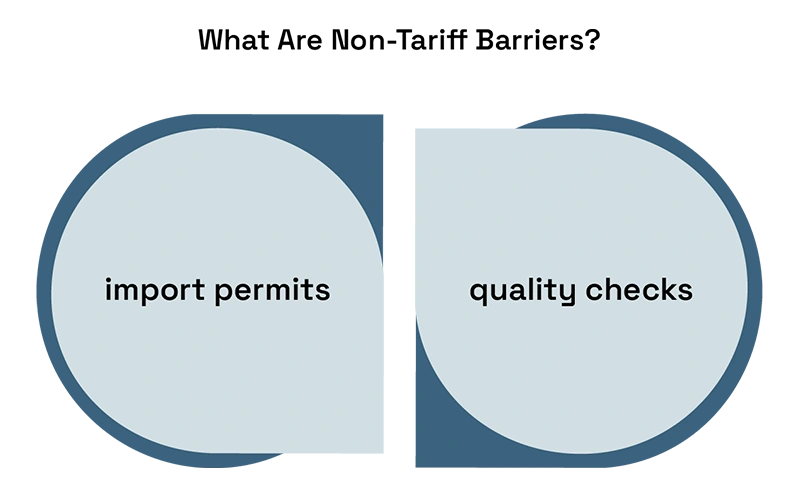
What Are Non-Tariff Barriers?
Non-tariff barriers are rules that decide which goods can enter a country and under what conditions. They do not involve adding money at the border.
These rules added import permits, limits on quantities, quality checks, safety rules, environmental rules, & product testing. Sometimes, goods must meet certain labels, standards, or paperwork requirements before they are allowed to enter.
If a product does not meet these rules, it may be delayed, sent back, or refused entry altogether.
Why Countries Are Moving Away From Tariffs
Tariffs increase prices very quickly. When prices rise, people notice right away. This affects daily items such as electronics and household goods. Businesses that depend on imported materials also face higher costs.
When prices grow too much, public anger can grow. This puts pressure on governments. Because of this, tariffs are often unpopular.
Non-tariff barriers work differently. They slow imports by adding checks, forms, & conditions. Prices may not rise immediately, so people do not feel the impact right away. This makes non-tariff barriers easier for governments to use without public backlash.
Following Global Trade Agreements
Many countries are part of international trade agreements. These agreements usually encourage lower tariffs & fair trade practices. When a country raises tariffs, other nations may complain or respond with their own trade limits.
Non-tariff barriers allow countries to protect their markets while still following trade agreements. Since these rules are often linked to safety, health, or quality, they are seen as reasonable & legal. This makes them harder to challenge.
Helping Local Businesses Compete
One major reason countries use non-tariff barriers is to support local businesses. Local companies already understand domestic rules & standards. Foreign companies often need more time, money, & effort to meet them.
For example, strict product testing or labeling rules can slow down foreign goods. While these rules may seem technical, they give local businesses a better chance to compete in their own market.
Protecting Health and the Environment
Many non-tariff barriers are created to protect people & the environment. Governments set rules to ensure electronics do not cause harm.
Some countries limit the import of old or used electronics to reduce electronic waste. Improper disposal of such waste can pollute land and water. These rules help protect public health while also controlling imports.
Stronger Control at the Border
Tariffs apply the same tax to all imported goods. Non-tariff barriers allow governments to look at each shipment more closely.
Officials can check documents, check goods, & verify details before approval. This helps stop unsafe products, fake goods, & illegal items from entering the country. It also improves tracking & border security.
Managing Imports Without Sudden Price Changes
Tariffs raise prices directly. Non-tariff barriers control trade in a more balanced way.
For example:
- Limits decide how many goods can enter
- Safety rules decide what quality is allowed
- Permits decide who can import
These tools help manage imports without causing sudden price jumps in the market.
Why Governments Prefer Non-Tariff Barriers
Developing tariffs often leads to public complaints & media attention. Non-tariff barriers are easier to explain. They are usually seen as safety or quality measures, not trade restrictions.
Governments can also adjust these rules quietly. They can update standards or checks when market conditions change. This gives them more flexibility & control.
What Exporters Need to Understand
Non-tariff barriers can make exporting more difficult. Exporters must follow different rules in different countries. This means more paperwork, more inspections, and careful planning.
Exporters who study these rules early and prepare properly can reduce delays and avoid losses. Those who ignore them often face shipment problems.
Conclusion
Countries prefer non-tariff barriers over tariffs because they offer control without clear price increases. These rules help protect local businesses, support safety and environmental goals, and follow global trade agreements. As international trade becomes more detailed and regulated, non-tariff barriers will continue to shape how countries manage imports and protect their economies.
Did you know?
All those assumptions are now under a cloud, as policymakers in New Delhi grapple with Trump’s statement announcing a 25 per cent tariff on Indian goods from August 1, alongside an additional but unspecified “penalty” for its defence and energy imports from Russia.
FAQ
1. What are non-tariff barriers?
Non-tariff barriers are rules that control imports without adding taxes.
They include permits, safety checks, and quality standards.
2. Why do countries use non-tariff barriers instead of tariffs?
They control imports without raising prices directly.
This makes them easier to manage and explain.
3. How do non-tariff barriers protect local businesses?
Local firms already meet domestic rules.
Foreign sellers must spend more time and money to comply.
4. Do non-tariff barriers follow global trade rules?
Yes, most are allowed under trade agreements.
They are often linked to safety, health, or quality needs.
5. How do non-tariff barriers affect exporters?
They increase paperwork and checks.
Exporters must plan better to avoid delays.