
Introduction
The e-commerce sector has become the backbone of global trade, seeing continuous growth in air freight and logistics operations. In 2025, despite changes in seasonal shipping demand, air cargo has remained remarkably steady. The combination of global supply chain services, freight forwarding services, and smarter Delivered Duty Paid logistics methods has allowed retailers and online sellers to meet the surging expectations of fast, cross-border deliveries. As global trade facilitation systems such as the Generalized System of Preferences (GSP) and Incoterms such as DAP and DDP shipping simplify trade, e-commerce organizations are improving airways, customs processes, and import-export registration to confirm quicker shipping and better agreements.
Why Air Cargo Is Holding Steady While the Peak Season Lags Behind?
Unlike traditional peak seasons, where volume spikes dramatically, the 2025 peak period has shown a more stable flow. The reason? Continuous online shopping trends have replaced the short-term surges of the past. With dependable freight forwarding services and importer of record (IOR) services, businesses are now spreading shipments evenly throughout the year. E-commerce giants use integrated Comprehensive import-export support systems that combine customs clearance support and export customs brokerage, ensuring smoother delivery cycles. The rise of Delivered Duty Paid services (DDP) and DAP shipping under globally recognized Incoterms allows sellers to take on more responsibility, simplifying customer experiences while confirming approval with HS codes and HTS harmonized tariff regulations.

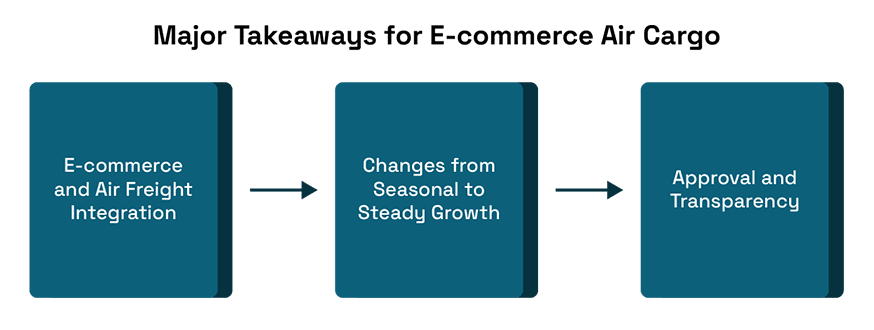
Major Takeaways for E-commerce Air Cargo
E-commerce and Air Freight Integration:
The synergy between logistics and digital commerce has created more efficient international export regulations and real-time shipment visibility.
Changes from Seasonal to Steady Growth:
Air cargo is no longer driven by a single “peak” month. Instead, consistent consumer demand grows sustained air freight utilization across multiple regions.
Approval and Transparency:
Businesses prioritizing exporter of record services, import export business support, and correct HS code classification reduce delays and avoid tariff miscalculations.
Tech-Driven Customs & Trade:
Automated systems are redefining global supply chain services, helping importers and exporters guide the HTS harmonized tariff schedule more effectively and work with the developing Incoterms.
What to Expect from Peak Shipping Season 2025?
In 2025, the global e-commerce air cargo landscape continues to mature. Retailers are depending on freight forwarding companies that provide DDP logistics and importer of record services to simplify agreements in new markets. With more countries adopting transparent international export regulations, the complexity of customs clearance support has reduced. E-commerce shippers should expect demand to remain stable, supported by smarter export register systems and simplified export customs brokerage processes. Also, sustainability is shaping the air cargo industry. Digital routing, eco-fuel use, and energy-efficient operations are becoming major parts of e-commerce logistics performance.
Air Cargo Is Bucking Seasonal Changes of E-commerce Demand
While sea logistics face issues and extra shipping times, air freight continues to be the chosen method for urgent e-commerce deliveries. The demand for Delivered Duty Paid logistics and DAP shipping has strengthened, providing faster and clearer delivery options. Freight forwarding services and Comprehensive import-export support help e-commerce organizations manage changing inventory requirements, manage returns, and remain compliant with HS codes and HTS harmonized tariff regulations. These strategies confirm that sellers maintain efficiency and visibility regardless of conventional seasonal cycles.
Conclusions
The lessons from the 2025 e-commerce air cargo season are clear: the market is changing from reactive seasonal logistics to proactive, tech-allowed supply chains. By using Freight Forwarding Services, importer and exporter of record services, and Delivered Duty Paid logistics, global retailers can sustain continuous growth. In an era defined by rapid fulfillment expectations and evolving Incoterms, working with providers that give Comprehensive import-export support and customs clearance services confirms smooth cross-border operations. The future of e-commerce air cargo depends on efficiency, approval, and resilience, powered by the smooth coordination of global supply chain services.
DID YOU KNOW?
“If you spend £100 on the street, there’s a 95% chance that the goods you’re buying are coming by sea,” he said. “But if you spend £80 or 20% less on an online platform, it’s probably 95% by air freight.”
FAQs:
Why is air cargo important for e-commerce in 2025?
Air cargo ensures fast, reliable, and cross-border deliveries for global e-commerce. In 2025, stable consumer demand and advanced freight forwarding services will keep air freight growth steady throughout the year.
What role do Delivered Duty Paid (DDP) and DAP shipping play in e-commerce logistics?
DDP and DAP shipping under Incoterms simplify global trade by letting sellers handle customs duties, taxes, and import processes, providing a seamless delivery experience for international customers.
How are freight forwarding services supporting e-commerce air cargo growth?
Freight forwarding services offer comprehensive import-export support, customs brokerage, and visibility tools that help e-commerce businesses manage global shipments efficiently and remain compliant with HS codes and tariffs.
What trends define the 2025 peak shipping season for e-commerce air freight?
Unlike traditional seasonal spikes, 2025 shows continuous shipment volumes due to steady online shopping habits, tech-driven customs clearance, and importer of record (IOR) services simplifying compliance.
How is sustainability influencing e-commerce air cargo operations?
E-commerce air freight is adopting eco-friendly fuels, optimized digital routing, and energy-efficient aircraft operations to reduce carbon emissions while maintaining rapid delivery performance.