Introduction
Sustainability has become an essential priority in the global air freight industry as businesses look for practical ways to reduce the environmental impact of cargo shipping. Freight forwarders or logistics offers can support this shift across smarter route planning, cargo grouping, efficient shipping choices, digital shipment management, & better use of available capacity.
For companies that rely on air freight, minimizing emissions does not always mean shifting the energy itself. Selecting effective shipping options, improving shipment planning, minimize unnecessary handling, & working with logistics partners that support lower-emission practices can all help to more sustainable air cargo operations.
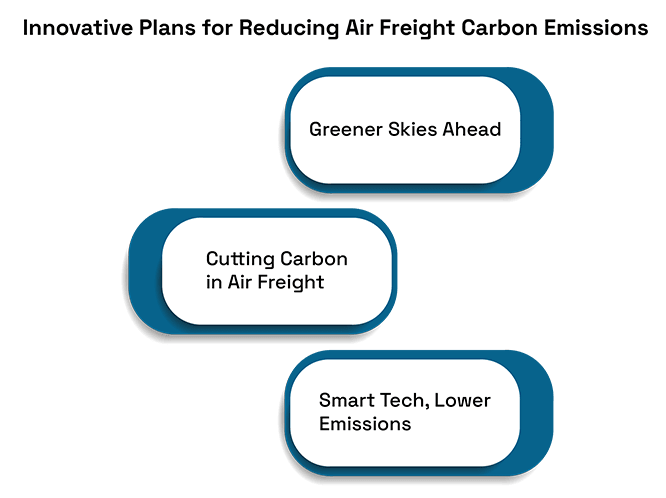
Innovative Plans for Reducing Air Freight Carbon Emissions
Airlines are introducing many advanced approaches to reduce emissions. Advanced digital systems enable efficient flight planning, predictive maintenance, and route optimization. Freight forwarding services now integrate carbon tracking tools within Global supply chain services to help businesses monitor their emission levels. Moreover, collaboration between cargo freight forwarders and customs authorities confirms that import export registration and documentation processes work with low-emission goals. Delivery Duty Paid (DDP) logistics and DAPs models further simplify end-to-end shipping while encouraging greener delivery systems through consolidation and improved load management.

How To Reduce Your Air Cargo CO2 Emissions?
Businesses can take many steps to lower their air cargo emissions. Using multimodal transport options, combining air and sea routes, reduces total CO2 output. Partnering with experienced freight forwarding companies offering Comprehensive import-export support also helps identify the most efficient Incoterms for greener logistics operations. Organizations should also prioritize export register compliance and collaborate with the importer of record services to ensure smooth handling under Delivered Duty Paid logistics. Choosing carriers that invest in SAF and energy-efficient aircraft models contributes hugely to lowering emissions across the complete import export business chain.
Simple Steps to Minimize Air Freight Emissions
Organization can make air freight more effective by checking each shipment before booking. Check whether air transport is important, combine suitable shipments where possible, or select routes with fewer unnecessary transfers. Lighter packaging can also minimize cargo weight when product protection is not affected. Tracking shipment emissions over time helps organization identify high-impact routes & make better shipping decisions for future shipments.
Air Freight Decarbonization Starts with Smarter Routing and Effective Work
Decarbonization in air freight includes more than aircraft technology. Smarter routing, smart analytics, efficient ground operations, or better cargo planning can help reduce unnecessary travel and resource use. Freight forwarding providers can support businesses by improving shipment planning, selecting efficient transport options, and managing air or ground movements. Digital shipment management can also enhance visibility & help reduce unnecessary handling and operational inefficiencies.
Demand for Air Transport is Growing. How Do We Make It Greener?
As demand for air cargo continues to grow, logistics offers need to focus on more effective ways to move goods. Better route planning, enhance cargo utilization, shipment consolidation, or efficient ground handling can help reduce unnecessary resource use. Businesses can also work with logistics partners that offer shipping options aligned with their lower-impact operation goals.
Conclusions
Sustainable air freight is no longer a vision; it is a present necessity. With SAF adoption, smarter routing, customs processes, and effective freight forwarding services, the logistics ecosystem is changing toward low-carbon operations. Organizations that work with Delivered Duty Paid logistics, follow proper HS Code standards, and use importer of record services or exporter of record services are not only confirming agreement but also supporting a cleaner, greener future for international trade.
DID YOU KNOW?
According to EASA’s 2025 European Aviation Environmental Report, aviation accounted for about 2.5% of global CO₂ emissions in 2023. The report highlights efficient aircraft operations and airspace management as ways to reduce emissions.
FAQs:
What information should businesses offer when planning sustainable air freight?
Organization should consider the cargo weight, dimensions, origin, destination, required delivery time, & shipping requirements. This information helps logistics offer assess suitable routing and shipping options for the shipment.
How can cargo planning improve the efficiency of air freight?
Accurate cargo planning helps organization use available space more effectively, avoid unnecessary shipments, and manage pickup and delivery activities. Better planning can improve transport efficiency while reducing unnecessary movement.
What role do freight forwarding services play in air freight sustainability?
Freight forwarding services integrate carbon tracking, optimize routes, and collaborate with customs brokers to ensure that shipping operations are both efficient and environmentally friendly.
How can businesses reduce their air cargo CO2 emissions?
Businesses can reduce emissions by using multimodal transport, partnering with sustainable freight forwarding companies, choosing carriers that use SAF, and adopting energy-efficient Incoterms like DDP and DAP.
Why is sustainable air freight important for global trade?
Sustainable air freight ensures that growing international trade remains environmentally responsible while meeting import-export compliance standards under systems like the Generalized System of Preferences (GSP) and HS Codes.