Insight
Today’s globalized world enables businesses from varying industries to expand globally, from aviation equipment and renewable energy technologies to importer of Record services, which assist international trade processes while meeting regulations & simplifying logistics – thus making Importer of Record services invaluable components of international trade processes such as those employed by renewable energy technologies, IT equipment, healthcare services or automotive manufacturing firms looking for international expansion. This article delves further into their contributions.
In today’s complex global trade landscape, IOR services (Importer of Record services) have become indispensable for businesses expanding globally across sectors such as renewable energy, IT, automotive, and healthcare. An Importer of Record confirms that goods entering global trade follow local import laws, including accurate classification under the HS Code, payment of duties and taxes, and agreement with safety standards. This skilled simplifies logistics, reduces delays, and confirms smooth customs clearance, allowing organizations to use preferential trade programs such as the Generalized System of Preferences while reducing costly fees and approval problems.
Understanding the Importer of Record
An IOR ensures that goods entering a country comply with local laws and regulations, including paying any duties, tariffs, or taxes due. Importers typically handle customs clearance processes themselves or through third-party representation if they are legally accountable for their shipments.
Importer of Record is essential for businesses seeking international expansion. IORs assume responsibilities ranging from complying with customs laws and organizing proper classification of goods – for instance, if a renewable energy company plans on importing wind turbine components into the European Union, then an IOR ensures all required paperwork is filed as well as any tariffs, taxes, or environmental regulations are met.

What Is an Importer?
Importers refer to an entity bringing goods into a country to sell or trade them, including customs clearance obligations. Companies engaging in import & export activities should understand the difference between importers and exporters. Importers bring goods into the country for trading purposes while exporters send them abroad.
Role of IOR in Renewable Energy Expansion
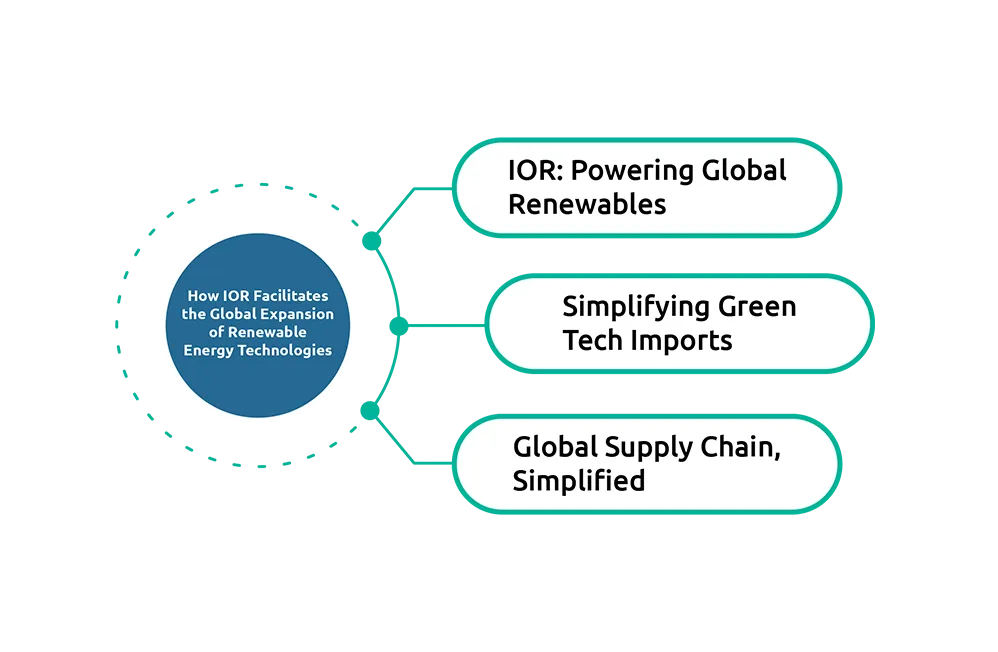
Renewable energy is a key sector that has greatly benefited from IOR services. As governments globally push towards more eco-friendly practices, the market for renewable energy technologies like solar panels, wind turbines, & electric vehicle equipment continues to rise.
Renewable energy companies seeking to expand into new markets often employ an IOR as a middleman between themselves & the customs regulations of the destination country. By handling import duties, taxes, and compliance issues on behalf of exporters, an IOR makes entering new markets much simpler, allowing companies to focus more on scaling operations and providing clean energy solutions.
Compliance and Logistics Roles for IOR
Employing an Importer of Record helps businesses avoid costly delays & penalties by complying with local customs laws. An IOR number can also help track shipment movements to confirm they have passed customs clearance.
Understanding logistics and customs brokers plays a significant role in the import process. An IOR works closely with customs brokers to streamline the import process and ensure smooth customs clearance. If the product requires special care, such as DAP (Delivery At Place), an expert IOR will manage this aspect without issue. Likewise, businesses in global logistics hubs such as Nuevo Laredo or Colton, CA need an expert IOR to manage these complex international routes efficiently.
Why IOR Is Necessary for Global Expansion
Global expansion can be both exciting and daunting. Each country has different rules governing tariffs, taxes, & imports; as an importer of record requires more than simple paperwork responsibilities, they involve understanding international logistics, local regulations, & customs process so businesses can streamline operations while staying compliant with all necessary laws and regulations.
Working with an IOR eliminates any confusion over who the importer and consignee roles are; in certain instances, goods may arrive directly with the consignee, yet legally speaking, the IOR remains responsible for compliance issues.
Conclusion
No matter your industry – renewable energy, IT, healthcare, or any other – importer of record services is an indispensable asset to international expansion. One union solutions will help ensure goods move seamlessly across borders while adhering to regulations and reaching markets on schedule. Businesses looking to capitalize on global trade can use an IOR’s expertise when navigating international logistics, tariffs, and compliance matters.
Did you know?
Did You Know, According to a World Trade Organization report, global trade in renewable energy technologies has experienced compound annual growth at 18% over the last several years due to strong demand in developing nations. Furthermore, countries like the US and China remain top exporters of these technologies, especially thanks to preferential programs such as, Generalized System of Preferences, which lessen tariffs for developing nations.
FAQs
What is an Importer of Record (IOR) and why is it important in global trade?
An Importer of Record is the legal party responsible for making sure goods entering a country follow all local import laws. This includes handling customs clearance, paying duties and taxes, and meeting regulatory requirements. IORs are important because they reduce compliance risks, simplify logistics, and help businesses expand into global markets without setting up local entities.
How do IOR services benefit the renewable energy industry?
IOR services support the renewable energy sector by managing the import of equipment such as solar panels, wind turbines, and EV components. They ensure compliance with customs rules, tariffs, and environmental standards. This allows renewable energy companies to focus on clean energy projects while smoothly entering new international markets.
Can an IOR help with preferential tariff programs like the Generalized System of Preferences (GSP)?
Yes, an IOR helps companies benefit from programs like GSP by ensuring products are correctly classified under the HS Code and meet eligibility rules. This helps businesses qualify for reduced or zero duties, leading to significant cost savings.
How do IOR services support industries beyond renewable energy?
IOR services are widely used across industries. In IT, they help import servers and networking equipment in compliance with regulations. In healthcare, they support the import of medical devices that meet strict safety standards such as FDA or CE. In aviation, they help fast-track critical Aircraft on Ground (AOG) parts. In automotive, they manage tariffs and compliance for parts and vehicles to reduce delays and control costs.
What is the difference between an Importer of Record and a Consignee?
The Importer of Record is legally responsible for customs compliance, including paying duties and taxes. The Consignee is the party that receives the goods. In some cases, both roles may be handled by the same entity, but the IOR always carries the legal responsibility. This clear separation helps avoid confusion, penalties, and compliance issues in international trade.