The Growing Complexity of Importing AI Hardware
Artificial intelligence is driving a new wave of digital transformation across industries, fueling unprecedented demand for advanced computing infrastructure. Businesses are using high performance GPUs and AI accelerators. They are used by companies that store a lot of data and by car makers. Some other companies that use them are airlines and hospitals. These companies need performance GPUs and AI accelerators for machine learning and other things that use a lot of data. As more companies start using AI around the world they need the hardware they can get. This creates chances for companies that want to use AI in different countries. It also creates some problems for these companies. Businesses are looking for ways to use AI technologies, like high performance GPUs and AI accelerators in markets.
Governments over the world are making rules about exporting advanced semiconductors and artificial intelligence hardware. They are doing this to keep their countries safe and to control technology. They also want to keep track of where high-performance computing equipment’s going. Because of this companies that import graphics processing units and artificial intelligence hardware have to be very careful about following trade rules. They have to make sure they have the licenses and that they fill out customs forms correctly. Companies also have to think about the risks in their supply chain. To avoid problems they have to make sure they have the documents and that they classify their products correctly. They also have to plan their logistics carefully.
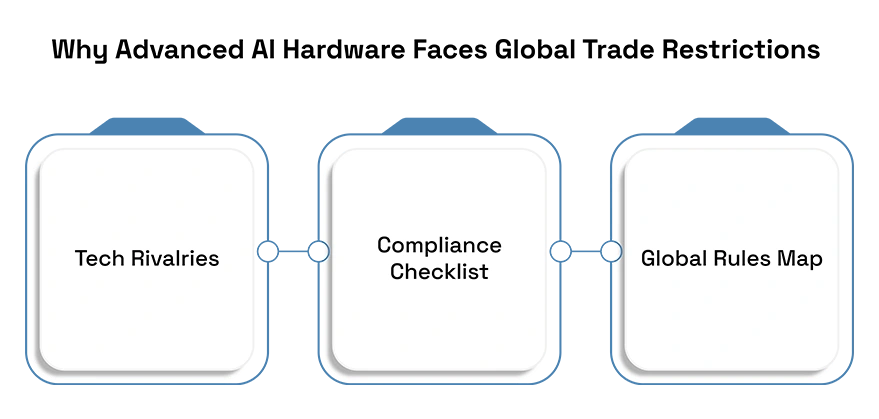
Why Advanced AI Hardware Faces Global Trade Restrictions
The world is changing with intelligence and this change is happening everywhere. Governments are making rules about who can move around computer parts like advanced GPUs and artificial intelligence hardware. They are doing this because they are worried about keeping their countries safe and being able to compete with countries when it comes to technology. They also think about how these powerful computer systems could be used by the military. Governments have rules about who can get artificial intelligence chips, servers and special computer parts that help them work faster. These rules say who can and cannot get these things and they also say which countries or groups are not allowed to have them.
When companies want to bring in or send out AI hardware they usually need to get special licenses first. This is really important when they are dealing with countries that have a lot of restrictions. So companies that work with technology around the world need to know what licenses they need check who their customers are and follow the rules of international trade. If they do not do this they might have problems like delays in getting their shipments issues with Customs, fines and problems with getting things to their customers. Companies need to understand the licensing requirements, for AI hardware and comply with them to avoid these problems.
Key Challenges in Importing GPUs into Restricted Markets
Importing GPUs and advanced AI hardware into restricted markets involves several regulatory and operational challenges that can significantly impact project timelines and costs. Customs rules need a lot of paperwork, technical details and information about who’s buying the product before they let it in. Getting the product classification under the correct HS code and HTS schedule is very important. This is because if you get it wrong it can cause delays, extra costs or penalties. Also many high-performance computer chips have rules about exporting them and limits on sharing technology. This makes getting the licenses a big worry, for people importing them.
When it comes to buying and selling things across borders things can get really complicated. There are a lot of things that can go wrong like problems between countries and changes in trade rules. These things can cause issues with getting the things we need like computer parts. This makes it really tough for companies to follow all the rules. So companies need to have systems, in place to make sure they are doing everything right. They need to keep records and work with people who know what they are doing like logistics experts and Importer of Record Service providers.
How Importer of Record Services Simplify AI Hardware Imports
When you bring things like computers and special machines into some countries you have to follow a lot of rules. This is where an Importer of Record service comes in. It helps companies make sure they are doing everything when they import things. The Importer of Record service makes sure all the paperwork is done correctly. They also handle things like taxes and customs fees, which can be a help to technology companies. This service is also important because it helps companies avoid problems like delays and fines. For companies that are using Artificial Intelligence in different countries having a good Importer of Record partner is very important.

Conclusion
Artificial intelligence is changing the way lots of industries work around the world. Because of this people are going to want advanced GPUs, AI accelerators and high-performance computing infrastructure. Artificial intelligence is going to need these things to keep getting better. The demand, for intelligence hardware is going to grow really fast. However, Trade regulations are also changing. Customs requirements are getting stricter. All these changes are going to make it really hard to move intelligence hardware from one country to another.
Organizations operating in the IT, aviation, medical equipment, and automotive sectors must prioritize compliance, accurate product classification, and efficient logistics planning to avoid costly disruptions. To do business across borders companies need to work with people who’re good at handling imports and exports. They also need to have a plan for getting things from one place to another. This will help them get their products through customs quickly and set up their intelligence systems without any problems. Companies that know a lot about the rules and have logistics will be able to take advantage of new opportunities in the global artificial intelligence hardware trade.
DID YOU KNOW
“Importing high-performance GPUs and AI hardware (such as NVIDIA H100s, H200s, and Blackwell architectures) into restricted markets requires strict compliance with export control frameworks like the U.S. Export Administration Regulations (EAR).”
FAQs
What determines if a GPU is export-restricted?
GPUs and AI accelerators are restricted based on their Total Processing Power (TPP), interconnect bandwidth, and whether they exceed specific processing limits (typically defined in INT8 and FP8 performance metrics).
How are countries classified for AI hardware imports?
Tier 1 (Allies): The US’s closest partners who can import advanced AI hardware with minimal restrictions. Tier 2 (Non-Embargoed/Developing): Over 120 nations (including India, Saudi Arabia, Brazil) that face quantity caps and require special licensing or Validated End-User (VEU) status to import large volumes of high-end GPUs. Tier 3 (Restricted): Embargoed countries (e.g., China, Russia, Iran) that are strictly forbidden from importing high-end Western AI chips.
What is a Validated End-User (VEU) / NVEU status?
To import high volumes of AI chips into Tier 2 countries like India, companies can apply for National Validated End-User (NVEU) status or utilize GVEU (General Validated End-User) lists.
What happens if I import without proper documentation?
Shipping high-value AI hardware without verified ECCN (Export Control Classification Number) documentation or end-use certification leads to massive penalties.
Are there new tracking or compliance requirements for imported hardware?
Yes. Under recent guidelines like the Chip Security Act, covered chips require embedded or firmware-level location verification mechanisms. Exporters and data center operators must prove they have active location-tracking and tenant-management systems in place to prevent the diversion of computing capacity to restricted actors.