Overview
After the 2022 takeover of Ukraine, Western governments introduced complete export restrictions on aerospace technologies supplied to Russia. These shows were related to cutting access to aircraft spare parts, avionics, and dual-use aerospace components necessary for both civil aviation capabilities. Also, sanctioned aerospace components continued to extend to Russian airlines and maintenance tools through an indirect trade route. Instead of direct exports, shipments are mainly shipped through third-country brokers, creating difficult approval challenges for exporters, regulators, and global trade. Despite strong customs clearance controls and updated export screening, import systems allowed supply chains to be used quickly, showing gaps in execution systems.
How Are Third-Country Trade Routes Challenging Aerospace Export Controls?
Third-country trade routes have made aerospace export controls more difficult by creating extra layers between suppliers and final users. Components may pass through multiple markets before reaching their destination, making end-user verification & shipment tracking more complex. Stronger compliance checks, documentation reviews, & supply chain visibility are becoming important to identify risks & prevent unauthorized transfers.
Who helped Russia after the aerospace component sanctions by the USA
Sanctions imposed by the United States Department of Commerce and the European Union restricted direct sales of aircraft parts from Western manufacturers. Organizations such as Airbus and Boeing officially stopped deliveries, yet trade data showed continued shipments through intermediary organizations. Investigations found networks of more than 360 companies worldwide involved in indirect export routes. Many shipments originated from businesses based in the United Arab Emirates, Turkey, and China. These organizations legally imported aerospace goods before re-exporting them to Russian buyers. In many cases, intermediary suppliers work with exporter of record services providers without openly violating domestic regulations, highlighting how approval responsibilities change across administrations.
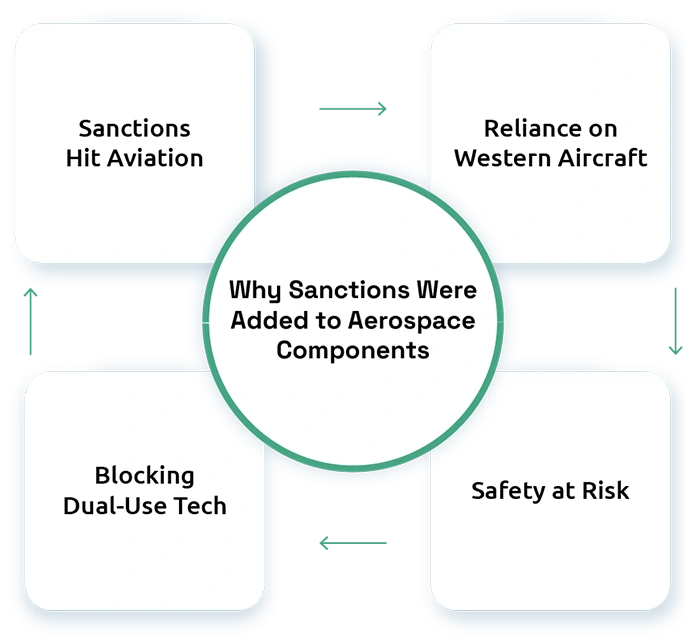
Why Sanctions Were Added to Aerospace Components
The aerospace sector became a main sanctions target because Russia’s airline parts shipments depend heavily on Western aircraft. Nearly two-thirds of operational planes are manufactured abroad, making spare parts necessary for safety and maintenance.
Sanctions aimed to:
- Limit aviation operational capability
- Stop dual-use technology from entering military aerospace programs
- Increase economic pressure by grounding aircraft equipments
Without access to certified parts, airlines faced maintenance delays, safety certification challenges, and rising working costs. Reports also indicated aircraft market overlap, removing parts from grounded planes to keep others growing, showing how critical supply disruption became in the supply chain.
How Third-Country Routes Manage Export Controls and Sanctions in Aerospace Parts
Third-country routes depend on legal trade gaps rather than direct seizure. Aerospace components are first sold to distributors in markets, then resold under new documentation. This process frequently involves HS code categorization differences and multi-layered logistics documentation.
Supply Chain Structuring
Companies use strategies such as:
- Indirect Procurement
- Goods shipped to an intermediary country before final delivery to Russia.
- Distributor Networks
- Local aviation maintenance organizations purchase parts and redistribute them through regional partners.
- Documentation Complexity
Transactions may pass through multiple International freight services providers, making tracking difficult in the supply chain. Trade analysis shows that by 2023, countries such as China, India, and Turkey will be responsible for over 90% of re-export activity involving controlled high-priority goods sent to Russia. These systems work within grey areas of trade approval software tracking, where execution depends heavily on due effort rather than being completely restricted.
Countries Linked to Bypassing Export Controls for Sanctioned Aerospace Components
Investigations and customs data repeatedly identify several transit hubs:
Central Asia and Eurasian Routes, Kazakhstan and Armenia. These countries benefited from regional trade agreements allowing duty-free shipments, allowing goods imported from Europe or Asia to be relabeled and re-exported. Aircraft electronic component re-exports from Kazakhstan increased mostly after 2022.
Middle East and Asia, the United Arab Emirates, Turkey, China, and India. In one investigation, more than 700 shipments of aviation parts were shipped through Indian brokers before reaching Russian airlines. These routes frequently involve freight forwarders, importer of record service providers, and layered inventory and order management systems that work with uncertain final end-users.

Conclusion
The continued shipping of sanctioned aerospace components shows how modern global trade chains can operate faster than regulatory systems. While export laws improved hugely after 2022, third-country routing, re-exports, and imports allowed aviation supply chains supporting Russia to remain partially working. Exporters and approval experts, this shows the growing importance of supply chain optimization, advanced tracking tools, and stronger verification of end-use declarations. Questions such as whether a customs broker can handle both import and export documentation or whether a freight forwarder can act as an exporter of record now carry greater approval risk.
DID YOU KNOW?
According to Russia’s Federal Air Transportation Agency, the country has 1,138 aircraft, two-thirds of which are Airbus and Boeing models that account for 90% of domestic passenger traffic.
FAQs:
1. Why were aerospace components sanctioned after the Ukraine conflict?
Sanctions were introduced following the conflict between Ukraine and Russia to restrict aviation capabilities, prevent dual-use technology transfers, and increase economic pressure by limiting access to certified aircraft parts.
2. Which authorities enforced aerospace export restrictions?
Export controls were mainly implemented by regulators such as the United States Department of Commerce and the European Union, which expanded licensing requirements and restricted aviation technology exports.
3. Did aircraft manufacturers stop supplying parts to Russia?
Yes. Major aircraft manufacturers like Airbus and Boeing officially stopped deliveries, although indirect trade networks later allowed some components to circulate through brokers.
4. Which countries became transit hubs for re-exported aerospace components?
Investigations frequently highlighted intermediary trade hubs including the United Arab Emirates, Turkey, China, and India, where goods were legally imported before being re-exported under new documentation.
5. How can companies prevent risks related to third-country trade routes?
Companies can reduce risks by strengthening end-user verification, monitoring re-export activities, maintaining accurate documentation, and using advanced compliance systems to identify potential sanctions violations.