
Introduction: Why Cargo Documentation Matters
Transporting goods globally isn’t just about moving items from one place to another. Correct documentation is difficult to ensure smooth customs clearance, legal compliance, & security against financial losses. One of the main difficulties in logistics is cargo repacking, which can create errors between the physical goods & the documents. These differences can lead to fines, shipment delays, or even the hold of goods. Understanding this issue is useful for businesses that depend on global trade.
What Is Cargo Repacking?
Cargo repacking is for the purpose of transporting goods from their original packaging into new boxes, pallets, or containers. Companies may do this to fix damaged packaging, combine shipments, save space, or meet airline & shipping standards. While repacking can make transport easier & safer, it also creates a risk that the information on shipping documents no longer matches the actual cargo.
The Importance of Accurate Shipping Documents
Shipping documents such as commercial invoices, packing lists, bills of lading, & certificates of origin are used as the official record of what is being shipped. They detail product descriptions, quantities, values, & origin. Customs authorities depend on these documents to calculate duties, enforce regulations, & approve shipments. If the documents don’t match the cargo after repacking, authorities may delay or reject the shipment, & insurance claims can also be canceled.

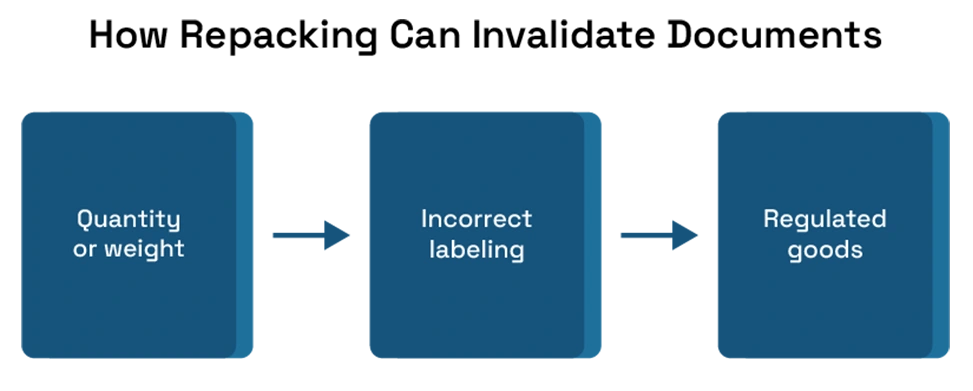
How Repacking Can Invalidate Documents
When cargo is repacked without proper documentation, many issues can develop. First, changes in quantity or weight can create problems. Like, breaking down a pallet into smaller boxes or combining shipments may change the total numbers, making the packing list inaccurate.
Second, incorrect labeling can cause problems. New labels applied during repacking must match the product descriptions in the documents. If they don’t, customs may consider the shipment improperly reported, which can result in fines or additional duties.
Third, repacking regulated goods, such as aerospace components, without following proper standards can make them non-compliant. This may invalidate export or import permission, creating legal risks.
Fourth, insurance claims may be affected. If the shipping documents do not reflect the repacked goods, insurance providers may deny claims for damaged or lost shipments.
Finally, in cross-border trade, mismatched documents can delay shipments at customs, increase costs, & disrupt supply chains. On-time delivery to clients can be affected, harming business relationships.
Managing Shipping Documents After Cargo Repacking
Following cargo repacking, it is required to correct all shipping documents to show the products being shipped. Changes in product size, weight, quantity, & labeling must be tracked properly. Correct customs documents allows customs officers to quickly check shipments, reducing the chance of delays, fines, & canceled cargo. Proper logistics management also makes sure that everyone involved in the cargo have current details. Businesses that keep documents correct and up to date can secure their shipments, avoid possible issues, and support smooth international trade.
Best Practices to Avoid Document Problems
To secure repacking from causing document issues, it’s important to update all shipping documents after repacking. The quantities, weights, & descriptions must match the actual cargo. Labels should be clear & consistent with the documents, with product codes & HS codes.
Businesses should work with experienced logistics partners, such as freight forwarders or Importer & Exporter of Record services, to ensure repacking & documentation deal with regulations. For high-value or regulated goods, following official packaging & marking guidelines is necessary. Managing a record of repacking activities, added with dates, personnel, & changes made, helps provide transparency during audits or insurance claims.
The Role of Logistics Partners in Compliance
Experienced logistics partners play an important role in avoiding documentation problems. They help ensure that repacked goods match all shipping documents, deal with customs regulations, & meet carrier standards. They also provide guidance on insurance, labeling, & regulatory requirements, minimizing the risk of delays or penalties.
Conclusion
Cargo repacking can be necessary for usability & safety, but it carries important risks if documentation is not completed. Different documents can cause customs delays, fines, denied insurance claims, & delayed supply chains. By carefully uploading documents, naming them correctly, & working with experienced logistics partners, businesses can ensure transportation moves easily. Giving attention to documentation & compliance is just as important as managing the cargo itself, helping protect the company, its clients, & its operations in global transportation.
Did You Know?
The business of shipping involves a complex array of documents from invoices to packing lists to certificates to bills of lading. Each of these documents has its own usage in a cargo’s journey, covering specific details essential for the smooth movement of the goods.
FAQ
Who can help businesses manage cargo repacking and documentation?
Experienced logistics providers, freight forwarders, and Importer of Record (IOR) or Exporter of Record (EOR) service providers can help ensure shipments remain compliant and move smoothly.
Which shipping documents should be updated after cargo repacking?
Businesses should update the packing list, commercial invoice, shipping labels, and any other documents that show package details.
Which types of goods are most affected by repacking?
Items that are regulated, high-value, or fragile—like medicines, chemicals, electronics, or aerospace parts—are most affected. Repacking them incorrectly can break legal rules or invalidate permits.
How can businesses prevent document issues after repacking?
Always update shipping papers with the correct quantities, weights, and descriptions. Make sure labels match the documents, and keep records of who repacked the items and when. Working with experienced logistics partners helps too.
What happens if documents don’t match after repacking?
Shipments can be delayed or stopped at customs. Companies may face fines, denied insurance claims, or interrupted supply chains, which can hurt business relationships and increase costs.