
Introduction
India’s medical device ecosystem is undergoing a significant transformation as the Central Drugs Standard Control Organisation shifts towards a more refined and risk-based system for regulating complex medical technologies. Cardiovascular and neurological devices play a vital role in modern healthcare. The modified categorization approach has become necessary for importers and suppliers in managing import/export documentation, logistics planning, and approval requirements. These updates are not merely regulatory changes; they directly impact supply chain optimization, Importer of Record responsibilities, Exporter of Record definition, and how international freight services manage high-risk trade. As India strengthens its oversight mechanisms, customers must balance high-risk innovation with high-reward market opportunities, all while guiding Incoterms, Delivered Duty Paid service, import duties and tariffs, and Real-time shipment tracking expectations in a globalized economy.
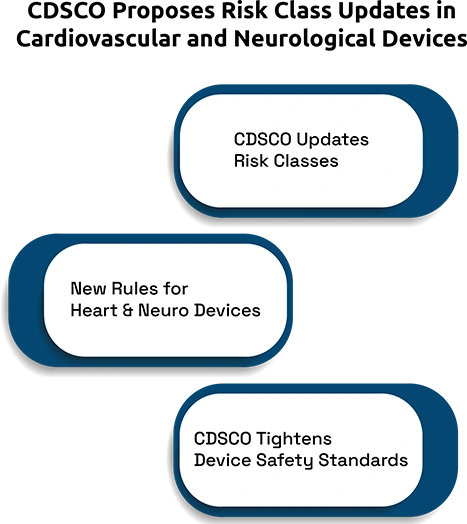
CDSCO Proposes Risk Class Updates in Cardiovascular and Neurological Devices
In its latest proposal, the CDSCO has introduced updated risk classifications and new device entries to confirm increased patient safety and regulatory predictability. The reclassification works more closely with global expectations yet retains India’s unique healthcare priorities. For businesses, the new changes from HS code identification and HTS Harmonized Tariff Schedule mapping to the use of IOR services for smooth border approval. Importers depending on DAP or Delivered at Place shipping methods must now support their risk exposure, while organizations using DAPs or DDP methods will require clearer visibility into regulatory guidelines. These developing regulatory systems show the same global change seen in programs such as the Generalized System of Preferences (GSP), where systematic rules determine market entry, trade benefits, and documentation requirements.

What is the Central Drugs Standard Control Organisation Medical Device Classification System?
The CDSCO classifies healthcare devices into four categories into A, B, C, and D, based on planned use and possible patient risk. This categorization shows approval approaches, post-market tracking responsibilities, and the type of Importer of Record service required for cross-border shipment. High-risk devices, mainly those in cardiovascular and neurological devices, frequently require strong quality management and special logistics support, such as temperature-controlled and complete delivery services. Accurate categorization is necessary not only for clinical safety but also for confirming the correct Import export documentation, validation of HS code, and calculation of import duties and tariffs. Misclassification can stop supply chain optimization and lead to delays that affect both patient care and market competitiveness.
Revised Risk-Based Reclassification of Neurological Medical Devices
Neurological devices, such as neurostimulators, diagnostic systems, and medical technologies, have been re-evaluated to better show their clinical difficulty. Many devices previously shown as moderate-risk are now raised to higher categories due to aggressive use, long-term implantation, or direct interaction with the central nervous system. This change requires manufacturers to strengthen clinical presence, technical reports, and post-market reporting. Importers must expect extra regulatory inspection and update their logistics workflows accordingly. When shipping such devices globally, working Incoterms with regulatory responsibilities becomes critical, mainly in methods such as DDP, where the seller takes full responsibility for customs approval.
Revised Risk-Based Reclassification of Cardiovascular Medical Devices
Cardiovascular devices such as scaffold implants, cardiac pacing devices, imaging systems, and medical-based technologies have also undergone huge reclassification. These products mainly require high-risk clinical applications, and the CDSCO aims to confirm that regulatory analysis shows these realities. As classifications change upward, customers must increase manufacturing documentation, quality audits, and testing systems. For importers and exporters, the updates change everything from the selection of freight methods to determining the need for IOR services when guiding customs. Since cardiovascular devices frequently fall under sensitive HS code listings with increased import duties and tariffs, proper classification helps stop approval issues.
Conclusion
The CDSCO’s reclassification of neurological and cardiovascular medical devices indicates a more extensive move toward global regulatory governance. While the updated categories introduce increased agreement issues, they also create long-term opportunities for manufacturers committed to innovation. In a landscape where supply chain optimization and cross-border clarity change business success, using early access to the CDSCO’s risk-based system is not just critical; it is necessary for unlocking the high rewards of India’s expanding medical device market.
DID YOU KNOW?
There are a total of 553 devices, of which 351 are in the cardiovascular category, while the other 202 are neurological devices.
FAQs:
What is the CDSCO medical device classification system?
CDSCO categorizes medical devices into four classes: A, B, C, and D based on patient risk and device usage, with high-risk devices requiring stricter regulatory approval and post-market surveillance.
Which cardiovascular devices are affected by the new CDSCO classification?
Devices like scaffold implants, cardiac pacemakers, imaging systems, and other high-risk cardiovascular technologies are now subject to stricter risk-based classification.
How does the reclassification impact import/export processes?
Importers must update HS codes, manage IOR responsibilities, and adjust shipping methods, particularly for high-risk devices requiring DDP or temperature-controlled logistics.
Why were neurological devices reclassified by CDSCO?
Many neurological devices previously considered moderate-risk are now higher-risk due to long-term implantation, aggressive usage, or direct interaction with the central nervous system.
What are the benefits of following CDSCO’s updated risk-based system?
Manufacturers and importers gain regulatory clarity, smoother customs approvals, optimized supply chains, and improved patient safety while accessing India’s growing medical device market.