
Introduction
The current global business environment is getting busier and hectic in terms of trade, and to win the business game, businesses have to keep ahead of any logistical difficulties, continue to comply with customs regulations, and navigate many complicated aspects of international business trade. Since the need for different commodities is constantly increasing, facilitating hassle-free business, beginning at importation and ending in exportation, is becoming crucial. Understanding the complexity of supply chain management, the meaning of incoterms, and customs clearance will be important to any business looking into simplifying its operations, cost reduction, and adherence to international trade laws. This guide highlights some major strategies and reflections businesses may use to overcome these challenges to enable uninterrupted and cost-effective international trading operations.
Supporting Green Aviation with Efficient Global Logistics
Global logistics helps aircraft parts and equipment reach safely and on time, which helps majorly to green aviation. A strong aircraft supply chain reduces delays, avoids unwanted transit, and helps reduce costs. Effective freight forwarding services make it simpler to handle customs, documents, and global deliveries. Smooth international shipping also allows airlines and manufacturers to get cost-effective aircraft parts faster. Businesses may support green aviation goals by improving logistics planning and following to trade standards, making sure that shipments are efficient, waste is reduced, and important aviation equipment reaches at its final location without unexpected delays or difficulties.
Import-Export Requirements for Sustainable Aviation Equipment
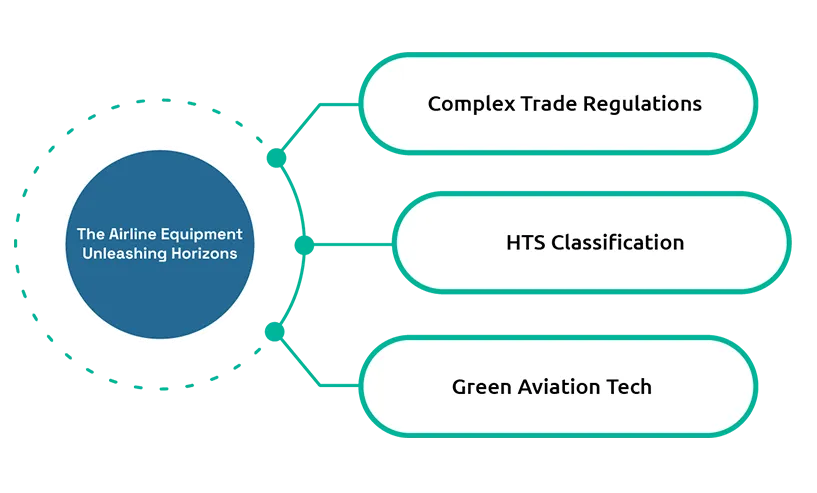
Aviation technology is one of the major factors in international trade, and the processes of air forwarding and export registration play a vital role in the process. HTS’s harmonised tariff system simplifies customs operations as businesses will be assisted in classifying aviation-related products for imports and exports. It is a system that would assure effective processing of products, hence, fewer delays, or rather facilitate faster international transactions.
Green aviation is becoming more significant as there is a more urgent need for sustainable technologies. Major international airports are on course towards reducing emissions, and the aviation equipment contributes immensely to such a shift. New technologies, like noise controls, and more advanced avionics, are changing the format of aviation on a global scale, and international trade is one of the assistants to transform this global river towards cleaner solutions.
Exporters and importers in the aviation sector must be ready to comply with the rigid laws governing the entry and clearance of aviation products in and out of a country. This is important to comply with international trade regulations, especially when many laws govern products such as aircraft parts or maintenance equipment. Trading with the right importer of record would ensure professional regulations on customs clearance of the aviation-related goods to meet local and international regulations.
Working with aviation logistics and compliance experts will enable businesses to deal with such complicated regulations, making their importing and exporting processes easier and more efficient.

Trade Requirements for Sustainable Aircraft Technology
Importing and exporting sustainable aviation technology requires careful product classification and shipment-specific regulatory checks. Equipment such as advanced avionics, aircraft components and ground-support systems may be subject to different customs classifications and export-control requirements depending on their technical specifications, origin and destination.
Before shipping, businesses should confirm the applicable HS code, commercial invoice details, packing list and any required export licences or technical documentation. Equipment containing controlled technology may require additional review before export. Importers should also check whether the destination country requires specific approvals or conformity documents for the equipment.
For aviation businesses, freight forwarding, Exporter of Record (EOR) and Importer of Record (IOR) arrangements may support different stages of the shipment. The applicable service depends on the direction of trade, the parties involved and the destination country’s requirements.
Conclusion
Supply chain management plays an important part in the modern multidimensional global trade, which is the key to opening new markets. At One Union Solutions, we aid companies through the complex aspects of international trading and compliance through solutions that streamline logistics and smooth operations. The fact that we have experience implies that we are careful with your goods so that you get time to focus on moving your business to the next level. Our solutions are based on the latest tools and Data-driven solutions to streamline your processes, reduce costs, and optimize your delivery schedules to make your global operations efficient and effective.
Did You Know,
The world market demand for aviation has increased by more than 15% within the last year due to changes in sustainable aviation technologies and efforts towards a friendlier environment and fuel-efficient aircraft.
FAQs
Why is the aviation supply chain important for sustainable aircraft?
A strong aviation supply chain ensures that aircraft parts reach manufacturers and airlines on time, helping projects stay on schedule.
What are the effects of the HTS harmonised tariff system on international trade?
The HTS harmonised tariff system facilitates the classification of products for customs clearance and establishes tariffs that must be paid for imported goods.
Why is supply chain management important in international trade?
The supply chain management makes goods flow harmoniously through the phases of the import-export process, thus eliminating delays and increasing efficiency.
What do Incoterms do to international shipping?
Incoterms outline the roles of the seller and the buyer in international trade, who will pay the shipping, insure against the cost, and pay the tariffs.
What documents are required to import sustainable aviation equipment?
Common documents include a commercial invoice transport document and accurate product classification details. Depending on the aircraft component, destination country additional licences or technical documents may also be required.