
Introduction
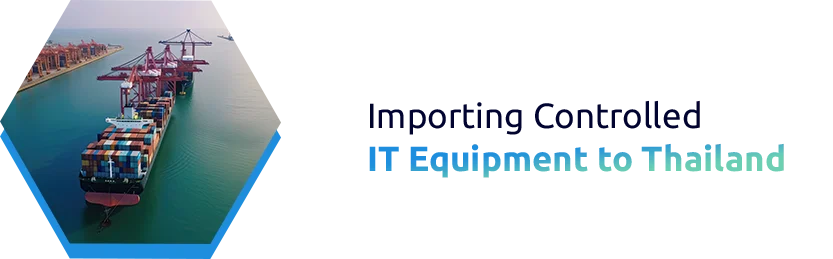
The importation of controlled IT equipment in Thailand is controlled by the stringent rules and regulations aimed at safeguarding national security and maintaining responsible utilization of the sensitive technology. Such equipment can be encrypted, include wireless data communications, or belong in the dual-use category, such as civilian and military use. Thailand applies these controls by employing several regulating bodies to fight fraud, misuse, and other risks like unauthorized surveillance or data theft.
Thailand’s booming digital economy and expanding data-center ecosystem—especially in Bangkok, Chonburi, and Rayong—are creating a sharp rise in demand for specialized, controlled IT and telecom equipment. As businesses scale their cloud infrastructure, cyber-security systems, and wireless technologies, the need for smooth imports has become essential. Companies must now align their logistics with Thailand’s strict telecommunication supply chain strategy, accurate harmonized system code (HS code) classification, and compliant freight forwarding services to avoid delays or penalties. Choosing the right importer of record (IOR), understanding the meaning of in transit during shipping, and using secure warehousing services ensures faster customs clearance and maintains full trade compliance for sensitive IT hardware entering the country.
What is Controlled IT Equipment?
Controlled IT equipment consists of hardware and software that are limited due to possible security threats. This encompasses gadgets that encrypt or have cryptographic technology to safeguard the data. It also includes equipment that facilitates wireless data transmission, transferring information without physical contact. The option of controlled IT equipment being regarded as the category of dual-use goods, i.e., civilian and military purposes, is also possible. Because of these issues, this type of equipment should not violate import restrictions to avoid illegal use, safeguard the country’s interests, and eliminate misconduct such as surveillance and data theft.
4 Types of IT Equipment Import Controls in Thailand
1. Thai Customs Controls: The Customs Department deals with the HS code classification, import declaration, collection of duties and taxes, & checks on the documentation. The importer must provide the invoices, packing lists, bill of loading, and valid import licenses to have the goods cleared.
2. National Broadcasting and Telecommunication Commission(NBTC): NBTC approves wireless and telecommunication devices. Some controlled goods are the dual-band Wi-Fi routers, RFID readers, the broadband PLC equipment, camera drones, and GPS smartwatches. Any wireless equipment should be type certified by NBTC (Class A or B) or by Supplier’s Declaration of Conformity (SDoC).
3. Thai Industrial Standards Institute (TISI) Controls: TISI oversees safety and electromagnetic compatibility certifications. It requires laboratory testing in approved laboratories, quality audits in factories, and issuance of certifications before customs clearance. Devices such as laptops, smart TVs, power banks, and modems are subject to such laws.
4. Department of Foreign Trade (DFT) Controls: The department controls regulations of dual-use goods. To avert the risks, the importer under the Trade Controls on Weapons of Mass Destruction Act must classify products under ECCNs or DUI codes, keep a comprehensive record of imports, ensure end-user legitimacy, and abide by certified internal compliance programs.

How to Import Controlled IT Equipment to Thailand
1. Registering of Business locally: Businesses must be registered locally, usually in a Thai Limited Company with a tax ID, VAT registration, and customs importer ID. Alternatively, the local presence can be simplified by appointing an importer of record.
2. Assign Equipment HS Codes: Assigning the correct HS code is the process of identifying the necessary licenses, tariffs, and compliance measures. Good classification is essential in order to prevent delays in shipments.
3. Make Import Documentation: The necessary documents include customs declaration and commercial invoices, transportation documentation, import licenses, technical reports, and certifications. Accuracy helps to speed up customs clearance.
4. Prepare Shipping Logistics: Hire the services of a reputed freight forwarder to obtain a safe package, adequate labelling, and prompt filing of customs documents in conformity with incoterms like DDP and DAP.
5. File Documentation, Pay Duties and Taxes: The documentation shall be completed using the Thailand electronic customs system. Custom duties are based on the HS codes, with a minimum of 0-20%, and the standard of 7% VAT paid on the CIF value.
6. Clearing Customs and Cargo Inspection: During the clearance of goods, customs inspects goods being shipped to ensure they are not breaching the regulations. Being approved by NBTC and TISI is essential to acceptance.
7. Post-Import Compliance Plan: Monitor renewal of licenses, maintain equipment quality, perform internal audit, monitor regulatory change, and maintain import record for at least five years.
The Role of Efficient Logistics in Importing Controlled IT Equipment
Importing regulated IT hardware into Thailand requires more than just documentation—it demands a robust logistics plan that integrates freight forwarding services, customs clearance expertise, and secure warehousing solutions for temperature-sensitive or high-value devices. Since many controlled IT components fall under dual-use regulations, businesses must ensure complete trade compliance and maintain visibility across every stage of shipment. Partnering with an experienced provider who understands importer of record responsibilities, DDP shipping requirements, and post-arrival tracking helps avoid shipment holds and ensures that your equipment is never stuck in an “in transit” status longer than necessary. These best practices create a dependable and compliant pathway for organizations scaling high-tech infrastructure across Thailand’s rapidly evolving digital landscape.
How to Obtain NBTC Approval
The initial step in the NBTC approval process is to categorize your tech equipment based on one of three categories – Class A, Class B, or Supplier’s Declaration of Conformity (SDoC). This aids in establishing the special certification requirements. This should be followed by taking the equipment through type-testing at the laboratory of NBTC or an ISO 17025-approved lab. After testing, include the application with all the necessary technical documentation, including test reports, product photos, user manuals, and circuit diagrams in Thai. The process of approval usually takes four to six weeks. Upon successful approval, a Type-Approval certificate will be issued to you, valid for three years.
Applying for TISI Import License
In the case of the TISI license, you can start by consulting the Thai Industrial Standards Institute website to locate the certification requirements that apply to your category of goods, namely, electrical safety and electromagnetic compatibility. Then, submit a request for product testing and factory quality control assessments through TISI’s e-licensing portal. You will also need to register your products via the National Single Window system, uploading product samples and relevant documents, including invoices and application forms. After customs releases your samples, print the release certificates and submit them for testing. TISI will then review the manufacturer’s Quality Management System. If the manufacturer is already registered with TISI, you must provide a letter of conformance; otherwise, TISI or a certified inspection body will conduct the assessment. Lastly, submit the final application, including all required technical documentation. Upon approval, generate a QR code that must be displayed alongside the TIS mark on the product label, completing the licensing process.
Why Partner with One Union Solutions?
Navigating Thailand’s import regulations demands expertise and precise coordination. One Union Solutions offers end-to-end export handling, trade compliance expertise, and customs clearance services tailored for controlled IT equipment. Our logistics services provide safe freight and effective control of paperwork and payment of duties. Working with us can reduce the risks of delays in shipments, fines for non-compliance, and demurrage to simplify your importation process in the tight context of Thailand.
Did You Know,
Recent government data shows that over 90% of dual-use technology shipments to Thailand now require formal pre-import licenses, confirming the country’s increasing emphasis on regulatory oversight.
FAQ’s
What defines controlled IT equipment for import?
Equipment with encryption, wireless data transmission, or dual-use classification governed by security controls.
Who regulates wireless device imports in Thailand?
The National Broadcasting & Telecommunication Commission (NBTC).
What documents are essential for customs clearance?
HS code classification, import license, technical reports, commercial invoices, and declaration forms.
What benefits does DDP shipping provide?
It includes duties and taxes upfront, enabling faster and smoother customs clearance.
How can One Union Solutions support the importer?
By offering expert trade compliance, customs brokerage, freight forwarding, and logistics to reduce import risks.