Overview
Licensing requirements for exporting controlled electronics and sensors have become increasingly difficult as governments implement strong regulations on dual-use technologies in global trade. For manufacturers and distributors working in global trade, understanding these controls is necessary to avoid shipment delays, penalties, or reputational risks. An export agreement is not limited to documentation. It works with HS code categorizations, the HTS Harmonized Tariff Schedule, customs clearance procedures, and international shipping terms such as DAP and other Incoterms. If you are managing international freight services directly or working with an exporter of record, licensing issues must be addressed before goods leave the country.
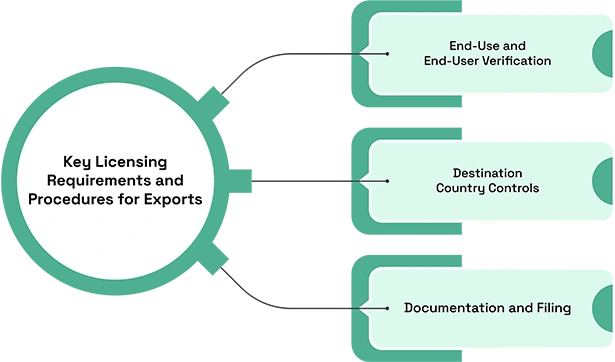
Key Licensing Requirements and Procedures for Exports
Governments regulate controlled electronics and sensors through export control laws that mainly require correct authorization before shipment to certain destinations, organizations, or end users. The licensing process usually involves:
Product Classification
The first step is determining whether your product is controlled. Authorities depend on control lists that categorize goods based on technical specifications. Accurate categorizations confirm correct inspections under the HS code and are combined with the HTS Harmonized Tariff Schedule for customs documentation.
End-Use and End-User Verification
Even if a product is not strictly military-grade, it may require a license depending on the declared end use. Organizations must make a due effort to confirm goods are not diverted for unauthorized purposes. This is mainly necessary when exporting sensors that could be combined into defense or monitoring systems.
Destination Country Controls
Some countries are related to stronger licensing authorities. Exporters must review country-specific restrictions. Trade preference programs such as the generalized system of preferences (GSP) may change tariffs, but they do not disallow export control laws.
Documentation and Filing
Applications generally require technical specifications, buyer information, intended use statements, and shipping details. Many exporters work with a Customs Broker or depend on the exporter of record services to confirm documentation accuracy and regulatory agreement.
Electronics and Sensors Will Need Export Control Classifications for Licensing?
Yes, most advanced electronics and sensors require export control classification before licensing decisions can be made.
Why Classification Matters
Export control categorizations determine whether a license is mandatory or whether a license exception applies. Goods such as infrared sensors, signal processors, encryption electronics, and aerospace-grade components frequently appear on control lists.
Improper categorizations can lead to shipment seizures or loss of export advantage. It also affects logistics planning, inventory, order management, and supply chain optimization strategies. Accurate categorization confirms that international shipping terms such as DAP or other Incoterms are applied correctly within contractual agreements.
Role of HS Code and HTS Harmonized Tariff Schedule
While export control classification is decided from tariff categorizations, both must align. The HS code supports customs clearance and duty calculations, whereas export control codes determine licensing requirements. Working these categorizations simplifies international freight services and reduces approval risks.
How do I get an Export License for Electronics and sensor goods?
Getting an export permit requires a systematic approach:
Step 1: Determine administrative and Classification
Identify the controlling authority and categorize your product according to applicable export control lists. Confirm corresponding HS code details for customs documentation.
Step 2: Conduct Internal Approval Review
Start an agreement program that includes end-use screening, restricted inspections, and documentation controls. Working with a Customs Broker can help confirm the combination of export controls and customs clearance requirements.
Step 3: Submit License Application
Complete the application with the applicable authority, such as technical descriptions, end-user certificates, and shipping details. Include international shipping terms such as DAPs or other Incoterms in your trade documentation where applicable.
Step 4: Await Approval and Maintain Records
Processing times change depending on product sensitivity and destination in the supply chain. Once approved, exporters must use strong licensing conditions and have records for inspection purposes.
Conclusion
Licensing requirements for exporting controlled electronics and sensors demand categorizations, documentation, and regulatory updates. HS code usage with the HTS Harmonized Tariff Schedule, to manage Incoterms like DAP, an agreement must be attached throughout the logistics process. By getting approval into inventory and order management and broader supply chain optimization efforts, exporters can maintain regulatory approval while supporting secure and effective global trade.
DID YOU KNOW?
China’s dual-use export control list includes more than 800 items, ranging from electronics and sensors to equipment and technology used in shipping and aerospace.
FAQs:
1. Do all electronics and sensors require an export license?
Not all electronics and sensors require a license. However, advanced or dual-use items such as infrared sensors, encryption devices, and aerospace-grade components may require export control categorization and licensing depending on the destination.
2. What is export control classification?
Export control categorizations show whether a product is subject to licensing requirements under national export control laws. It checks if the product appears on a control list and whether a license or exception applies.
3. How are HS codes different from export control classifications?
HS codes are used for customs clearance and tariff purposes under the HTS Harmonized Tariff Schedule, while export control categorizations determine whether a product requires an export license.
4. How long does it take to obtain an export license?
Processing times vary depending on the product’s sensitivity, destination country, and completeness of documentation. It may take many weeks to several months.
5. What documents are required for an export license application?
Exporters must provide technical specifications, end-user information, considered used statements, HS code details, shipping terms (such as DAP or other Incoterms), and supporting agreement documentation.