Introduction
The European Union is entering a new phase of border modernization with the launch of its digital Entry/Exit System (EES). As cross-border trade and logistics operations continue to grow, businesses are preparing for huge changes in Import export documentation, Import duties and tariffs approval, and real-time shipment tracking methods. The EU’s digital border system works to simplify logistics, strengthen security, and ensure smooth movement across member states. Also, these upgrades introduce new challenges for companies engaged in international freight services, mainly those working under Incoterms such as DAP or Delivered Duty Paid service. Knowing how this change affects supply chain improvement and IOR services has become necessary for logistics providers and businesses importing and exporting from the EU.
What is the new EU border system and how will it work?
The Entry/Exit System is a fully digital register that replaces manual checking for non-EU logistics entering or leaving the Schengen Area. Also, of physical stamps, the system records biometric data, logistics documents, and precise agreements. This helps track overstays, supports security agencies, and creates a uniform approach across member states. For companies involved in global logistics, the change to EES means quicker processing times at borders and increased predictability for improving their supply chains. Importers and exporters, depending on HS code classification, HTS Harmonized Tariff Schedule verification, and approval with the Generalized System of Preferences (GSP), will find that a simplified border system reduces delays related to manual checks. The automation built into EES also supports smooth work for the Importer of Record responsibilities. It improves the Exporter of Record definition in EU-related shipments by establishing a clearer documentation chain.

What are the issues with the new EU border system?
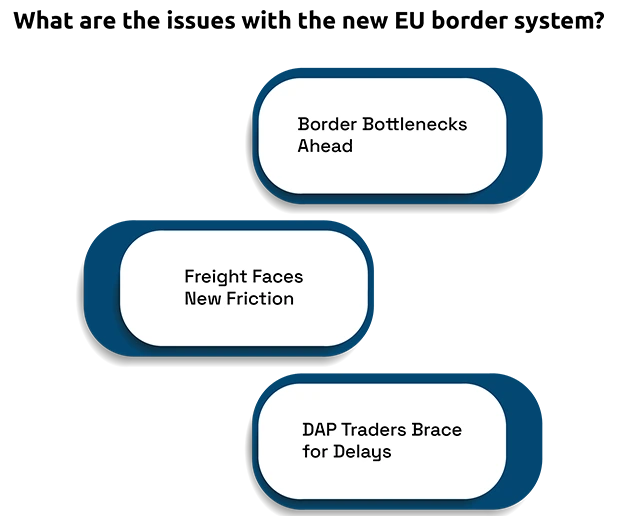
Despite its advantages, businesses have expressed concerns about the initial deployment of the new EU border system. The introduction of biometric capturing at border control points may lead to temporary congestion, specifically during peak logistics seasons. Logistics organizations worry that early disruptions could affect international freight services, last-mile delivery services, and even time-critical cargo shipments. Traders importing under DAP or DAPs issues fear possible delays that could improve duty billing cycles and increase working costs. Also, companies dealing with Import export documentation expect a learning curve as they adjust their internal systems to work with real-time EES updates. While the EU assures that the new system will ultimately reduce delay times, the shipping may still cause unpredictable delays, affecting businesses that depend on correct scheduling and predictable supply chain optimization.
Where does it apply and to whom?
The new EU border system applies across all Schengen Area border trade, air, land, and sea, for citizens of non-EU countries who do not require approval. It affects logistics, goods, truck drivers, and professionals who frequently cross EU borders. Although cargo itself does not pass through the new EU border system, personnel responsible for logistics operations, such as drivers managing International freight services or customs clearance teams managing IOR services, will work with the digital system regularly. Organizations working in Europe must confirm they understand how the new logistics agreement requirements affect their workforce’s ability to move, delivery timelines, and cross-border approval procedures.
How does One Union Solutions help you get EU border system approval?
One Union Solutions supports businesses in guiding the complexities of the new EU digital border environment by providing end-to-end agreement services. From guiding organizations through IOR and EOR requirements to supporting Import export documentation, they help organizations reduce risks during the transition to EES. Their expertise in HS Code validation, GSP benefit evaluation, and supply chain optimization confirms shipments move smoothly even when border systems are undergoing major upgrades. Their real-time shipment tracking tools, working with customized logistics support, allow businesses to avoid delays, stay updated on border changes, and maintain uninterrupted trade work.
Conclusion
The EU’s Entry/Exit System marks a major change in how borders are tracked and managed. While there may be short-term issues, the long-term advantages are major for logistics experts and global businesses. Organizations that prepare early, mainly through partners such as One Union Solutions, can confirm approval, reduce working risks, and keep their supply chains strong in an increasingly digital trade environment.
DID YOU KNOW?
The EES must be active at every Schengen border crossing point in all 29 participating countries by April 10, 2026.
FAQs:
- What is the EU Entry/Exit System (EES)?
The EES is a digital platform that records biometrics and logistics data of non-EU logistics entering or leaving the Schengen Area. It replaces manual passport stamping and improves security, accuracy, and border efficiency.
- How will EES affect import–export and logistics businesses?
Logistics teams, drivers, and customs staff will undergo digital checks, which may temporarily slow border movement. However, long-term, it increases predictability, reduces manual delays, and supports smoother supply chain operations.
- Will EES cause border delays?
During the initial rollout, biometric capturing and system migration may cause congestion. Once stabilized, EES is expected to significantly reduce wait times and improve border workflow efficiency.
- Does EES apply to goods or only people?
EES does not track cargo. It applies only to non-EU citizens crossing borders. However, since truck drivers and logistics staff must use EES, shipment timings may be indirectly affected.
- How can One Union Solutions help with EES compliance?
They provide support for IOR/EOR processes, import–export documentation, HS code validation, tariff assessments, and real-time shipment tracking, ensuring businesses stay compliant and avoid operational delays under the EES system.