Introduction
Delays in customs can happen before to a shipment reaching at the border. Clearance problems may result from the wrong HS code, a missing document, an incorrect customs value, or a missing approval. A virtual model of a package and its customs process is produced by a digital customs twin. It can use shipment data and customs requirements to find possible risks before shipping. This connects digital twin logistics with customs automation and customs clearance technology. By helping importers in identify issues early on, it can also improve predictive customs compliance. The growth of AI-based risk analysis and the declaration of a Customs Integrated System by India in 2026 show the growing value of digital customs and border clearance technology.
What Is a Digital Customs Twin?
With the use of digital twin technology, a real system is digitally replicated. It may show products, routes, storage spaces, and supply-chain processes in logistics. Using product details, HS codes, documents, customs value, tariffs, and import rules, a customs digital twin produces a virtual shipping model. This digital replica of shipment can help find possible customs issues before shipping. It can also support virtual customs clearance by testing different situations and helping importers prepare for risks.
How Would a Digital Customs Twin Work?
First, the system creates a digital shipment profile using basic shipment data, such as the product, quantity, origin, value, destination, importer, and shipping route. Next, HS code verification compares the product with the proposed HS code. This supports HS classification, customs classification, and automated HS code checking. The twin also checks customs documentation and import documents, including invoices, packing lists, transport documents, certificates, and permits. Automated document verification can find missing or incorrect customs paperwork.
It can support customs duty calculation, import tax calculation, landed cost, and customs valuation to estimate the expected costs. Finally, a customs risk assessment can flag classification errors, missing documents, incorrect values, missing permits, or possible inspections. This helps identify import compliance risk and customs inspection risk early.
How AI Could Make Digital Customs Twins More Useful
AI can make a digital customs twin more useful by studying large amounts of shipment and customs data. It can find unusual patterns and flag possible problems before the shipment reaches customs. With AI customs clearance, the system can check shipment documents for missing or inconsistent information. AI customs compliance can also compare product details with classification data and highlight possible HS code issues.
Predictive customs analytics can help identify risks before cargo moves. Machine learning customs systems can learn from past shipment patterns and improve risk detection over time. A customs risk assessment with AI features can also perform different “what-if” scenarios. It can compare, for example, the possible impacts on customs cost, risk, or clearance of a change in HS code, route, value, or documents.
What Could Importers Simulate Before Shipping?
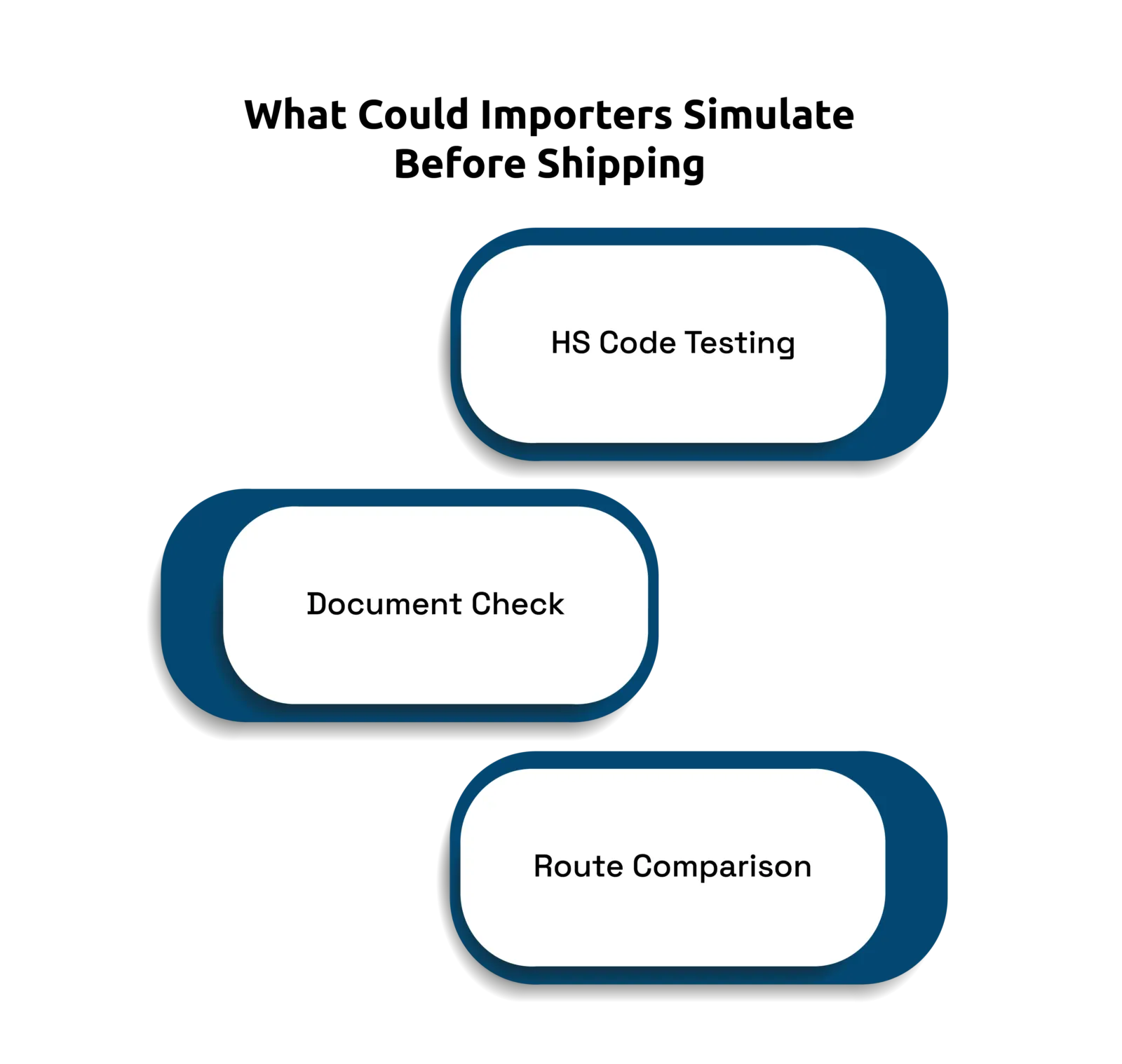
A customs simulation can help importers test different shipment conditions before the goods move. For example, they can compare different HS code options to find possible classification issues and reduce uncertainty. Before shipping, tariffs, taxes, and other customs costs can be calculated through import scenario planning. Invoices, packing lists, licenses, certificates, and different documents can be checked by the system to verify if they are prepared for clearance.
A border clearance simulation can highlight shipments that may need extra customs review. Customs risk simulation can also help identify possible inspection risks based on shipment details and past patterns.
Importers can compare different ports and routes when delays or congestion are possible. They can also test how a new regulation, permit, or compliance requirement may affect the shipment. This type of planning can support shipment risk prediction and help importers fix potential problems before the cargo reaches the border.
Digital Customs Twins and the Future of Border Clearance
Customs is moving from paperwork to digital documents, automated checks, predictive compliance, and eventually more advanced simulation. This change can make border clearance faster and help identify problems earlier. India’s ICES already supports electronic customs processing and connects customs with trade, transport, banking, and other regulatory systems.
In the future, digital customs twins could allow importers to create a virtual shipment and check its possible customs journey before the goods are physically moved. This could help identify documentation, classification, duty, and compliance risks earlier and improve customs clearance technology.
Conclusion – Can Importers Simulate Border Clearance Before Shipping?
Digital customs twins can help importers check shipment, customs, and compliance risks before shipping. AI can review documents, classification, duties, and other data while testing different shipment situations. They can help companies in improving their capacity, reducing risks, and avoiding issues before goods reaches the border, but they cannot ensure a customs clearance.
Did You Know
The global digital twin market size was valued at USD 24.48 billion in 2025 and is projected to grow from USD 33.97 billion in 2026 to USD 384.79 billion by 2034, exhibiting a CAGR of 35.40% during the forecast period.
FAQ
What happens when a digital customs twin finds a shipment error?
It shows where the issue is and identifies the error. Customs delays can be reduced by the importer verifying the HS code, documents, shipment value, or approval before to delivery.
Are digital customs twins the same as customs clearance software?
No. Traditional software may manage customs tasks, while a digital customs twin focuses more on creating a virtual shipment and testing possible outcomes.
Can a digital customs twin work with real-time customs data?
Yes, where reliable data is available, real-time information can help update the shipment model and improve its risk assessment.
Can a digital customs twin simulate border clearance?
It can simulate possible clearance conditions and identify risks, but it cannot reproduce every decision made by a customs authority.
Why would an importer use a digital customs twin before shipping?
It helps find customs risks, document errors, and classification issues early, so the importer can fix them before shipping.