Insight
The interconnectedness of global trade into the European Union has never been more of a reality, yet it is always a challenge to navigate the customs requirements. Starting with getting the tariff requirements under control to simplify clearing sensitive shipments, all these work up to the efficiency of cross-border logistics. It applies particularly to aviation components, car technology, information technology infrastructure, or medical equipment. In the case of businesses investing in shipments of high value, the distinction between seamless trade and expensive delay lies in understanding the responsibilities of the importer of record, compliance frameworks, and delivery frameworks.
Partnering with experienced trade & customs experts ensures proper documentation & adherence to EU regulations. Specialized logistics solutions, including careful handling & DDP shipping, minimize the risk of delays & damage. A structured approach to compliance & delivery enables businesses to expand easily & reliably across European markets.
Importer & Exporter of Record
Every shipment into the EU designates an importer of record, the entity legally responsible for ensuring proper compliance, paying duties, and maintaining documentation. For exporters, the role of exporter of record carries equal weight. It means adhering to export declaration services, abiding by international export regulations, and aligning with export compliance management expectations.
Understanding these differences answers the critical question of what an importer means and how it differs from the exporter representation service. While the importer of record definition focuses on obligations when goods enter EU territory, the exporter definition applies to responsibilities when those goods leave their origin country. Hence, effective trade logistics and compliance depend on the alignment of both sides.

Customs Valuation and Tariffs
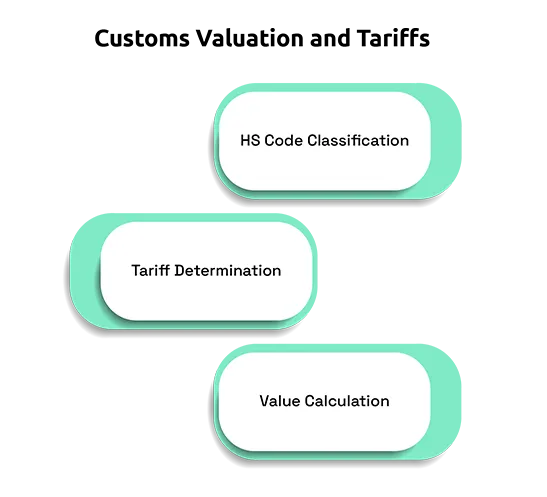
One of the pillars of EU trade compliance is customs valuation. Most duties and value-added tax are calculated based on the customs value, and proper reporting can avoid conflicts and fines. The process is most frequently associated with the classification based on the HS code or the HTS harmonized tariff, which determines the tariff to apply. Accuracy is essential to maximizing customs duty management, whether the tariff is a specific or compound duty.
Defining the importer’s meaning in daily operations involves ensuring the declared value is precise and compliant. A customs broker can assist companies in valuation methodology and harmonization with trade regulations. The result? Duties are carefully calculated, goods are accurately measured for import statistics, and compliance is preserved throughout the chain.
Under the 2026 EU Customs Reform, the previous €150 duty-free limit has been removed. This means that starting in July 2026, even low-value shipments face a fixed tax rate, making accurate HS code classification mandatory for every product.
Compliance and Documentation
In the case of shipments into the EU, documentation is important. The backbone of customs clearance support is often composed of commercial invoices, certificates of origin, bills of lading, and packing lists. Other paperwork may be required, like conformity certificates or health standards documentation.
When managed incorrectly, these processes result in demurrage, delays, or penalties. Import documentation services ensure that the burden is reduced by creating accurate declarations and connecting the dots between import terms and customs clearance expectations. Whether through DAP incoterms or Delivery Duty Paid logistics, ensuring shipment customs paid helps businesses access markets without disruption.
Trade Obligations and Delivery Frameworks
Shipments often involve sensitive equipment shipping, so the applied delivery model matters. Businesses choosing DDP shipping terms, where import duty handling and import tax management are included, benefit from predictability. Even in 2026, if you use DDP, you must make sure your digital info matches the shipping company’s records. This helps you avoid getting stuck at the border. DAP shipping solutions, conversely, stop short of covering local duties, increasing flexibility but requiring stronger importer exporter compliance management.
Door-to-door delivery service models increasingly combine white glove shipping service and fragile item transportation, offering handled-with-care shipments for critical goods. Whether this means global supply chain services geared toward high-value goods transport or project cargo handling for large-scale deliveries, import compliance services anchor the process.
Overcoming Trade Challenges
The challenges experienced by businesses are similar in rate since they could include delays by customs, tariff variation, or flawed record keeping. Unstable tariff policies add to the costs, and the trade requirements are complicated, so import-export management must be proactive. End-to-end export processing aids companies in removing their exposure to this kind of risk, and synchronized export customs brokerage and customs tax management streamlines border barriers.
With international freight forwarding systems optimized to support time-critical delivery service, specialized shipment care provides peace of mind. Whether goods require a white glove logistics process or specialized asset protection delivery, proper compliance ensures costs are contained and timelines are protected.
Conclusion
Blooming trade into the EU depends on clear customs frameworks, careful duty calculation, and accurate importer of record services. From regulatory import management to customized delivery solutions, expert oversight helps businesses protect their shipments, keep operations compliant, and streamline delivery across international borders. At One Union Solutions, we provide the expertise and support to simplify your journey, ensuring every shipment crosses smoothly with efficiency and compliance.
Did You Know,
Global trade grew by $2.5 trillion in 2025, increasing by about 7.5% to a record of $35 trillion
Trade in goods drove most of the expansion, growing by about 7% and adding roughly $1.8 trillion to global growth.Trade in services grew by around 8%, contributing about $700 billion to the total increase.
FAQ’s
Q1: What is the role of an Importer of Record (IOR) in EU trade?
An IOR ensures imported goods comply with EU customs regulations, maintains proper records, and is responsible for paying duties and taxes.
Q2: How do DDP and DAP shipping terms differ in the EU?
With DDP (Delivered Duty Paid), the seller covers all costs including duties and taxes, while under DAP (Delivered at Place), the buyer handles local import charges.
Q3. What is the most common reason for shipment rejections at the EU border today?
The most common reason is missing or incorrect digital information. Even if your paperwork is perfect, neglecting to provide accurate 6-digit HS codes before the goods reach the border will result in instant rejection or extended wait times.
Q4: What challenges do companies face during EU customs clearance?
Delays, incorrect tariff application, missing or incomplete documentation, and potential storage or demurrage charges are common hurdles.
Q5: Can sensitive or high-value goods receive specialized shipping in the EU?
Yes, fragile or expensive shipments can be transported safely using solutions like white glove delivery or tailored handling services.