Understanding Customs Compliance in Aviation Logistics
Shipping aircraft components across borders requires strict rules and regulations. Unlike general cargo, aviation parts must address safety and airworthiness standards before they can be cleared & used. This makes customs compliance a very important part of the overall logistics process.
Each shipment can be classified correctly using an HS code, & in some fields aligned with the harmonized tariff schedule (HTS), to make sure the right duties & taxes are applied. In some cases, trade programs like the generalized system of preferences (GSP) can help to lower costs if the shipment qualifies. For organisations that are working with aviation, IT, medical, & automotive industries, maintaining compliance is necessary to avoid delays and keep operations running smoothly.
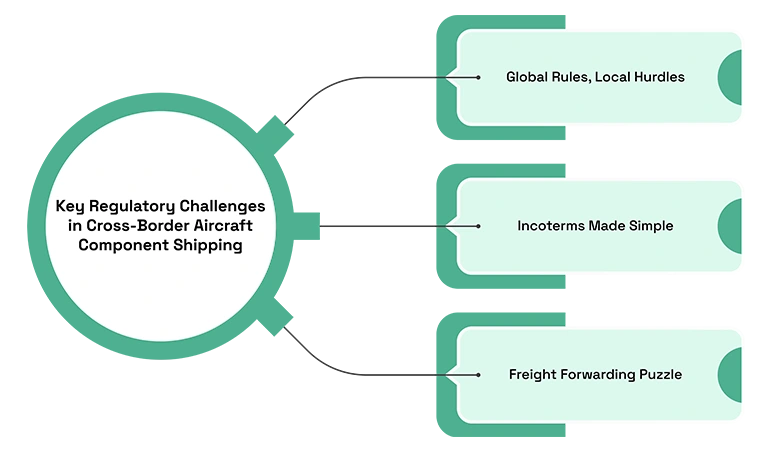
Key Regulatory Challenges in Cross-Border Aircraft Component Shipping
One of the biggest challenges in cross-border shipping is dealing with different rules & regulations in each country. Aircraft components usually need permissions from many authorities, which makes the process more difficult and time-sensitive.
Understanding trade terms like Incoterms is also important. For example, terms like DAP (Delivered at Place) explain who is responsible for delivery, duties, & risks. If these terms are misunderstood, it can lead to unexpected costs or confusion during shipping.
Additionally, aviation parts are usually high-value and sensitive. This means they go through stricter inspections and compliance checks. As a result, international freight forwarding becomes more challenging & needs proper planning and coordination.
Documentation and Certification Requirements
The right documentation is very important for smooth & easy customs clearance. Aircraft components need proper paperwork like commercial invoices, packing lists, certificates of origin, and airworthiness certificates to avoid delays and ensure easy processing.
Another important challenge is clearly defining roles and responsibilities in international shipments. When shipping high-value aviation components, it is important to know who is responsible for compliance, documentation, and declarations. This is where EOR and IOR help to ensure that all legal requirements are managed properly.
Good coordination between logistics providers, customs authorities, and internal teams is also very important. Even small mistakes in paperwork can cause delays. Many businesses now use digital tools and compliance systems to enhance accuracy & manage inventory and orders more easily.
Delays, Risks, and Cost Implications of Non-Compliance
Not following customs rules can result in serious problems in aviation logistics. Delays in customs clearance can affect service, & in some cases, grounded aircraft can cause major financial losses.
Mistakes in classification, missing documents, or incorrect shipment details can result in penalties, fines, or goods being held at customs. These issues increase costs & also affect overall supply chain performance.
For industries including aviation & the automotive supply chain, a delay in one shipment can impact many services across the world. This makes it very important to maintain accuracy & efficiency at every step.

Best Practices to Overcome Customs Compliance Challenges
To manage customs compliance properly, businesses need to take a planned approach. Working with experienced partners in international logistics & freight forwarding can help to ensure that shipments move easily across borders.
Using Importer of Record & Exporter of Record services helps organizations to handle compliance responsibilities more easily. Also, using modern customs compliance services and digital tools can improve visibility, minimize manual errors, & keep service on track.
Clear communication, proper paperwork, & a good understanding of trade terms like DAP are important to avoid confusion. By including compliance in overall logistics and supply chain planning, businesses can minimize risks and improve efficiency.
For companies working in aviation, IT, medical, and automotive industries, having a strong compliance plan is key to easy and successful global service.
Did you know?
Airlines transport over 62 million cargo tonnes of goods a year, representing more than 33% of global trade by value but less than 1% of world trade by volume.
FAQs
Why is customs compliance important for aircraft components?
Customs compliance ensures that aircraft parts meet all legal and safety requirements. It helps avoid delays, penalties, and ensures smooth operations in aviation logistics.
What documents are required for shipping aircraft components internationally?
Common documents include commercial invoices, packing lists, certificates of origin, and airworthiness certificates. Accurate paperwork helps in faster customs clearance.
What are the common challenges in cross-border shipping of aircraft parts?
Major challenges include different country regulations, strict inspections, complex documentation, and delays in approvals.
How can businesses avoid delays in customs clearance?
Businesses can avoid delays by preparing accurate documents, using correct HS codes, and working with experienced logistics partners.
What role do Importer of Record and Exporter of Record services play?
These services help manage legal responsibilities, documentation, and compliance requirements, making international shipping smoother and more efficient.