Executive Summary
A healthcare organization that was having serious difficulties getting CT scanners into the Middle East because of onerous regulatory requirements. The client, a preeminent supplier of cutting-edge medical imaging technologies, needed a practical plan to handle challenging certification procedures and guarantee adherence to various regional standards. Simplifying the import procedure, cutting down on delays, and making sure the medical equipment complied with all requirements for quick installation in nearby healthcare facilities were the objectives.
The Challenge Analysis
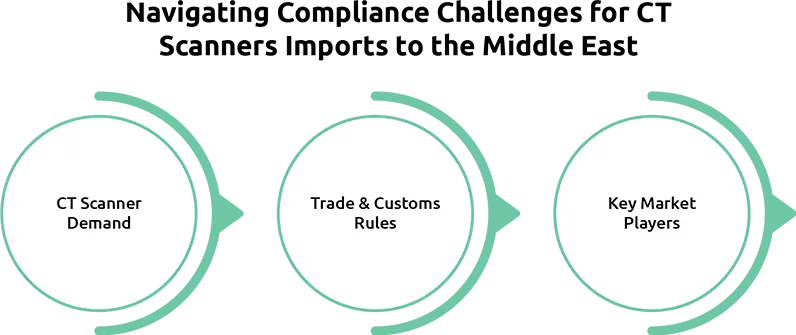
It was discovered during the first evaluation that the healthcare organization lacked a streamlined strategy to handle the highly complex regulatory landscape of the Middle East. Due to the disjointed structure of their current procedures, there were serious inefficiencies and a chance that important import and customs laws would not be followed. The region’s urgent need for CT scanners made these difficulties even more severe, making any delay not only a logistical problem but also a significant loss of healthcare services. The customer needed a reliable solution that would work with their current processes and improve their capacity to effectively serve healthcare providers.
What should importers look out for when shipping CT Scanners to the Middle East?
CT scanners Importers should verify the registration of the medical device, the import permit and any radiation-safety approval requirements in the destination country. The shipment documents should correctly state the manufacturer, model, serial numbers where applicable, declared value and product classification.
Transport planning is also essential because CT scanners contain heavy and sensitive components that may require special crating, careful handling and appropriate lifting arrangements. Importers should arrange with the receiving hospital for delivery and unloading facilities, and installation requirements, before dispatch. Check for the specific destination for regulatory approvals and documentation instead of assuming it is applicable all over the Middle East as requirements differ from country to country.
Ensuring Smooth Medical Equipment Imports with Importer of Record Services
An Importer of Record helps make medical equipment imports simple and safe. The IOR handles customs documents, pays import duties & taxes, and makes sure every shipment follows local rules. This improves customs compliance and helps avoid delays, charges, & extra costs. In healthcare logistics, timely delivery is very important because hospitals need equipment without delays. By working with an experienced Importer of Record, businesses can ship medical equipment across borders more easily, reduce risks, & makes sure products reach healthcare facilities quickly and in full compliance.
Installation and Site Readiness for Imported CT Scanners
Import compliance is only one aspect of getting a CT scanner into clinical use. Prior to shipping, health care facilities should verify that the installation location can support the scanner size, weight, electrical requirements, cooling requirements, and radiation shielding requirements. You should also think about delivery access and unloading arrangements, and the availability of qualified installation engineers. We work with the equipment supplier and hospital facilities team to coordinate these requirements to avoid any avoidable problems after the scanner arrives. Import clearance does not ensure the equipment is ready for clinical operation, as relevant installation, safety and regulatory requirements will also need to be met.
One Union Solutions also established compliance checkpoints, integrated real-time tracking systems, and optimized supply chain routes as part of a series of strategic modifications to the client’s logistics operations. These improvements made it possible to move CT scanners with more control, guaranteeing that the import procedure was carried out most efficiently and that all steps complied with legal requirements.
By implementing these calculated measures, One Union Solutions changed the way the client handled the import of vital medical supplies, guaranteeing the prompt, compliant, and effective delivery of CT scanners to the Middle East. This case study serves as an excellent example of how strategic management combined with focused expertise can effectively mitigate intricate regulatory challenges and improve operational efficiency in the field of global healthcare logistics.
Conclusion
Importing CT scanners into the Middle East can be difficult because of different customs rules & regulations. With proper planning and the support of an expert IOR service businesses can avoid delays & compliance problems. Good documentation, smooth customs clearance, & strong logistics help medical equipment reach hospitals on time. This allows healthcare providers to install important equipment faster & continue giving quality care to patients.
Did you know
estimates that there are more than 2 million different types of medical devices used around the world. Fast customs clearance and proper import compliance help hospitals receive these important devices without unnecessary delays.
FAQ
Why do CT scanner imports need special compliance?
CT scanners are medical devices that must follow local import rules, safety standards, and customs requirements before they can be used.
Why is proper documentation important for medical equipment imports?
Correct documents help customs clear the shipment faster, reduce delays, and avoid extra costs or penalties.
How can businesses make medical equipment imports easier?
They can work with an experienced Importer of Record, prepare accurate documents, follow local import rules, and plan shipments in advance.
How does customs compliance help medical equipment imports?
Customs compliance helps shipments clear faster, reduces delays, and avoids penalties or extra charges.
How does good planning improve medical equipment imports?
Good planning helps businesses prepare documents early, follow import rules, avoid delays, and deliver equipment safely and on time.