Introduction
The ongoing crisis in Bangladesh has created major trade disruptions, directly impacting the flow of goods between India and Bangladesh. As one of India’s major trading partners in South Asia, Bangladesh plays a crucial role in maintaining regional economic stability through the exchange of goods across borders. Both nations share strong trade partners in electronics, medical devices, and automotive components industries that now face supply chain delays and customs issues. International export regulations are tightening, and port work is slowing; businesses’ complex import and export activities are struggling to maintain delivery schedules and manage growing fees.
How does political instability in Bangladesh affect trade with India?
Political instability in Bangladesh can significantly disrupt trade with India because it creates uncertainty for businesses, logistics providers, and border authorities. During periods of unrest, transport routes, border checkpoints, and customs operations may experience delays, slowing the movement of goods between the two countries.
Impacts on Indian Exporters After the Crisis in Bangladesh
For Indian exporters, the crisis has stopped cross-border logistics and created challenges in fulfilling export requirements. Many small and medium exporters dependent on road and sea routes to Chittagong and Benapole have experienced shipment delays and higher operational costs. The situation has also increased dependence on DDP shipping and Incoterms arrangements to confirm timely delivery despite infrastructural uncertainties. Also, changes in the HTS Harmonized Tariff Schedule and difficulties with HS Code classifications have made customs clearance more difficult. Exporters dealing in IT hardware and automotive parts have been specifically affected, as they depend on accurate tariff documentation and quick border movement. In such times, having Export customs brokerage support and access to Comprehensive import-export support becomes necessary to reduce export-related risks.
Impacts on Indian Importers After the Crisis in Bangladesh
Indian importers who supply raw materials and machinery parts from Bangladesh are also facing critical supply issues. Importers report longer shipping times, higher freight charges, and complications in customs clearance support due to frequent documentation updates. The situation has emphasized the required for strong Importer of Record services that can manage difficult documentation and customs representation effectively.Businesses involved in import and export now need to review their risk plans and work with reliable service providers to keep operations running smoothly. As international export rules change, especially related to GSP benefits, importers are also relying more on expert support for registration and managing global supply chains.
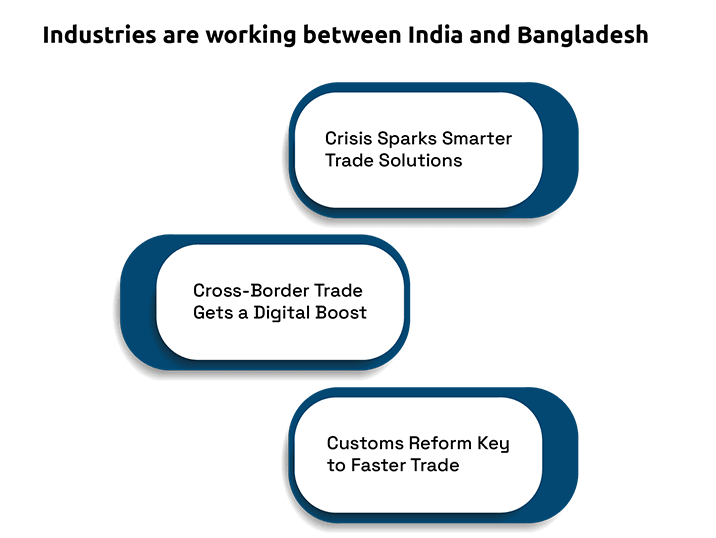
Industries are working between India and Bangladesh
Despite the crisis, there are opportunities for both nations to improve trade and develop sustainable systems. India and Bangladesh can get together on customs approval and trade system development. Improving data clarity and promoting effective importer-exporter work, both countries can reduce dependency on manual customs procedures and accelerate cross-border movement. Also, strengthening Import and export business combined across sectors such as IT, medical technology, and automotive manufacturing can increase trade stability and reduce future crisis impacts. Such collaborative efforts can confirm resilient and varied trade routes between the two countries.
How One Union Solutions Helps You After a Crisis in Bangladesh
During trade disruptions like the Bangladesh crisis, One Union Solutions helps importers and exporters keep their operations running smoothly by providing complete support. The company manages documentation, compliance, and customs processes to avoid delays and issues. With expertise in DDP shipping, customs brokerage, and clearance, they help businesses handle logistics challenges and avoid penalties. They also guide companies on Incoterms, HS codes, and international regulations, ensuring efficient global supply chain operations. Overall, they act as a reliable partner, offering Importer of Record (IOR) and logistics support across different countries.
Conclusion
The crisis in Bangladesh has shown how fragile regional trade can be and why stronger import and export systems are needed between India and nearby countries. Indian businesses must adjust by focusing on compliance and using expert support. With reliable partners like One Union Solutions, companies can protect their operations through strong IOR services, efficient DDP shipping, and smooth customs clearance, helping trade continue even during uncertain times.
DID YOU KNOW?
In the past few weeks, orders from businesses dealing in large quantities of export goods, automobile parts, grains, etc., have fallen by almost 60%. Bangladesh is a huge market for us, exporting millions of dollars every year. But the current situation has put the brakes on all business between the two countries.
FAQs:
-
How has the crisis in Bangladesh affected trade with India?
The crisis has disrupted supply chains, delayed customs clearance, and slowed logistics operations between India and Bangladesh. Both importers and exporters face higher freight costs and longer shipping times.
-
Which industries are most affected by the Bangladesh trade crisis?
Industries such as IT hardware, medical devices, and automotive components are among the hardest hit due to their reliance on timely imports and exports across the India–Bangladesh border.
-
What challenges do Indian exporters currently face?
Indian exporters face shipment delays, changes in HTS Harmonized Tariff Schedules, and challenges with HS Code classifications. Many have turned to DDP and specialized customs brokerage services for smoother operations.
-
How can Importer of Record (IOR) services help during a trade crisis?
IOR services ensure compliance with import regulations, handle customs documentation, and represent businesses before authorities, allowing importers to continue trading without legal or logistical setbacks.
-
How does One Union Solutions support trade continuity during the Bangladesh crisis?
One Union Solutions offers Importer of Record, Export customs brokerage, and DDP shipping solutions. Their expertise helps clients manage customs challenges, maintain regulatory compliance, and stabilize supply chains.