Introduction
Hospitals and other healthcare centers depend on medical equipment like CT and MRI scanners, surgical equipment, and patient monitors. But companies are finding it more difficult to find and import medical equipment on time due to global shortages. The medical device supply chain can affected by a lack of raw materials, a shortage of suppliers, and shipment delays. Because of this, importers facing increased costs, longer delivery delays, and difficulties finding goods. Companies may reduce these difficulties by using supply chain control, import planning, and proper sourcing.
Understanding Global Shortages of Medical Devices
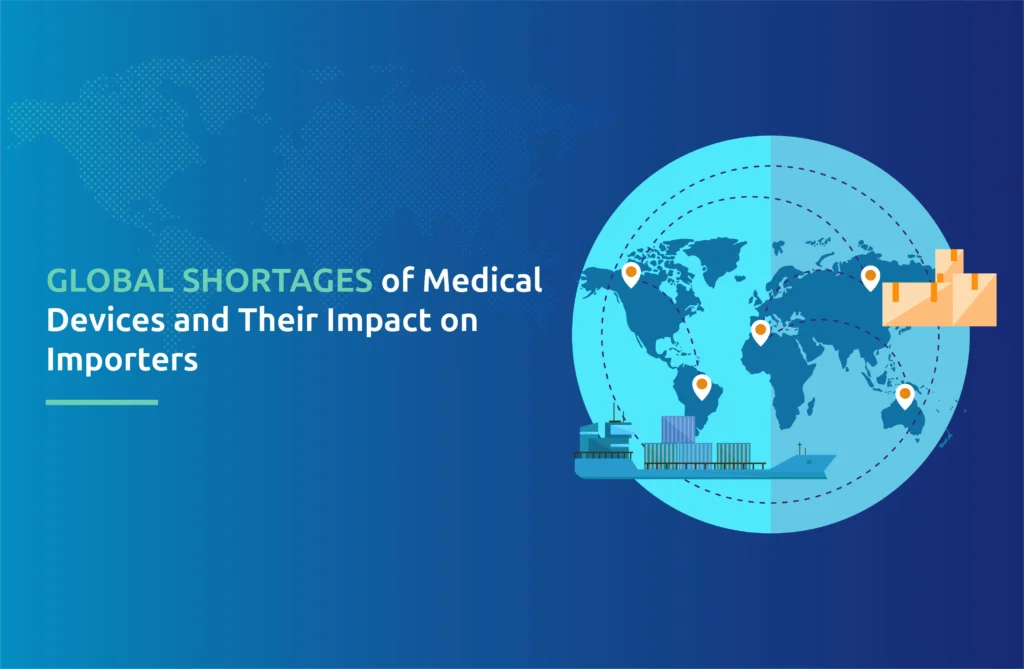
When companies cannot to get more medical equipment to fulfill demand, there are global shortages of medical devices. Medical equipment depend on many types of suppliers, raw materials, electronic parts, and foreign manufacturers. The design and delivery of complete equipment can be delayed by lack of any important component, like a chip or sensor. These shortages can happen in lots of methods. A part lack happens if the parts required to make a medical device are limited, so a product shortage happens when the final product is missing. Goods that are prepared but fail to get at their location in proper time are believed to be delayed. All of these issues have an affect on the quantity of medical equipment, make buying a medical devices difficult, and affect with international medical device trade and the global medical device supply chain.
What Are the Main Causes of Global Medical Device Shortages?
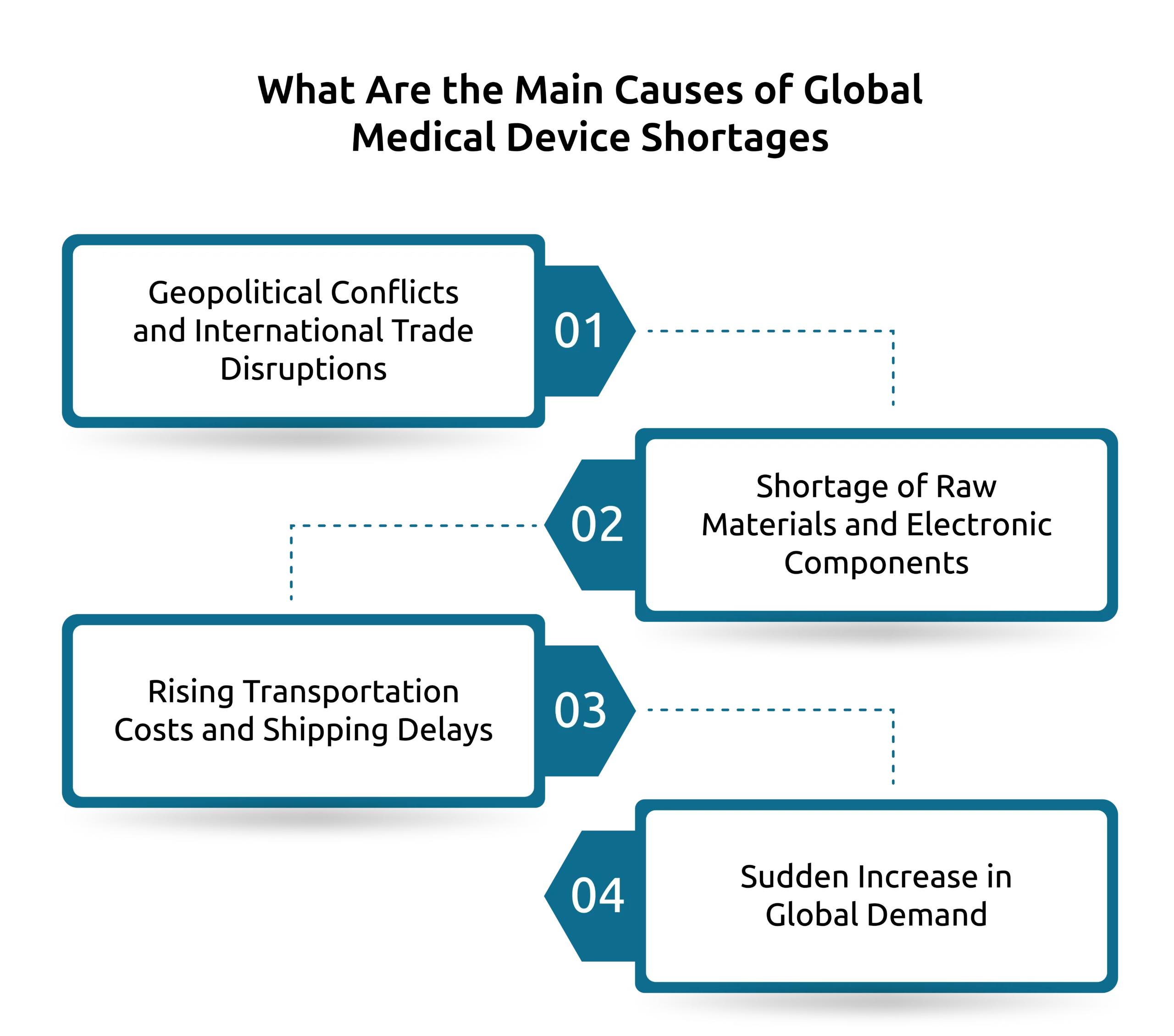
Shortages of medical devices can happen globally for a number of reasons. Medical equipment supply can be affected by issues with shipping, international trade, production, and raw materials. Below are explanations of some of the main reasons.
Geopolitical Conflicts and International Trade Disruptions
The supply of medical equipment and its parts may be affected by global issues and political tensions. Companies can find it challenging get raw materials or ship finished goods due to trade rules and border issues. Problematic shipping route changes can increase delivery times and make it more difficult for importers to trade medical devices globally.
Shortage of Raw Materials and Electronic Components
Different supplies and electronic parts are required for medical equipment to work correctly. Devices like CT scanners, MRI scanners, & patient tracking use circuit boards, semiconductors, and sensors. Medical device shortages of parts can result from companies reducing production or delaying orders when specific parts are not provided in proper amounts.
Dependence on Limited Manufacturers and Suppliers
Many medical equipment depend on parts produced by some suppliers. Other producers could have difficulty getting the required parts when a company stops processes because of technical issues, power problems, or other issues. So, depending on just a few of suppliers can put medical device supply chain at risk and make it more difficult for importers to find similar products.
Rising Transportation Costs and Shipping Delays
Before medical equipment reaches importers, it usually travels between different countries. Delivery can be delayed by port congestion, a lack of cargo space, & changes to shipping routes. Increase freight costs can also increase the total cost of importing medical equipment. These problems make it difficult for importers to control transport costs and delivery times.
Sudden Increase in Global Demand
When hospitals grow, medical centers improve their technology, or more testing services are required, demand for medical equipment may increase. Manufacturers can get more orders than they can process at these times. The availability of medical equipment in total can be affected by longer delays for goods like surgical equipment, diagnostic machines, and patient tracking systems.
Which Medical Devices Are Most Affected by Supply Shortages?
Many types of healthcare equipment, like MRI scanners, CT scanners, ultrasonic machines, patient monitors, ECG machines, surgical equipment, and laboratory devices, are affected by global medical device shortages. For their production, these devices require specific electronic parts, sensors, chips, and other parts. The production and delivery of equipment by companies may be delayed if these parts are missing. This has an impact on patient tracking systems, surgical equipment supply chains, and medical imaging equipment supply. Also, hospitals face difficulty find spare parts, buying new devices, and replace old equipment. Hospitals sometimes have to keep using old equipment or wait longer for new equipment. Medical services and hospital changes may also be affected by these delays. The availability of important diagnostic equipment may be affected, and the buying of medical equipment becomes more difficult.

How Do Medical Device Shortages Affect International Shipping and Customs Clearance?
Shortages of medical devices can make it difficult to ship globally and go through customs. Companies can choose for air freight rather than ocean freight when medical centers and importers require equipment quickly in order to reduce down on delivery time. But shipping by air can be costly, and shipping by sea can take longer. Delivery times may also be affected by shipping delays, restricted cargo space, & changes in shipping routes. Medical equipment shipment documents, like commercial invoices, packing lists, and air waybills, must be prepared by importers with correct product details. Before shipping, they have to check the destination country’s import rules & the medical device HS code. Product licenses, permits, or other permission is required, based on the country and equipment type. Medical device regulatory compliance checks and proper medical equipment customs clearance help importers avoid document issues and delays.
Conclusion
Global shortages of medical devices can increase import costs, cause shipments to be delayed, and make it difficult to find goods on time. By working with different suppliers, planning shipments before time, and following import regulations, importers can handle these issues. Companies can more easily handle medical equipment imports and deal with customs rules with the use of proper logistics support and IOR services.
Did You Know
The India medical devices market size is expected to increase from USD 18.3 billion in 2026 to USD 19.73 billion in 2027 and reach USD 28.46 billion by 2032, growing at a CAGR of 7.6% over 2027-2032.
FAQ
Why are MRI and CT scanners difficult to source during medical device shortages?
MRI and CT scanners need special electronic parts, chips, and sensors. When these parts are in short supply, manufacturers may take longer to complete and deliver the machines.
Can importers use alternative suppliers during medical equipment shortages?
Yes, importers can look for other suppliers. However, they must check product quality, technical details, documents, and required approvals before placing orders.
How can importers avoid customs delays during medical device shortages?
Importers should check HS codes, product details, import rules, and required documents before shipping. This helps reduce errors during customs clearance.
How does an Importer of Record help with medical equipment imports?
An Importer of Record helps manage applicable import responsibilities, customs documentation, and destination-country compliance requirements. It does not replace product registration or medical device approvals.
Which medical equipment is most affected by global supply shortages?
MRI scanners, CT machines, patient monitors, ultrasound machines, and laboratory equipment can face shortages due to limited electronic parts and manufacturing delays.