Introduction
Server and networking equipment, including servers, routers, switches, and storage systems, supports cloud computing, telecommunications, and data centres. However, new trade controls are affecting international shipments through export licensing, product classification, and end-user screening.
Nations are tightening the screws on some high-tech computer equipment to protect national security and prevent misuse. Before sending equipment out, importers have to check documents, identify special rules for the destination, and know the laws.
How Do Export Controls Affect Server and Networking Equipment Shipments?
Export controls can be used to determine if equipment can be exported from the country of origin, if a licence is required and if the proposed recipient is eligible to receive it. Buyers should not assume that because a product is available commercially it can be exported or imported without further checking.
Product classification is an important first step. Depending on the jurisdiction and product, a server, processor, encryption-enabled networking device, or specialized computing system may have a specific export classification. In the United States, the Export Administration Regulations (EAR) govern many commercial and dual-use items, with the Bureau of Industry and Security (BIS) administering relevant controls.
Classification is used to determine whether a product is controlled, whether a licence may be required and what restrictions should be reviewed. Technical factors such as processing performance, encryption capabilities, component specifications and product functionality may affect the assessment.
Also exporters and importers have to consider the destination, end user and end use intended. A shipment may need further authorization or may be prohibited if it involves a restricted organization, a prohibited transaction or a controlled destination. If shipments are misclassified, or if they are screened improperly, they might be held up, investigated by regulators, fined or sent back.
What Documents Should Importers Prepare Before Shipping IT Hardware?
Proper documentation is key to show that a shipment of servers or networking equipment has been properly declared and inspected. Documents needed differ by destination, product type, transaction structure and applicable controls.
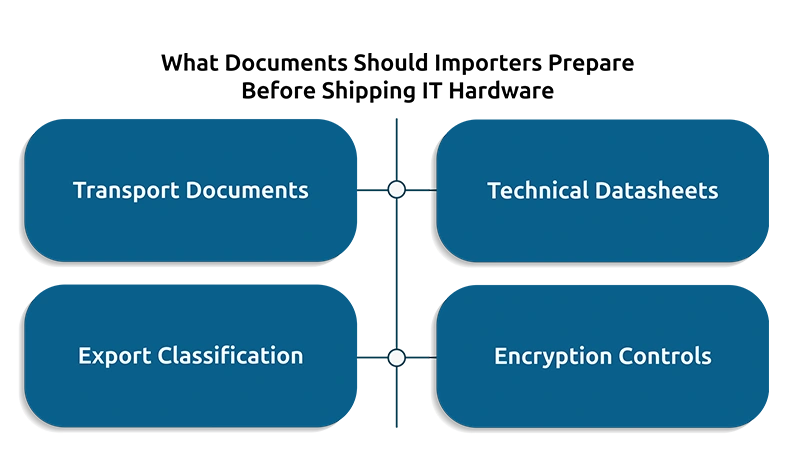
A commercial invoice should contain a detailed description of the equipment including the manufacturer name, model, quantity, unit value and total value of the shipment. The packing list should describe the packages and their contents and the bill of lading or air waybill should record the transportation arrangement.
Importers may also need technical datasheets, product specifications, evidence of country of origin, export classification details and any licences or authorizations that apply. If encryption or high-tech computing controls are involved, you may need to provide additional technical information to help us determine the regulatory status of your product.
The end user and end use of the equipment can be determined from end user statements and end use documentation. These records can be especially important where products will be used in data centers, telecommunications facilities, research institutions or within organizations working in sensitive sectors.
Businesses must check the commercial invoice, packing list, transport documents and customs declaration to ensure that product descriptions, quantities, values and consignee details are consistent before dispatch. When more specific identification is available, documentation should describe the actual transaction and not generic descriptions such as “computer parts”.
How Can New Trade Controls Delay Customs Clearance?
If customs authorities or other government agencies require additional information about the contents, origin, destination or intended use of the shipment, a shipment can be delayed. Such reviews can take place even after the equipment has been purchased and the transportation has been arranged.
One of the most common causes is that the declared product does not match the technical specifications. For example, an invoice can be for a shipment of general IT hardware, but datasheets attached to it show specialized computing equipment that needs further regulatory evaluation.
Another problem is where products in a single shipment are subject to different classification or control. Importers moving servers, processors, network switches, and encryption-enabled devices together should verify the treatment of each item instead of assuming that the entire shipment follows a single regulatory pathway.
Import processes can also be interrupted by missing authorizations, incomplete end-user information, incorrect customs values and unresolved sanctions concerns. Depending on the circumstances, the shipment may be held pending documentation, referred for additional review, returned to the exporter, or denied entry.
Product classification, party screening , document checks and licence checks can be done ahead of dispatch to reduce unnecessary delays. Advance preparation, however, does not ensure that customs clearance will occur within any particular time frame as final decisions rest with the relevant authorities.
What Role Does an Importer of Record Play in Controlled IT Equipment Imports?
The Importer of Record (IOR) shall be responsible for all relevant import customs declarations, documentation, duties and taxes under the relevant arrangement. It can help companies import server and networking equipment into countries where they do not have a local entity.
However, export controls or sanctions are not replaced by IOR services. Importers should check product classification, licensing, end users & destination-specific rules prior to shipment.

Conclusion
Export Licensing, Sanctions Screening, Product Classification & Customs Documentation Requirements – New trade controls could affect imports of server or networking equipment. “Businesses should verify product specifications, check regulations and get the correct paperwork in order before shipping.
Early co-ordination between suppliers, importers and logistics providers can help prevent unnecessary delays. For help with import customs requirements, use the Importer of Record (IOR) service. All shipments are subject to applicable trade controls or destination specific rules.
Did You Know?
In May 2025, the U.S. Bureau of Industry and Security (BIS) issued guidance explaining that certain advanced computing chips and servers, including some classified under ECCN 5A992.z, may require export authorisation for specified end uses or users.
FAQs
1. Do new trade controls apply to all server and networking equipment?
No. Requirements vary with the technical specifications of equipment, origin, destination, intended use and parties involved. Some products may be subject to additional controls or different treatment under the rules that apply.
2. Can advanced computing servers require an export licence?
Yes. Some advanced computing systems, processors and associated technology, depending on the classification, destination, end user and intended use, may require export authorization. Importers should work with the exporter and the appropriate compliance specialists prior to shipment to identify the rules that apply.
3. Which documents help reduced delays when importing networking equipment?
Typical documents include a commercial invoice, packing list, bill of lading or air waybill, product specifications and country of origin information. In addition, the transaction authorities may require export licenses, import permits, classification information or end-user documentation depending on the transaction .
4. Can an Importer of Record resolve export control restrictions?
Nope. An IOR can help meet applicable import-entry requirements, but cannot substitute for export licensing requirements, sanctions or prohibited-transaction restrictions. There are approvals to be done. The transaction must be legally possible.
5. How can businesses minimize the risk of customs delays for IT hardware?
The organizations must correctly classify the products, screen the parties includes, check the licences required, verify the declared values or prepare accurate shipping documents before dispatching the products. When suppliers, compliance teams and import service providers work together early, they can spot any problems before the equipment reaches the destination country.