
Introduction
The EU Carbon Border Adjustment Mechanism (CBAM) puts a carbon price on certain goods imported into the EU. In 2026, the EU has updated its CBAM default values for the definitive period. These values are used to calculate the embedded emissions of imported goods when actual emissions data is not used. A change in these values can affect CBAM calculations and the number of CBAM certificates an importer may need.
Importers should review their 2026 CBAM calculations, supplier data and related costs to make sure they are using the correct CBAM default values and meeting their CBAM compliance requirements.
What Are EU CBAM Default Values?
EU CBAM default values are standard emission values provided by the European Commission. They help importers calculate the embedded emissions of certain goods when suitable actual emissions data is not used. In 2026, importers can use CBAM actual values when the required emissions data is available and properly verified. Otherwise, the applicable CBAM default emissions can be used under the CBAM rules. These values are separate from customs tax and duties, which are calculated under customs rules.
The reported embedded carbon emissions are used for CBAM emission calculation and can affect the number of CBAM certificates required. Therefore, using the correct values is important for CBAM reporting requirements, import cost planning and overall CBAM compliance.
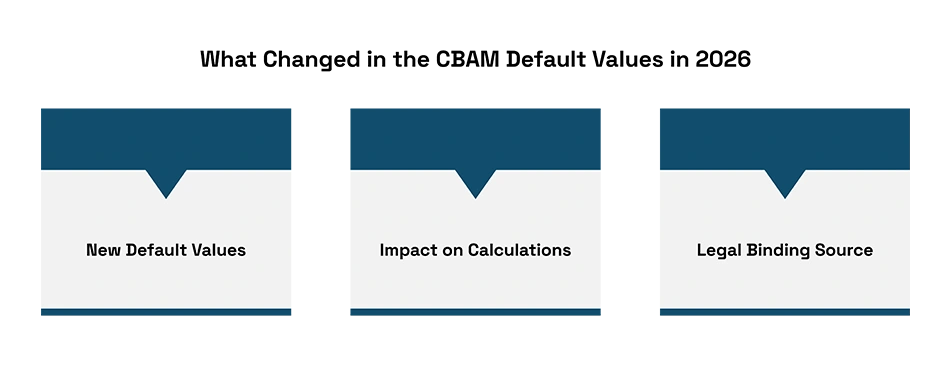
What Changed in the CBAM Default Values in 2026?
The CBAM definitive period is now in effect, with new CBAM default values used for calculating the embedded emissions of covered imports. The European Commission also issued Commission Implementing Regulation (EU) 2026/1740 to correct some values, product codes, production routes and units in the earlier regulation. These updated CBAM default values give importers revised data for their CBAM emission calculation. Importers should check the values used in their import records, supplier information and customs documentation before preparing CBAM declarations.
The Commission’s Excel file helps importers review the revised CBAM values, but the legally binding requirements come from the relevant CBAM regulation. This makes it important for EU importers, customs teams and businesses handling international trade compliance to use the correct information when planning their CBAM obligations.
How Do Default Values Affect CBAM Calculations?
In 2026, the CBAM default value helps importers calculate the embedded emissions linked to imported goods when actual emissions data is not used. The calculation starts with the quantity of goods imported and the applicable emission value. It may also consider the CBAM free allocation adjustment and any carbon price paid in third country, where applicable. The result is used for CBAM certificate calculation and helps determine the CBAM certificate requirement and related CBAM carbon cost. Accurate customs records, import documents, product quantity and supplier information are important for this process. An IOR (Importer of Record) or customs representative may also support the import process, depending on the shipment and applicable requirements.
What Could the Updated Default Values Mean for Importers?
The updated CBAM default values can affect how importers calculate the emissions linked to their goods and plan their CBAM carbon cost. The impact can also reach customs documentation, supplier data and overall import planning.
CBAM Cost Estimates May Change
A change in the CBAM default values can change the calculated embedded emissions of imported goods. This may affect the CBAM certificate requirement and the estimated cost linked to CBAM. Importers may therefore need to review their landed cost calculations along with customs duties, taxes and other import costs.
Supplier Data May Become More Important
Importers may need clear information from suppliers about the goods, production process and country of production. Good supplier data can help support the CBAM emission calculation and reduce errors in import compliance records.
Import Documentation Needs Better Coordination
Customs and CBAM information should be consistent. Details such as product classification, quantity, origin, producer and shipment documents should match. An IOR (Importer of Record), customs broker or other responsible party may need to coordinate these records, depending on the import arrangement.
Procurement Decisions May Be Affected
Importers may include CBAM carbon cost when reviewing the total cost of imported goods. Emissions data can become another factor in supplier discussions and landed cost analysis, alongside freight, customs duties and other import expenses.
Internal CBAM Processes May Need Updating
Importers using spreadsheets, customs systems or internal compliance tools should check whether they contain older CBAM default values. Updating calculation sheets and reporting procedures can help customs, finance, procurement and trade compliance teams work with the same information.

How Can an Importer Manage CBAM Data Across International Shipments?
In 2026, an importer should keep CBAM data accurate across all shipments. Product classification, importer and supplier information, country of production, quantity, shipment records and customs documentation should match. CBAM emissions data should also be kept with the related import records. An IOR (Importer of Record) or customs broker can help coordinate shipment information and record keeping. Customs clearance support and CBAM compliance are related but not the same function.
Conclusion – What the CBAM Default Value Change Means for Importers
The CBAM default values are an important part of embedded emissions calculations in 2026. Importers should use the current values instead of older assumptions and keep supplier emissions data, product classification and customs records accurate. An IOR (Importer of Record) or customs broker may help coordinate import information, while importers remain responsible for meeting their applicable CBAM compliance, reporting and certificate obligations.
Did you know
Free allocation for CBAM-covered sectors phases out through nine annual steps, from 2.5% liability in 2026 to full liability by 2034. As free allowances decrease, importers must purchase an increasing number of CBAM certificates.
FAQ
What should importers check when CBAM default values change?
Importers should check the applicable value, product classification, quantity, country of production, supplier data and existing CBAM calculations.
Do customs documents affect CBAM reporting?
They can. Product classification, quantity, importer details and other customs documentation should be consistent with the information used for CBAM reporting.
What happens if an importer uses the wrong CBAM default value?
The embedded emissions calculation may be incorrect, which can affect the reported CBAM information and certificate requirement.
Can updated CBAM default values change an importer’s CBAM cost?
Yes. A change in the value can affect the calculated emissions and may change the CBAM certificate requirement and related CBAM carbon cost.
What CBAM information should an importer collect from a supplier?
An importer may need information about the product, producer, production process, country of production and embedded emissions, depending on the applicable CBAM requirements.