2026 Changes the Focus From Reporting to Financial Compliance
2026 Transition to Financial Compliance, Beyond Reporting During the transition period, companies’ main focus was on collecting and reporting of emissions data. From 2026, authorised CBAM declarants must declare embedded emissions and surrender the corresponding CBAM certificates. The first annual CBAM declaration covering 2026 imports is due by 30 September 2027. This means companies should not treat 2026 emissions records as routine shipment paperwork; they form part of information that will later support a financial obligation.
Which Imports Fall Under CBAM?
CBAM applies to specific imported goods and customs classifications covered under the EU framework. Whether an import falls within CBAM depends on the product and its applicable customs code. Whether a shipment is affected depends on the specific goods and applicable customs classification rather than simply the broad industry in which the importer operates. This makes product-level classification an important starting point before emissions data is requested from overseas suppliers. An importer handling several product lines should therefore review the relevant CN codes and determine which shipments fall within the CBAM framework.
Why Old Emissions Data May No Longer Be Enough
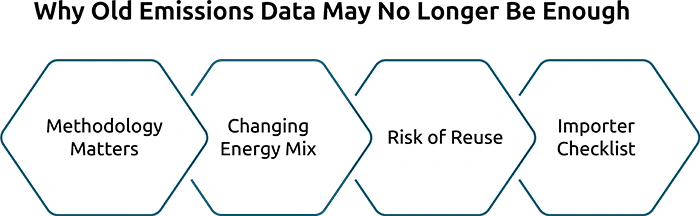
Importers may have emissions information collected during the transitional period, but that does not automatically make it suitable for 2026 definitive-period reporting. The methodology, supporting evidence and verification requirements now need to be considered when using actual emissions values. Production facilities may also change their electricity mix, energy consumption, production volumes or manufacturing processes during the year. Reusing an old emissions figure without checking whether it still reflects the relevant installation and production process can therefore create inconsistencies in the importer’s CBAM records.
Actual Emissions Require Stronger Supporting Evidence
Importers can use actual emissions values or applicable default values when preparing CBAM information. Where actual values are used, the emissions data supplied by the producer must be verified by an accredited independent verifier. Verification examines the monitoring approach, emissions calculations and supporting evidence at the installation where the CBAM goods are produced. This makes supplier documentation an important part of the importer’s compliance file rather than information that can simply be accepted without review.
Recheck How Suppliers Calculate Embedded Emissions
A supplier’s emissions number should be examined alongside the method used to produce it. Importers need to understand whether the figure relates to the correct installation, production process and quantity of goods being imported. Differences in production routes can materially change embedded-emissions calculations, particularly where manufacturers use different technologies or energy sources. The European Commission has published detailed 2026 guidance covering calculation methods and sector-specific requirements.

Verification Makes Data Quality More Important in 2026
The definitive regime introduces a formal verification structure for actual emissions. Accredited CBAM verifiers assess emissions calculations and supporting information at the relevant production installation before issuing verification reports. The European Commission states that verification is intended to provide reasonable assurance that the embedded-emissions calculation is correct and that the information is consistent and transparent. Importers relying on actual values therefore need to consider not only the emissions figure itself but also whether the underlying data can withstand the verification process.
The 50-Tonne Threshold Should Be Checked Before Import
From 2026, EU importers or their indirect customs representatives importing more than the 50-tonne single mass-based threshold of CBAM goods are required to have a CBAM account number or application reference number. The threshold applies to the relevant CBAM goods rather than acting as a general exemption from every CBAM-related consideration. Companies should therefore review expected annual import volumes and product classifications before shipments arrive instead of discovering the authorisation requirement after a shipment has been arranged.
Customs Data and Emissions Data Need to Match
CBAM information does not sit separately from the customs transaction. Product classification, quantity, country of origin and other shipment details feed into the process used to identify and report covered imports. The CBAM Registry itself allows emissions information to be viewed using details such as sector, goods code, country of origin and quantity. A mismatch between commercial documents, customs declarations and emissions records can therefore create questions when the information is reconciled.
Carbon Price Paid in the Origin Country Can Matter
CBAM calculations can take account of a carbon price already paid in the country where the goods were produced, where the applicable conditions are met. This means importers should obtain appropriate evidence rather than simply relying on a supplier statement that a carbon cost exists. The relevant amount and supporting information need to be considered within the CBAM calculation. Keeping evidence of qualifying carbon pricing arrangements alongside emissions records can therefore become an important part of the import documentation package.
What Importers Should Recheck During 2026
A practical CBAM review should begin with the product’s customs classification and whether it falls within the covered sectors. The importer should then confirm the producing installation, production route, quantity and emissions methodology used by the supplier. Supporting evidence should be retained for the figures used, while actual emissions data should be checked against the applicable verification requirements. Importers should also reconcile supplier information with customs records and identify whether any qualifying carbon price has already been paid in the country of production.
Prepare the 2026 Data Before It Becomes a Cost Issue
CBAM is no longer only an emissions-reporting exercise. From 2026, emissions information is connected to the calculation and surrender of CBAM certificates, making the quality of the underlying data commercially relevant. Importers should therefore revisit supplier emissions figures, confirm the applicable methodology, maintain supporting records and coordinate customs information with CBAM data. The earlier these checks are built into the import process, the less likely it is that missing or inconsistent information will surface when the annual declaration is being prepared.
Conclusion
CBAM in 2026 makes accurate emissions data an important part of EU import planning. Importers should recheck product classification, supplier emissions figures, calculation methods, verification records and applicable carbon-price evidence before preparing their declarations. Reviewing this information year-round gives businesses more time to identify any gaps and to ensure customs and emissions records align. For covered imports, treating emissions data as part of the import process rather than separate reporting paperwork can help avoid issues when the 2026 CBAM declaration is prepared.
Did You Know?
In the first week of 2026, the EU validated 10,483 customs declarations containing CBAM goods, covering 1.66 million tonnes of imports.
Frequently Asked Questions
What changed for CBAM importers in 2026?
CBAM entered its definitive regime on 1 January 2026. Importers of covered goods must meet authorisation, emissions declaration and certificate-related requirements under the definitive system.
Why should importers recheck emissions data in 2026?
Actual emissions data must follow the applicable CBAM methodology and, where actual values are used, must be supported by verification from an accredited verifier. Supplier figures should therefore be checked for accuracy and supporting evidence.
Why does product classification matter under CBAM?
CBAM applicability depends on the specific imported product and its applicable customs classification. Importers should verify the relevant CN code before determining whether CBAM requirements apply.
When is the first CBAM declaration for 2026 imports due?
The first CBAM declaration covering 2026 imports must be submitted by 30 September 2027, together with the required surrender of CBAM certificates.
Can importers use default emissions values?
CBAM permits the use of applicable default values or actual values. If an importer chooses actual values, the producer’s emissions data must meet the applicable verification requirements.