Insight
In 2026, ocean freight rates will be uncertain. Major trade routes are seeing changes in shipping costs; some are seeing increases, while others are seeing decreases. Container shipping rates are being affected by rising fuel costs, geopolitical problem, route changes, port traffic, and changes in cargo demand. Certain markets could face lower prices if more shipping capacity is restored to specific routes. The main reasons of the 2026 increase in ocean freight rates and their effects for global shipping are discussed.
What Is Happening to Ocean Freight Rates in 2026?
Ocean freight rates 2026 are changing across major shipping routes. Some routes have higher container shipping rates 2026, while others have lower rates as more shipping space becomes available. Spot ocean freight rates can change quickly based on demand and available space. Contract rates are agreed for a longer period, so they may change more slowly. This can make container freight prices different from one route to another.
These changes are part of wider global freight rates and freight rate trends in the container shipping market. Businesses need to check route conditions, demand, and available capacity when planning international shipping costs.
Why Are Ocean Freight Rates Rising Again?
Several factors are putting pressure on ocean freight rates in 2026. Higher fuel costs and changes in major shipping routes are two important reasons.
Higher Fuel and Bunker Costs
Fuel is a major cost for container ships. When bunker fuel prices and other shipping costs rise, carriers may face higher container ship costs. They may pass some of these costs to customers through a fuel surcharge or higher freight rates. Longer routes can also increase fuel use, adding to the insing cost impact on freight rates. The bunker adjustment factor may also change with prices.
Red Sea and Suez Canal Route Changes
Security concerns in the Red Sea have caused some ships to use the Cape of Good Hope route instead of the Suez Canal shipping route. These longer travels use more fuel and require ships to move from their regular routes for longer.
The Red Sea and Suez Canal are slowly restoring certain services, though issues remain unclear. These changes affect Suez Canal freight cost, vessel availability, and Asia-Europe shipping routes. As a result, Red Sea container shipping continues to face changes linked to vessel diversion and wider shipping route disruption.
Port Congestion Is Adding Pressure to Freight Rates
Port congestion 2026 is creating more pressure on the global shipping network. At busy Asian ports, container port congestion can lead to vessel bunching, container backlogs, and longer vessel waiting time. Typhoons and other weather problems can also delay port operations and cause missed schedules. When ships and containers stay longer at ports, available port capacity becomes tighter.
Border transport delays, longer delays, and terminal congestion may also happen at US and European ports. These issues may have an effect on the supply of containers and increase shipping delays for both importers & exporters. Carriers may have less efficient space available for new shipments as ports handle goods more slowly, which could put pressure on freight costs.
How Rising Ocean Freight Rates Affect Importers and Exporters
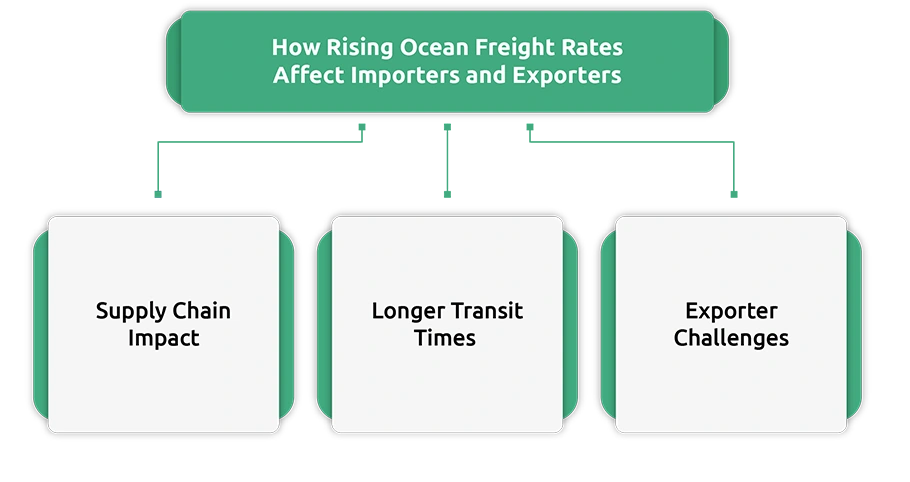
Imported goods may become more costly when they reach due to higher ocean freight costs. Businesses may need to adjust their import shipping costs, logistics costs, and overall shipping budget. Higher rates can also increase international freight expenses and affect supply chain costs. Changes to delivery plans and inventory planning may be required due to longer transit times. Additionally, businesses may require extra operational capital to cover the cost of goods during transit. The cost of insurance can also go higher with routes that are risky. Businesses can manage these changes with careful route and import cost planning.
How Can Businesses Manage Higher Ocean Freight Costs in 2026?
Businesses can compare different ports, carriers, and shipping routes to find suitable options. They can also compare direct and transshipment services and check Suez or other routes where available. Preparing shipments before of time can help avoid unexpected issues and provide wait times more time. Businesses must also review Incoterms to identify who handles freight, insurance, customs clearance, tariffs, taxes, & final delivery.
Businesses may better plan shipments and control logistics costs by checking freight metrics, fuel costs, port congestion, carrier changes, route changes, & capacity.
Conclusion – Why Ocean Freight Rates Are Rising Again
Ocean freight rates in 2026 are changing due to lots of factors. Container shipping rates are under pressure in 2026 because of peak-season demand, port congestion, Red Sea delays, and increasing fuel costs. At the same time, reducing cost on some routes might be helped by increased ship capacity & the recovery of some Suez services. When planning a shipments, businesses should keep track on capacity, transit times, shipping routes, and international freight costs.
Did You Know
Drewry’s Intra-Asia Container Index (IACI) softened 1% to $978 per 40ft container as of 16 July 2026²², down from $993 a week prior and reflecting softer regional feeder traffic.
FAQ
Why are ocean freight rates rising in 2026?
Ocean freight costs are facing pressure in 2026 because of increasing fuel costs, port traffic, route changes, & high demand.
Why are ocean freight rates different from one route to another?
Rates depend on cargo demand, vessel space, port conditions, & the shipping route. This is why one route can become more expensive while another becomes cheaper.
How can businesses reduce the impact of higher ocean freight rates?
Before shipping, companies may check available space, prepare shipments in advance, compare carriers & routes, and keep track on trends in shipping costs.
Which shipping routes are most affected by the 2026 rate changes?
The impact differs by trade lane. Different demand, capacity, and route factors may affect the Asia-US, Asia-Europe, & Asia-Middle East routes.
Why should businesses check freight rates before booking?
Ocean freight rates can change quickly. Checking current rates helps businesses compare options and plan their shipping budget.