Introduction
Shipping across the Gulf in 2026 is being shaped by sift in maritime access, customs processes, cargo availability & inland transport capacity. The Strait of Hormuz remains a critical route for cargo moving between Gulf ports and global markets, while security delays have reduced normal cargo movements. In September 2026, reported commercial cargo traffic through Hormuz fell sharply compared with pre-conflict levels.
For importers moving IT equipment, telecom hardware, automotive components, medical equipment & other B2B cargo, the issue is not simply whether a cargo can reach a Gulf port.
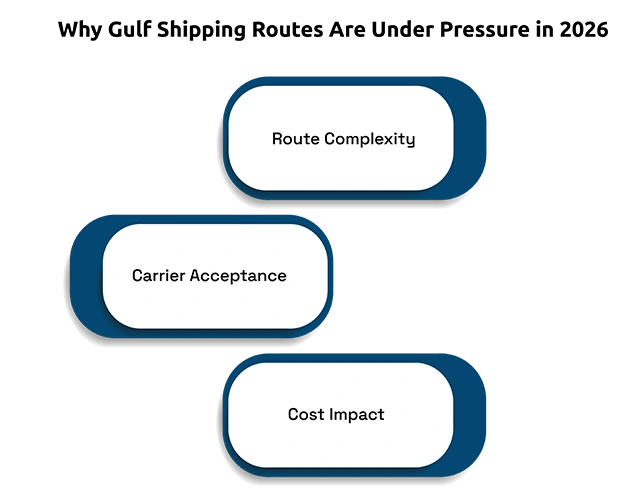
Why Gulf Shipping Routes Are Under Pressure in 2026
The Gulf transport network is facing stress from disruptions around the Strait of Hormuz & the wider Red Sea region. Recent shipping data shows a major cut in cargo movements across Hormuz , while traffic across the Bab el-Mandeb has also experinced security-relevant risk.
This creates a more complicated routing environment for cargo destined for the UAE, Saudi Arabia, Qatar, Bahrain, Kuwait and Oman. A route that previously depend on direct maritime access may now require a different port, cargo transfer arrangement or inland connection. For organization , routing decisions therefore need to be reviewed according to the cargo, destination and current carrier acceptance rather than relying only on established shipping patterns.
Strait of Hormuz & Gulf Cargo Routing
The sea channel of Hormuz stays one of the most important maritime gateways for the Gulf. On 21 September 2026, initial shipping data indicated that only two commodity cargo crossed the narrow waterway , compared with a reported pre-crises average of about 125 large commercial ships per day.
Minimized cargo movements can affect more than the supply of ocean transport. Lower traffic can create risk around sailing schedules, cargo allocation, insurance arrangements and onward network.
Alternative Ports and Routing Options
When a direct Gulf route is not available, companies can identify alternative gateways based on the destination or cargo requirements. Saudi-bound cargo , for example, can be routed across Red Sea gateways such as Jeddah before continuing inland. Other shipments may use ports in Oman or UAE locations outside the main Hormuz plan where carrier services and cargo acceptance are available.
Alternative routing does not automatically mean faster delivery. A different port can introduce additional trucking, transshipment, handling or customs requirements.
Customs Procedures Across the Gulf
Customs remains a central consideration when changing the route of a Gulf shipment. The GCC Customs Union provides a common framework covering customs procedures, tariff structures and the treatment of goods entering member states. The GCC framework identifies the first external entry point as an important stage for customs inspection, clearance and duty collection.
However, a common GCC customs framework does not mean every shipment can be treated identically in every country. Import requirements, restricted-product controls, permits, documentation and local regulatory approvals can still depend on the destination and product. Importers therefore need to confirm the customs route before cargo is dispatched.
HS Classification and Import Documentation
Correct product classification becomes particularly important when cargo is redirected through another Gulf entry point. The GCC Integrated Customs Tariff uses a unified 12-digit customs structure, building on the Harmonized System used for international classification. Accurate classification supports tariff assessment and identification of restricted or controlled goods.
Documentation must also match the actual shipment. Depending on the destination and transport mode, documents can include commercial invoices, packing lists, bills of lading, delivery orders, manifests and permits. Qatar Customs, for example, specifies documentation for sea and air imports and requires electronic customs declarations through the importer, authorised representative or customs broker.

Capacity Challenges at Gulf Ports
Routing changes can site extra stress on available port and inland capacity. If many importers move cargo toward the same alternative gateway, terminal handling, trucking, warehousing or customs resources can become more constrained. This is specifically relevant for large project shipments, data-centre equipment, automotive parts and medical equipment that may require controlled handling or specialised delivery.
Recent reporting has highlighted a shift toward alternative Gulf and Omani facilities as access to major routes has been disrupted. The movement of cargo toward different ports can change the balance of available container, and landside capacity.
Role of an Importer of Record in Gulf Shipments
An Importer of Record can be relevant when a foreign business needs a locally accountable party for an international equipment shipment. Depending on the destination and shipment structure, the IOR may support customs declarations, import documentation, duties and taxes, product-related requirements and coordination with customs representatives.
For companies transport IT, telecom, data-centre, automotive or medical equipment into Gulf markets, the IOR structure should be assessed before dispatch. The review can consider the product, importer details, end use , destination requirements, customs classification and available regulatory documentation rather than treating every shipment as a standard import.
Conclusion
Shipping across the Gulf in 2026 requires closer management between maritime routing, customs and inland logistics. Reduced cargo movements through the Strait of Hormuz, changes in port usage and pressure on alternative capacity are making traditional routing assumptions less reliable.
For importers, the key factors is the complete logistics chain rather than the ocean route alone. Reviewing customs duties , HS classification, port capacity, carrier acceptance, inland transport and importer duties before dispatch can help organization select a workable route for their specific cargo and destination.
Did You Know?
On 21 September 2026, only two commodity vessels crossed the Strait of Hormuz, compared with a pre-conflict average of about 125 large commercial cargo per day.
Frequently Asked Questions
What is affecting Gulf shipping routes in 2026?
Gulf transport is being affected by minimize cargo movements across the Strait of Hormuz, security concerns around regional maritime corridors and changes in cargo routing. These conditions can influence cargo availability, transit planning and alternative port capacity.
Can cargo use alternative Gulf ports?
Yes, depending on carrier acceptance, cargo type, destination and current operating conditions. Alternative ports can provide another routing option, but businesses should also evaluate customs procedures, inland transportation and available handling capacity.
Why is customs planning important for redirected shipments?
A change in port or country of entry can affect the customs declaration, documentation, applicable controls and responsible authorities. Correct HS classification and complete import documentation should therefore be confirmed before the revised route is used.
How can businesses manage Gulf shipping capacity issues?
Businesses can review alternative ports, carriers and transport modes while confirming inland trucking and customs capacity in advance. For urgent or regulated equipment, contingency routing can be assessed before dispatch rather than after a shipment is already delayed.
Is an Importer of Record required for Gulf shipments?
The requirement depends on the destination country, importer structure, product and applicable customs rules. Where a foreign business cannot act directly as the local importer, an appropriate IOR arrangement may be considered after reviewing the shipment and destination requirements.